


By | YOUNG, D
Africa trades heavily with the rest of the world, yet it does so largely through foreign currencies. The United States dollar and the euro dominate cross border payments, reserves, and pricing. This reality weakens African economies and limits policy autonomy. The proposed Eco currency offers a chance to change that trajectory and assert a distinct African trade identity.
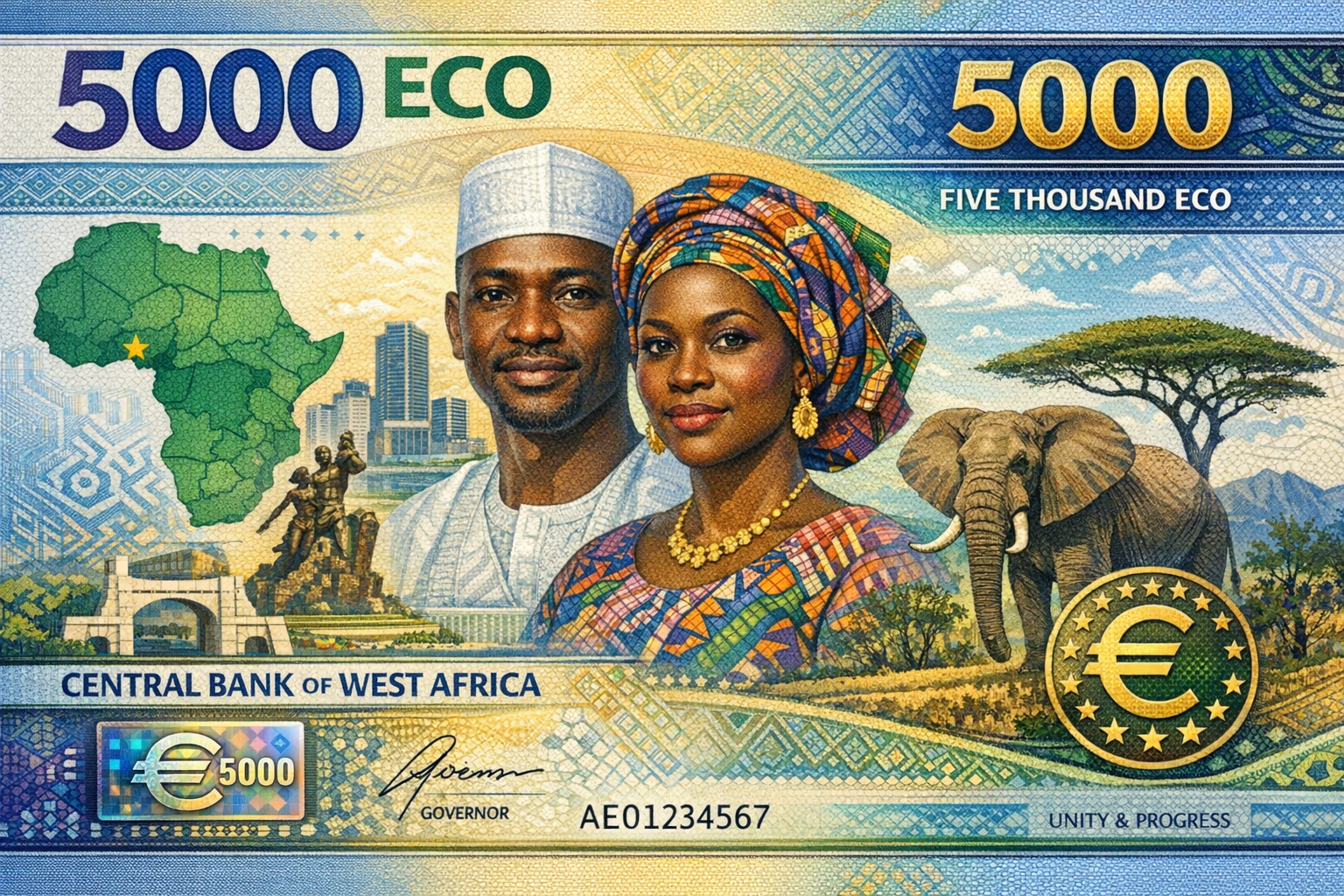
The Eco is designed as a single currency for West Africa under the framework of Economic Community of West African States. Its goal is simple. Reduce currency fragmentation, cut transaction costs, and deepen regional integration. Today, traders moving goods across West African borders face exchange losses, delays, and volatile rates. A common currency would simplify payments and encourage intra regional trade, which remains far below potential.
Trade identity matters. Currency is not only a medium of exchange. It signals economic confidence and strategic intent. Europe’s adoption of the euro strengthened internal trade and elevated its collective influence in global markets. For Africa, the Eco could serve a similar purpose by anchoring regional trade in African value chains rather than external financial centres.
Monetary sovereignty is another key issue. Many African currencies remain exposed to external shocks driven by policies set outside the continent. A well governed Eco, backed by credible fiscal discipline and independent monetary management, could reduce overreliance on foreign reserve currencies. Institutions such as the Central Bank of Nigeria and its regional counterparts would play a critical role in shaping convergence rules, inflation targets, and reserve management.
Critics often point to readiness gaps. These concerns are valid. Member states differ in debt levels, inflation rates, and export structures. A rushed launch would risk instability. However, delay also carries costs. Fragmentation keeps trade small, raises business costs, and weakens bargaining power in global negotiations. The answer lies in phased implementation, strict convergence criteria, and transparent governance, not abandonment of the idea.
The Eco also aligns with broader continental ambitions. The African Continental Free Trade Area seeks to boost intra African trade and industrialisation. A regional currency supports that goal by easing settlement and reducing dependence on correspondent banking outside Africa. Over time, successful regional currencies can become building blocks for deeper continental monetary cooperation.
Africa must define how it trades and on what terms. A shared currency is not a cure all, but it is a strategic tool. If designed with discipline and political commitment, the Eco can help West Africa speak with one economic voice. Trade identity follows monetary confidence. The Eco represents an opportunity to claim both.