

The Federal Government has launched a new national poverty reduction framework aimed at lifting 50 million Nigerians out of poverty by 2030.
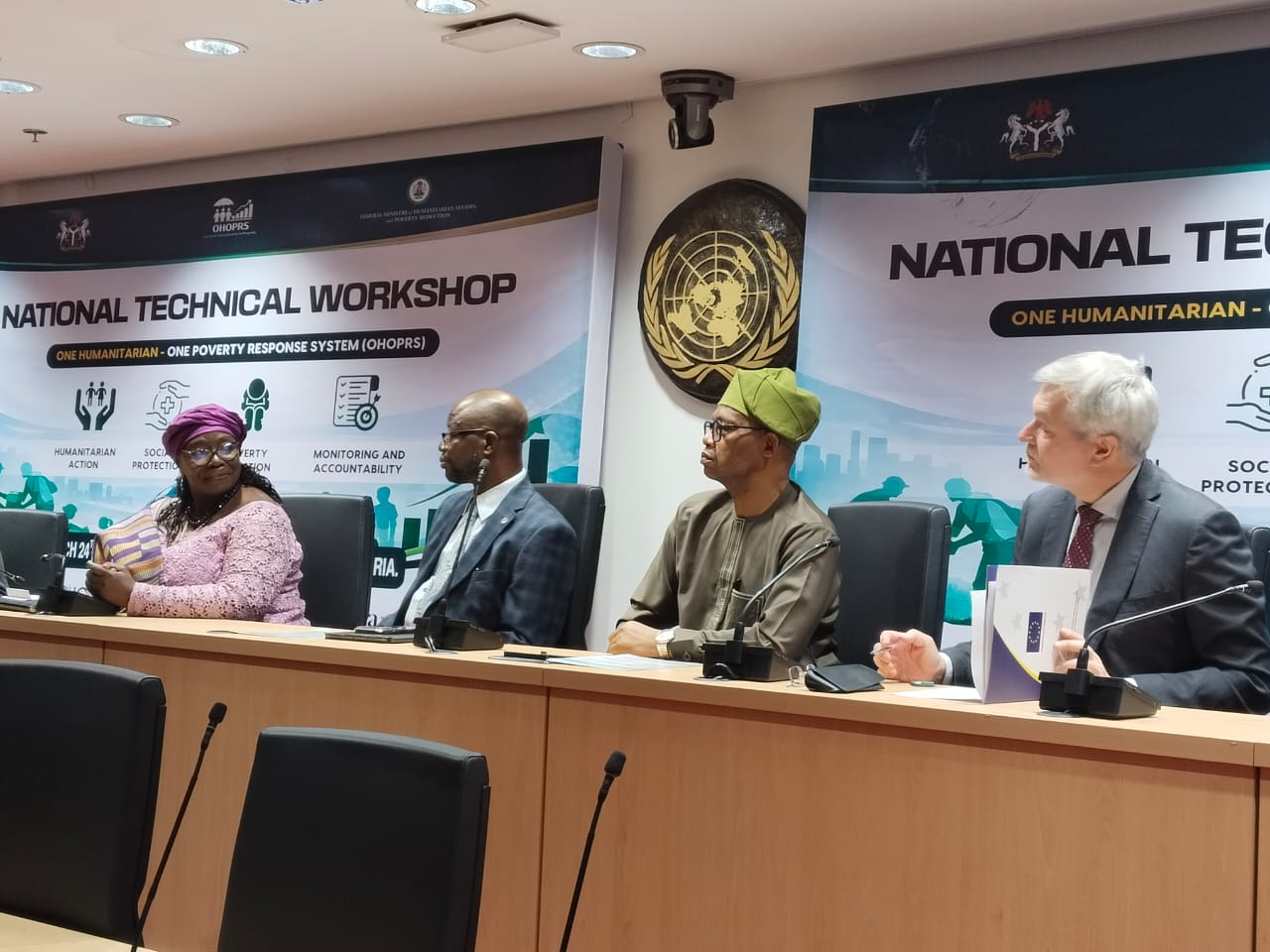
The initiative, unveiled in Abuja on Tuesday, is built around a unified platform known as the One Humanitarian, One Poverty Response System. Officials said the programme is designed to tackle poverty through better coordination, stronger data systems and closer collaboration among government institutions, development partners and the private sector.
Under the plan, the government is targeting a funding pool of N16 trillion between 2026 and 2030. The proposed financing structure includes contributions from the Federal Government, development partners, private investors and climate-linked funding sources.
Authorities said the new framework would also be supported by a National Humanitarian and Poverty Reduction Trust Fund, expected to draw from blended financing options such as climate finance, social impact bonds, private sector investment and Islamic finance instruments.
Minister of Humanitarian Affairs and Poverty Reduction, Dr Bernard Doro, said the new system was introduced to address deep-rooted and multi-dimensional poverty across the country. He said Nigeria had recorded several interventions over the years, but had failed to build a coordinated system strong enough to deliver lasting results.
According to him, the new approach will focus on real-time data, targeted interventions and a more people-focused response. He added that the aim is to bring ministries, departments and agencies, state governments and development partners into one national structure.
Doro said the administration of President Bola Tinubu wants a more transparent and accountable poverty response system, with digital tools expected to play a central role in monitoring delivery and tracking results.
The government said the framework includes an oversight structure made up of a national steering committee, independent audit mechanisms, results-based financing and digital transparency measures.
Speaking at the launch, representatives of development partners backed the initiative and stressed the need for urgent action. They said poverty in Nigeria now demands a system-wide response that combines humanitarian support, social protection and economic inclusion.
Officials also pointed to the scale of the challenge, noting that millions of Nigerians continue to face hardship driven by weak access to housing, healthcare, education, sanitation and security.
The National Bureau of Statistics also pledged support for the programme, saying reliable data and interoperability across public institutions will be critical to achieving the target.
The new plan comes as the Federal Government pushes for a more centralised and measurable strategy to reduce poverty and improve the effectiveness of social intervention programmes nationwide.