


By | Destiny Young
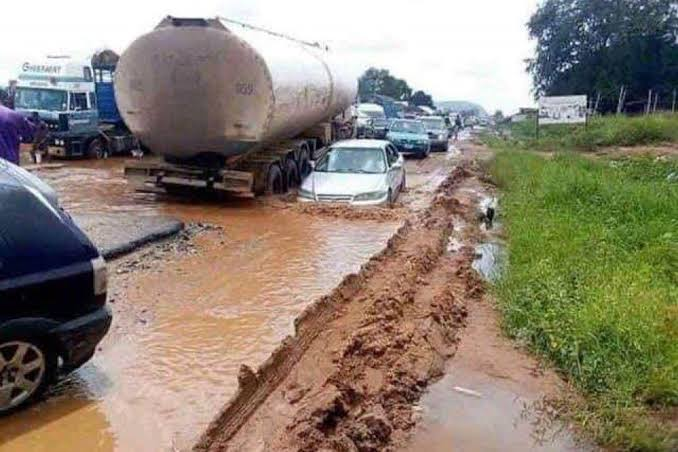
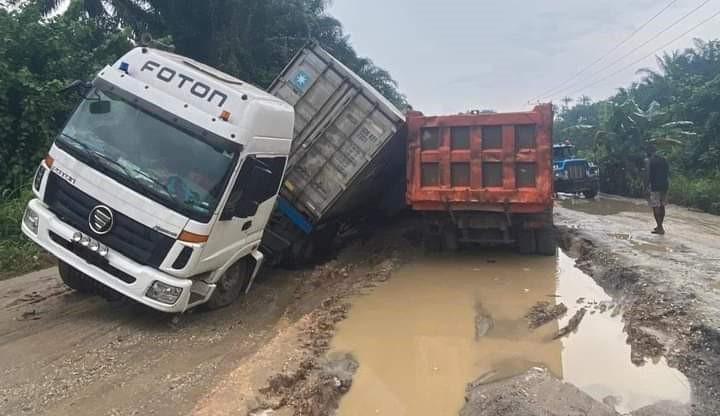
The Calabar-Itu Road has become one of the strongest tests of the Federal Government’s commitment to balanced infrastructure development across Nigeria. For years, commuters, transporters, traders and residents have endured a highway that has fallen into a deplorable state, turning what should be a vital economic corridor into a route of delay, danger and daily frustration, writes Destiny Young
This is not just another federal road in disrepair. Calabar-Itu Road is a major transportation backbone in the South-South. It links Cross River and Akwa Ibom and supports the movement of people, agricultural produce, petroleum products, goods and services across a region that plays a central role in the Nigerian economy. When this road breaks down, the impact goes far beyond the communities along the corridor. It affects trade, raises transport costs, slows business activity and weakens regional connectivity.
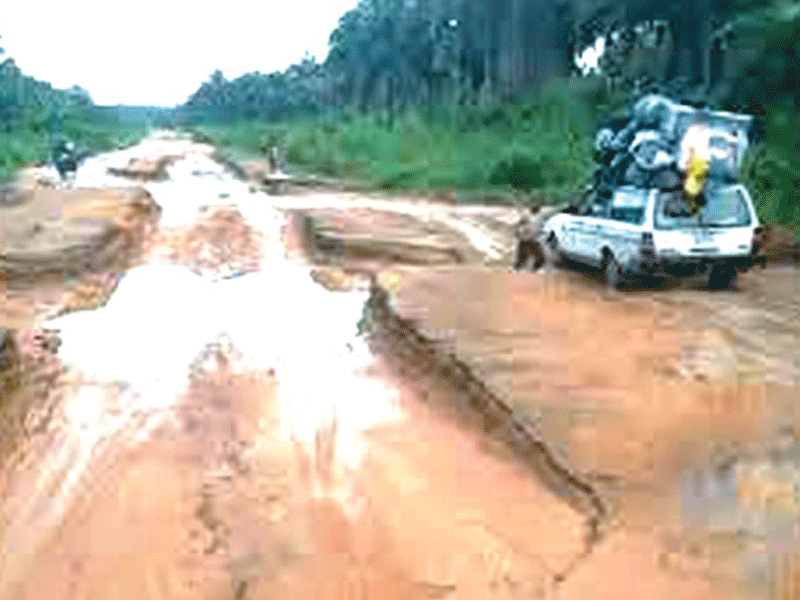
For too long, road users on this route have faced hardship that should never persist on such an important federal highway. What ought to be a smooth and strategic link has become a symbol of neglect. In many stretches, the road is difficult to navigate. Travel time has increased. Vehicle maintenance costs have risen. Commercial drivers lose income. Passengers bear the burden of discomfort, risk and uncertainty. For farmers and traders, a bad road means reduced access to markets and avoidable economic losses.
The Tinubu administration has shown that it can think big on infrastructure. Across the country, the Federal Government has prioritised high-profile road and transport projects, especially in corridors seen as economically important. That is the right approach. Infrastructure drives growth, expands opportunity and strengthens public confidence in government. But that same urgency must now be applied to the South-South, and few roads deserve that attention more than the Calabar-Itu Road.
The South-West has received substantial infrastructure focus because of its economic significance and population pressure. No one disputes the importance of those investments. But fairness in governance requires that the same seriousness be extended to other regions whose roads are just as critical to commerce and national integration. The South-South cannot continue to be treated as an afterthought on a route that is central to its economic life.
This is why the case for urgent federal intervention is both practical and political. Practically, the road must be rebuilt because it is essential to mobility, trade and safety. Politically, visible action on the Calabar-Itu Road would send a strong message that the Tinubu government is committed to inclusive development and national balance. In a region where federal projects are often used as a measure of sincerity, this road offers the government an opportunity to demonstrate seriousness through action.
There is also a wider electoral context that cannot be ignored. The South-South is ready to strongly support President Bola Tinubu in 2027, but support is always strengthened when people can point to tangible results. Roads remain one of the clearest signs of government presence. When a government fixes a major highway that people use every day, it does more than improve transport. It builds trust.
That is why this road should not be handled through piecemeal repairs or slow-moving promises. The Federal Government must treat the Calabar-Itu Road as a top-priority national corridor. It needs full reconstruction, proper funding, strict contractor accountability and a clear timeline for completion. Nigerians who rely on this route deserve more than repeated assurances. They deserve to see steady work and measurable progress.
President Tinubu still has time to make this happen. The road should be fully completed before he leaves office in May 2031. That is an achievable legacy target, and one that would carry real meaning in the South-South. A modern and completed Calabar-Itu Road would improve trade, reduce hardship, strengthen regional movement and stand as proof that federal infrastructure planning is not limited to one part of the country.
The argument is simple. If the Federal Government is serious about national development, it must act with urgency on the Calabar-Itu Road. The road is too important to ignore. The hardship is too severe to prolong. The need is too clear to delay.






Coming from an APC front line loyalist and party man, this is rare reflection because its richness in content and balanced comparison, especially regarding the South-West and South-South. I have followed you lately because of your mature stances on public discourses. I wish that this article found its way to the president’s table so that the necessary actions could be taken soon.
Bravo, Mr Young!
Coming from an APC front line loyalist and party man, this is a rare reflection because its richness in content and balanced comparison, especially regarding the South-West and South-South. I have followed you lately because of your mature stances on public discourses. I wish that this article found its way to the president’s table so that the necessary actions could be taken soon.
Bravo, Mr Young!
Thank you Promise, we appreciate your balanced comment on the subject in context.
Thanks you my brother for speaking out, this is one project that will hunt our leaders if they don’t urgently do something about it.
Thanks, Eddy.