



By | Destiny Young
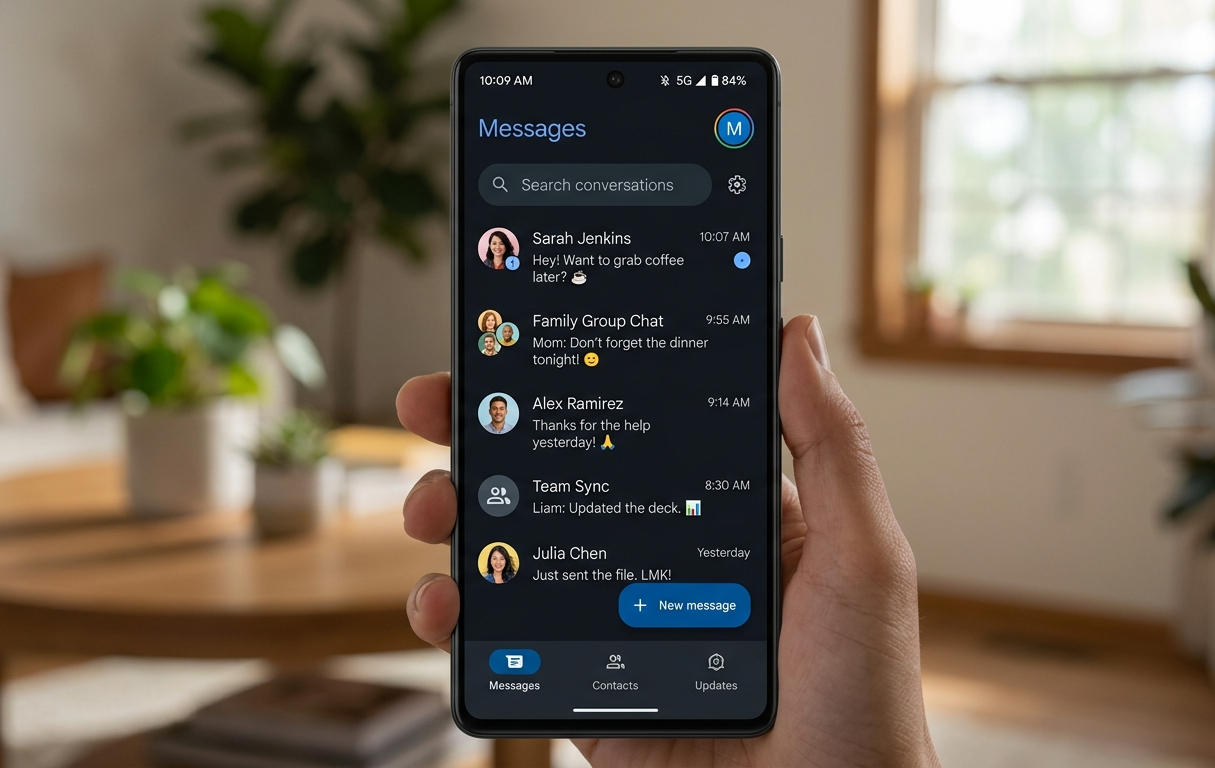
Google is widening its push to make Google Messages a more competitive default messaging app, with fresh features now rolling out and broader work underway on secure cross-platform RCS messaging. The latest developments centre on live location sharing, improved group chat controls and stronger spam protection in key markets.
One of the most immediate changes for users is real-time location sharing in Google Messages. Google announced the feature in its March 2026 Android update, and recent reporting says it is now rolling out more widely to users. The addition brings Google Messages closer to rivals that already offer in-chat live location tools.
Google has also officially launched Mentions for group RCS chats and a Trash folder in Google Messages. Mentions are designed to make busy group conversations easier to follow, while the Trash folder gives users a clearer way to recover recently deleted messages before they are removed permanently. These are practical quality-of-life changes aimed at making the app more useful for everyday communication.
The bigger strategic shift is Google’s work on encrypted RCS messaging between Android and iPhone. Recent reporting says Google and Apple have started testing end-to-end encrypted RCS messaging across platforms, a step tied to updated GSMA standards for interoperable encryption. If fully deployed, that would mark an important advance for mobile messaging by improving privacy in conversations between Android and iPhone users.
Google is also trying to address one of RCS messaging’s major weak points, spam. In India, the company has partnered with Airtel to integrate carrier-level spam filtering into RCS, in a move aimed at reducing fraud and unwanted messages. That matters because spam has been one of the major barriers to trust and wider adoption of rich messaging services in some markets.
Taken together, the latest updates show Google is working on two fronts at once. It is adding more consumer-friendly features inside Google Messages, while also pushing the technical and security changes needed to make RCS a stronger long-term alternative to traditional SMS and fragmented messaging platforms.