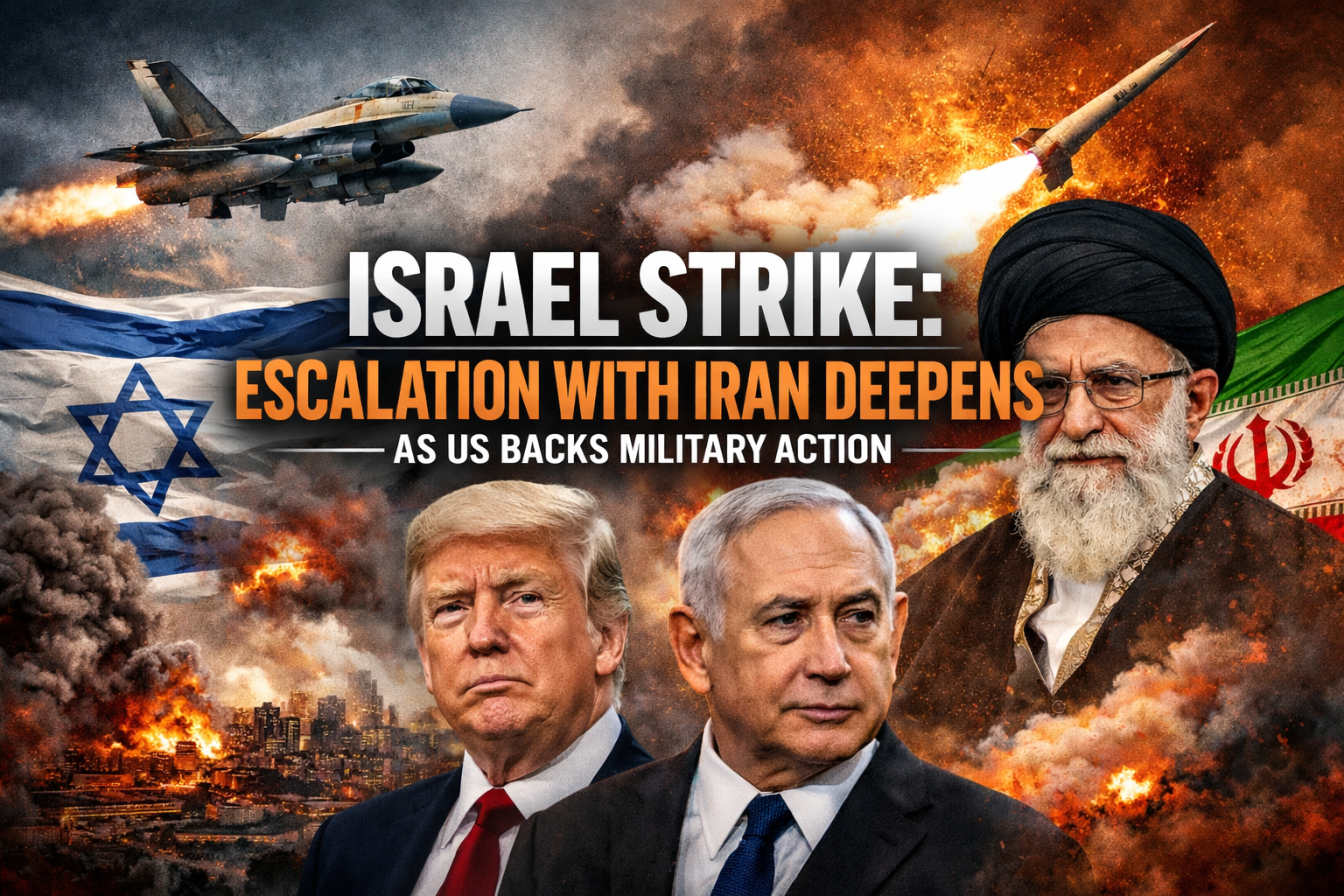


Tensions between Israel and Iran have surged sharply following a coordinated wave of air strikes that Israeli officials describe as pre emptive action against Iranian military and nuclear infrastructure.
The strikes, launched on February 28, targeted multiple locations across Iran, including sites in and around Tehran. Explosions were reported in several districts, while Iranian air defence systems were activated. Israeli authorities said the operation was necessary to neutralise what they called an imminent strategic threat.
Prime Minister Benjamin Netanyahu stated that Iran’s advancing nuclear programme and expanding missile capabilities left Israel with no choice but to act. He said Tehran was moving closer to weapons capability and that Israel would not permit what it considers an existential threat to materialise.
The American angle
The United States played a direct role in the latest operation. US officials confirmed military coordination with Israel, describing the strikes as defensive in nature. Washington has long maintained that Iran must not acquire nuclear weapons and has repeatedly warned that diplomatic efforts have limits.
Recent talks between US and Iranian representatives over nuclear restrictions collapsed days before the attack. American officials had pushed for broader limitations that would include Iran’s ballistic missile programme. Tehran rejected linking missile controls to nuclear negotiations, insisting its missile development is non negotiable.
Following the strikes, the US military raised alert levels across several bases in the Middle East. Officials signalled readiness to respond to any Iranian retaliation targeting American personnel or assets in the region.
Iran’s response
Iranian authorities condemned the attack as an act of aggression. State media reported missile launches toward Israeli territory in response. Tehran warned that both Israeli and American interests in the region would face consequences.
Supreme Leader Ayatollah Ali Khamenei was reportedly moved to a secure location as precautionary measures intensified. Iranian officials framed the confrontation as part of a broader campaign by Israel and the US to weaken the Islamic Republic.
Wider regional risk
Airspace closures and heightened security measures were reported across parts of the Gulf. Regional governments are monitoring the situation closely amid fears of spillover. Analysts warn that direct confrontation between Israel and Iran, especially with US involvement, increases the risk of sustained regional conflict rather than limited exchanges.
At the centre of the crisis lies a long running dispute over Iran’s nuclear ambitions, its missile arsenal, and its support for armed groups opposed to Israel. What began as covert shadow warfare has now escalated into overt military action, with Washington openly aligned with Israel’s position.
The coming days will determine whether the confrontation remains contained or expands into a broader regional conflict involving multiple actors.