
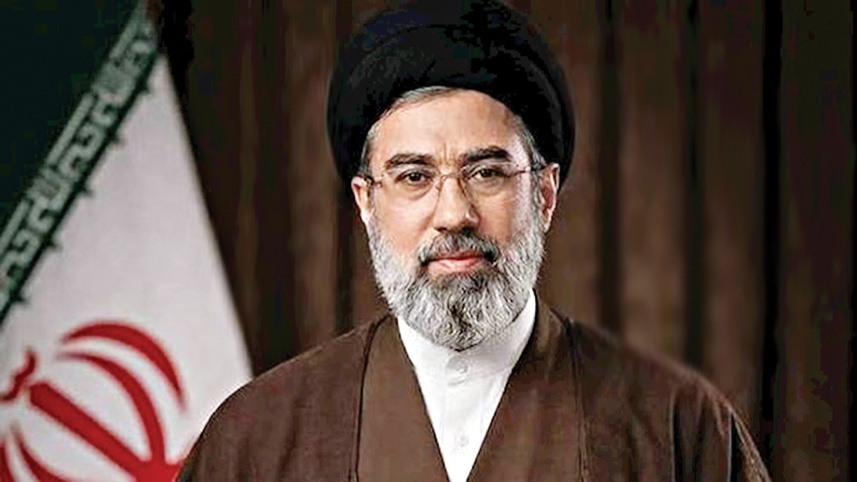
Israeli Prime Minister Benjamin Netanyahu’s remark that Iran’s new leader “cannot show his face in public” appears to reflect more than political rhetoric. It points to a deeper problem inside Iran’s leadership at a time of war, uncertainty and transition. Reports indicate that Mojtaba Khamenei, who succeeded his father as supreme leader, has yet to appear publicly in person since taking power. His first message was delivered through state media rather than a live appearance, a choice that has fuelled speculation about his condition and his grip on power.
One possible explanation is injury. Recent reports suggest Mojtaba Khamenei may have been wounded during the strikes that killed his father. That has added weight to claims that his absence is linked, at least in part, to his physical condition. His continued invisibility has only deepened doubts, especially at a moment when Iran’s leadership is trying to project strength.
Security is another likely factor. With senior Iranian figures already targeted, keeping a newly installed supreme leader out of public view would be a practical move to reduce the risk of assassination and preserve command continuity. In wartime, leaders often limit exposure when the threat environment is high. For Iran, that calculation may now outweigh the symbolic value of a public appearance.
There is also a political cost to staying out of sight. A new supreme leader would normally be expected to project control, legitimacy and confidence. Instead, Mojtaba Khamenei’s absence has created a vacuum that rivals can exploit. Netanyahu has seized on that vacuum to argue that Iran’s leadership is weak and unsettled, even as Tehran tries to project resolve through military threats and defiant rhetoric.
The central issue is not simply that Iran’s new leader has not appeared in public. It is that his absence raises broader questions about whether he is fully fit, fully secure and fully in command at one of the most dangerous moments for the Iranian state in years. Until he appears directly before the public, those questions are likely to persist.