
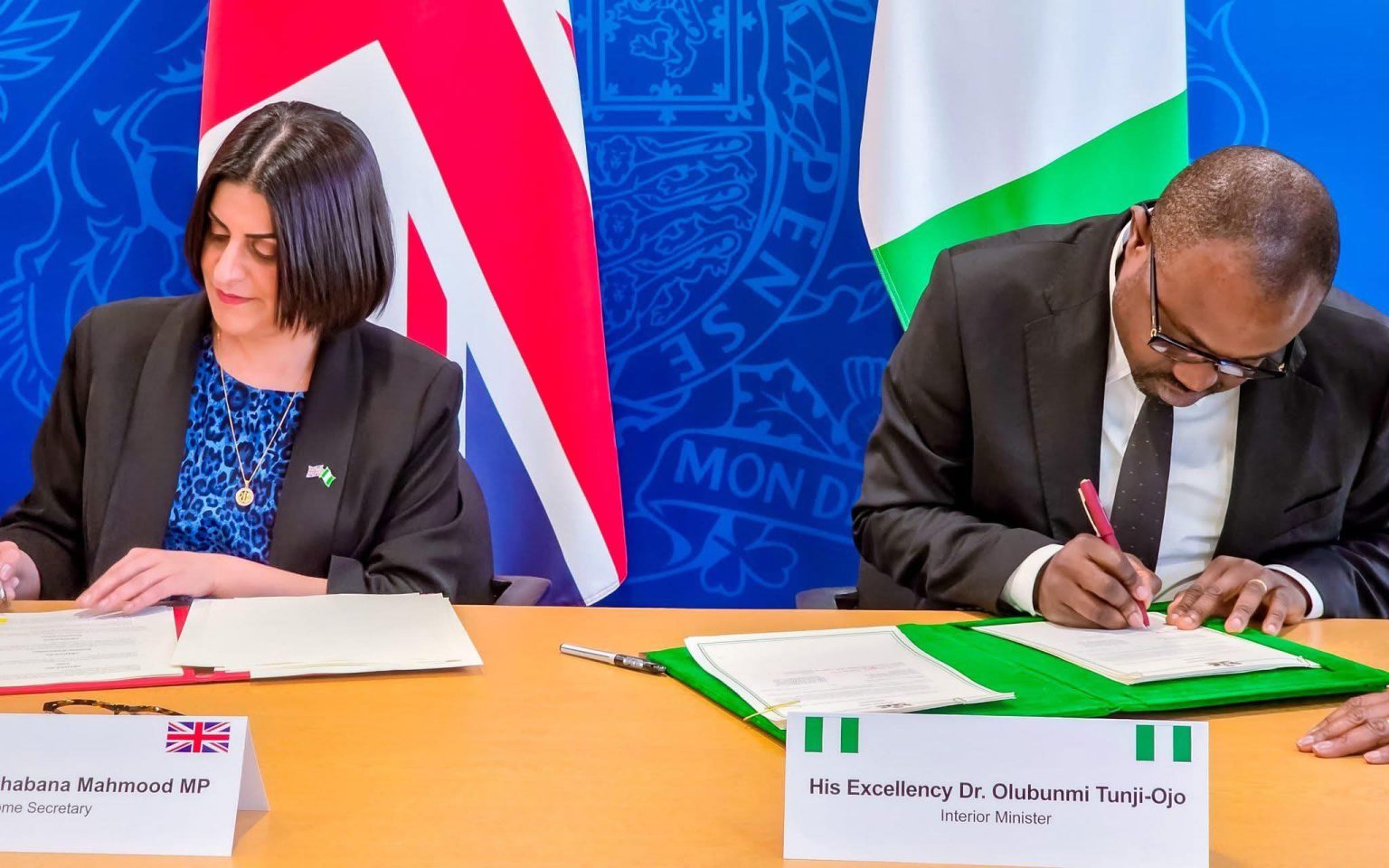

Nigeria and the United Kingdom have signed three bilateral agreements covering migration, border security and the expansion of business visas for UK companies operating with Nigeria.
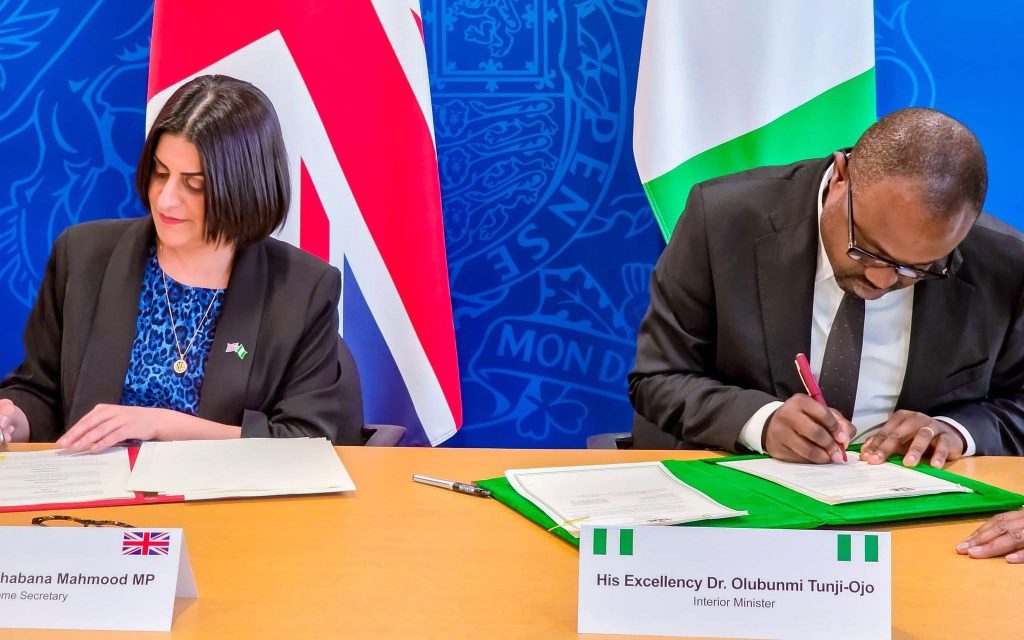
The agreements include a Memorandum of Understanding on Migration Partnership, a Statement of Intent on Cooperation on Organised Immigration Crime and Border Security, and a Statement of Intent on the expansion of business visas for UK firms working with Nigeria.
Nigeria’s Minister of Interior, Dr Olubunmi Tunji-Ojo, signed two of the documents on Wednesday evening and the third on Thursday during official engagements in the UK on behalf of the Federal Government.
Tunji-Ojo said the agreements reflected Nigeria’s commitment to a migration framework that is transparent and aligned with national interests and international obligations.
He said the partnership showed both countries’ resolve to build a migration system that is safe, orderly and beneficial to both sides. He added that Nigeria hoped to demonstrate measurable progress within the next year and expressed optimism that the arrangement could serve as a model for future bilateral agreements.
The minister also praised the existing working relationship between Nigeria and the UK Home Office, describing it as important to Nigeria. He said the level of engagement showed the commitment of President Bola Tinubu to strengthening ties between both countries.
Tunji-Ojo said Nigeria remained committed to protecting its citizens while ensuring that individuals who exploit legal migration channels or engage in criminal activity are held accountable.
Speaking on the agreement to expand business visas for UK companies, the minister said the development was in line with the reform agenda of the Tinubu administration and would support socio-economic growth in Nigeria.
He said easier visa access was one of the outcomes Nigeria had looked forward to, especially as the country seeks to deepen trade and investment links.
Tunji-Ojo added that Nigeria must remove barriers to trade, including challenges linked to irregular migration, if it is to achieve its long-term economic ambitions. He assured investors and development partners that Nigeria was open to broader opportunities for growth and would move to eliminate obstacles that could hinder progress.
UK Home Secretary Rt Hon Shabana Mahmood said Nigeria held a leading position in the UK’s bilateral engagement efforts, noting that it was the first country to secure such a broad agreement with the British government.
She said both sides understood each other clearly and shared a common vision for deeper cooperation, adding that the UK appreciated the scope of the agreements.
At the signing of the third agreement, UK Trade Envoy Florence Eshalomi said the expansion of business visas for UK companies would bring clear advantages to both countries.
She described the arrangement as an important step for economic growth and stronger commercial ties with Nigeria, which she referred to as Africa’s largest and thriving economy.
The agreements are expected to strengthen cooperation between both countries in migration management, border control and cross-border business activity.