

By | Bamidele Jacobs, Ibadan
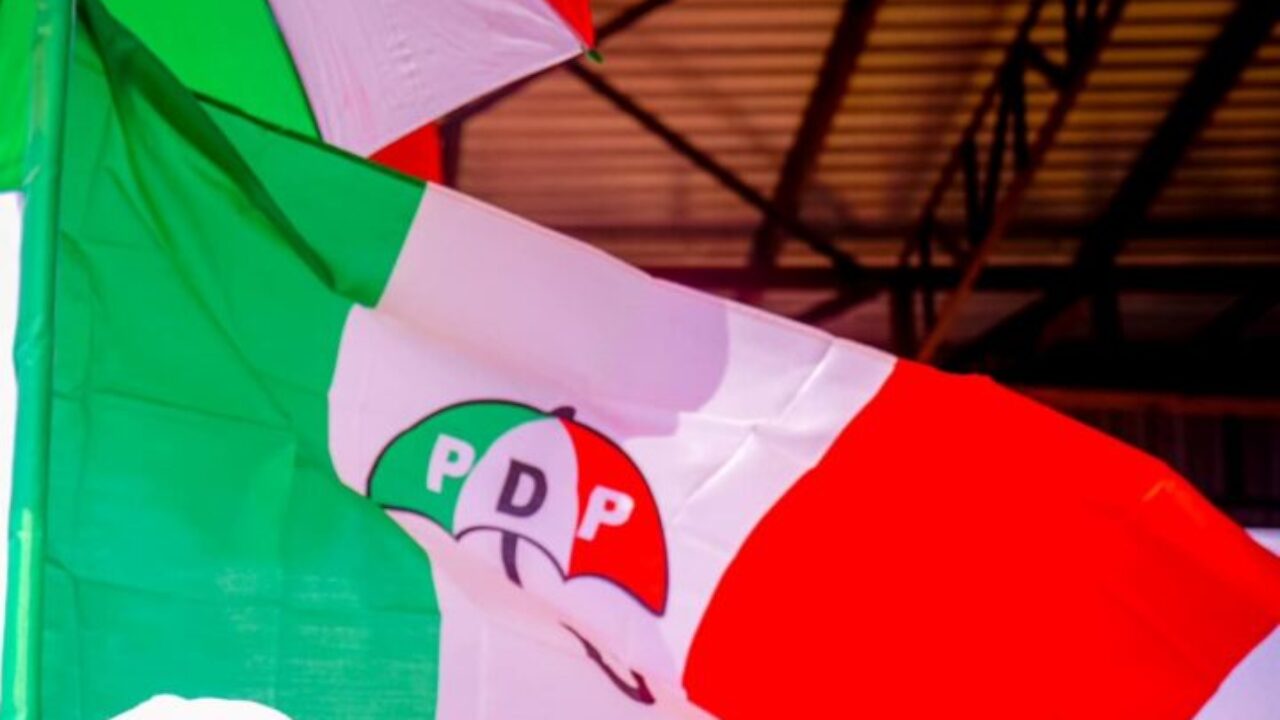
There is still time for the Peoples Democratic Party, PDP, to field candidates in the 2027 elections. But time alone will not save it. Only order, legality and political discipline can do that.
That is the hard reality facing the party today.
The PDP is not short of experience. It is not a fringe platform. It has national spread, recognisable figures and a long electoral history. Yet none of those advantages can substitute for internal coherence. A party may have legacy, structure and name recognition, but if it cannot settle who is in charge, who can call its convention, who controls its organs and who can lawfully supervise its primaries, then it begins to drift into dangerous territory.
That is where the PDP now finds itself.
At first glance, the party appears to be moving. It has talked up its plans. It has tried to project readiness. It knows that the electoral clock is ticking and that every party hoping to compete in 2027 must align itself with the Independent National Electoral Commission, INEC, timetable. That should have created urgency and focus.
Instead, what has emerged is a picture of a party still trapped in internal conflict while trying to convince the public that all is well.
This is why the debate should go beyond the usual partisan language. The issue is no longer just whether the PDP is divided. Most Nigerians already know that. The real issue is whether the party can produce candidates through a process that is orderly enough to survive challenge, credible enough to inspire confidence and lawful enough to stand without being pulled apart by litigation.
That is the point many party loyalists still seem unwilling to confront.
Primaries are not only political exercises. They are legal processes. They must be properly convened. They must follow party rules and electoral requirements. They must be carried out by a leadership structure whose authority is not in doubt. Once there are cracks in that foundation, the entire process becomes vulnerable.
A party in crisis can still hold a primary. It can gather delegates. It can announce winners. It can even celebrate outcomes. But if the process itself rests on contested authority, unresolved disputes and factional distrust, then the victory may only be temporary. It may produce candidates on paper, but not stability in practice.
That is the danger before the PDP.
The party is trying to move forward while still carrying old wounds. There are unresolved leadership disputes. There are factions with competing loyalties. There are disagreements over the convention process and over who should control the direction of the party heading into the election cycle. These are not routine family quarrels. They strike at the very legitimacy of the structures that should produce candidates.
And that is why I believe the PDP is swimming against the current.
The current, in this case, is made up of three forces.
The first is time. Election calendars do not slow down for troubled parties. Every delayed decision reduces the room for correction. Every unresolved dispute increases the risk of error. Once a party begins to compress major decisions into a narrow space, mistakes become more likely and mistakes in election season can be fatal.
The second force is legality. Nigerian elections are not won by emotion. They are governed by process. The moment a party fails to meet procedural expectations, it opens the door to exclusion, challenge or confusion. That risk grows when notices, registers, delegates and internal approvals are handled under a cloud of dispute.
The third force is public confidence. Politics is perception as much as organisation. Voters are not blind to internal disorder. They watch how parties behave before asking for power. A party that cannot manage its own affairs sends a weak signal to the electorate. It raises doubts about its seriousness and its readiness.
This is where the PDP should be most worried.
Even if it manages to put candidates on the ballot, it may still arrive at the election weakened by the long shadow of internal crisis. By then, the damage will not only be legal. It will also be political. Trust would have thinned. Momentum would have faded. The image of the party as a credible national alternative would have suffered another blow.
That is why this moment is bigger than one convention or one round of primaries.
It is a test of whether the PDP still has the institutional strength to act like a party seeking power, or whether it has become a platform too distracted by internal struggles to prepare effectively for national contest.
There is still a way out.
The party must first resolve the question of authority. It cannot continue with multiple voices claiming ownership of the same structure. There must be one clear chain of command, one recognised leadership process and one accepted operational centre. Without that, every other step becomes shaky.
It must also use its next major internal meeting to settle disputes, not widen them. A convention that creates fresh controversy will only deepen the crisis. What the PDP needs now is not another headline. It needs finality.
It must also stop reducing institutional problems to elite bargaining. Too much depends on personalities. Too much attention is placed on power blocs and godfathers. That may shape temporary peace, but it does not build durable party order. Rules must matter. Procedures must matter. Internal legitimacy must matter.
Anything less will leave the party exposed.
The PDP still has assets. It still has supporters across the country. It still has political memory and grassroots recognition. But those strengths are being steadily weakened by delay, rivalry and indiscipline. Political capital does not remain intact forever. It can be wasted. It can be eroded. It can be lost through repeated failure to act in time.
That is the wider lesson here.
The party does not need more denial. It needs honesty. It needs to accept that the 2027 race cannot be entered casually. It cannot behave as if history alone guarantees relevance. It cannot assume that because it has been a major player in the past, it will remain one in the future.
That assumption would be dangerous.
My view is simple. Yes, the PDP can still field candidates in the 2027 elections. But that outcome is no longer automatic. It now depends on whether the party can replace confusion with clarity, factionalism with order and rhetoric with procedure.
If it does that, it will make the ballot and remain a serious contender in the national conversation.
If it does not, it may discover too late that the real battle was never the general election. It was the struggle to put its own house in order before the race truly began.
And in politics, parties do not always collapse in one dramatic moment. Sometimes they weaken slowly, deadline by deadline, dispute by dispute, until the system moves on without them.
That is the risk facing the PDP now.