

By | Bassey Ekpenyong
Why many in Akwa Ibom believe the ARISE Agenda needs more time to reach full effect
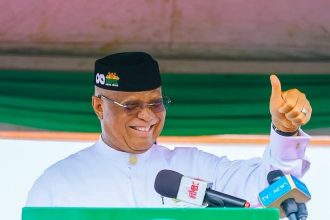
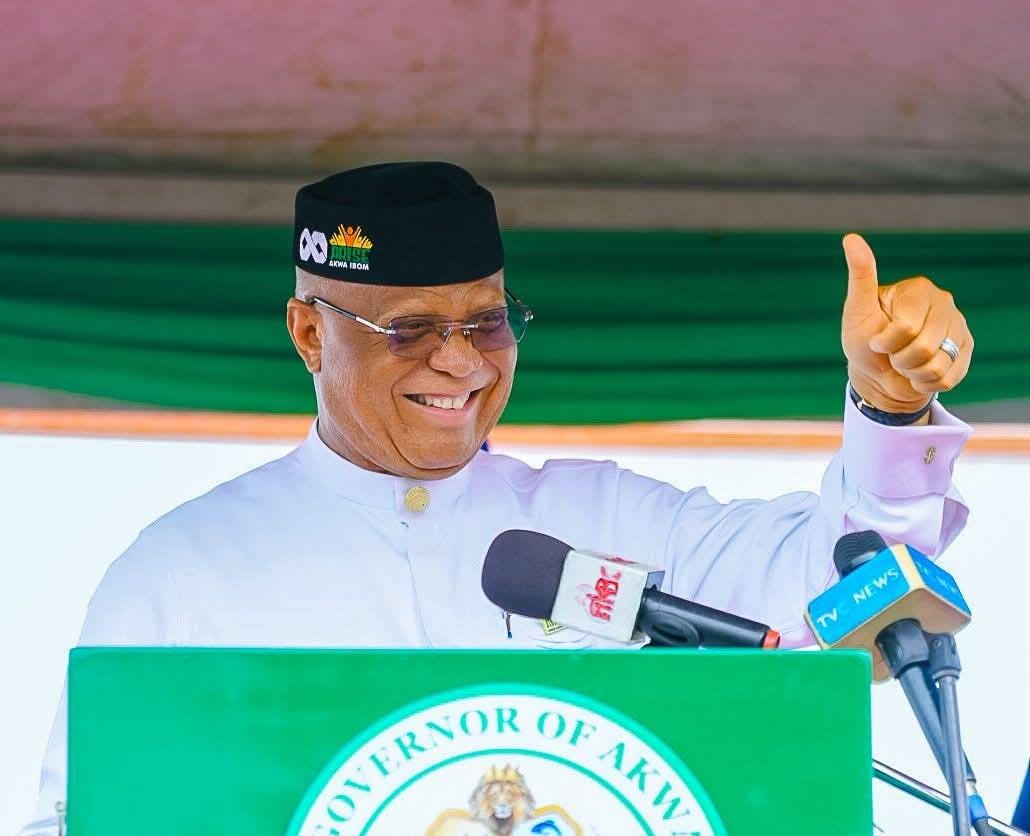
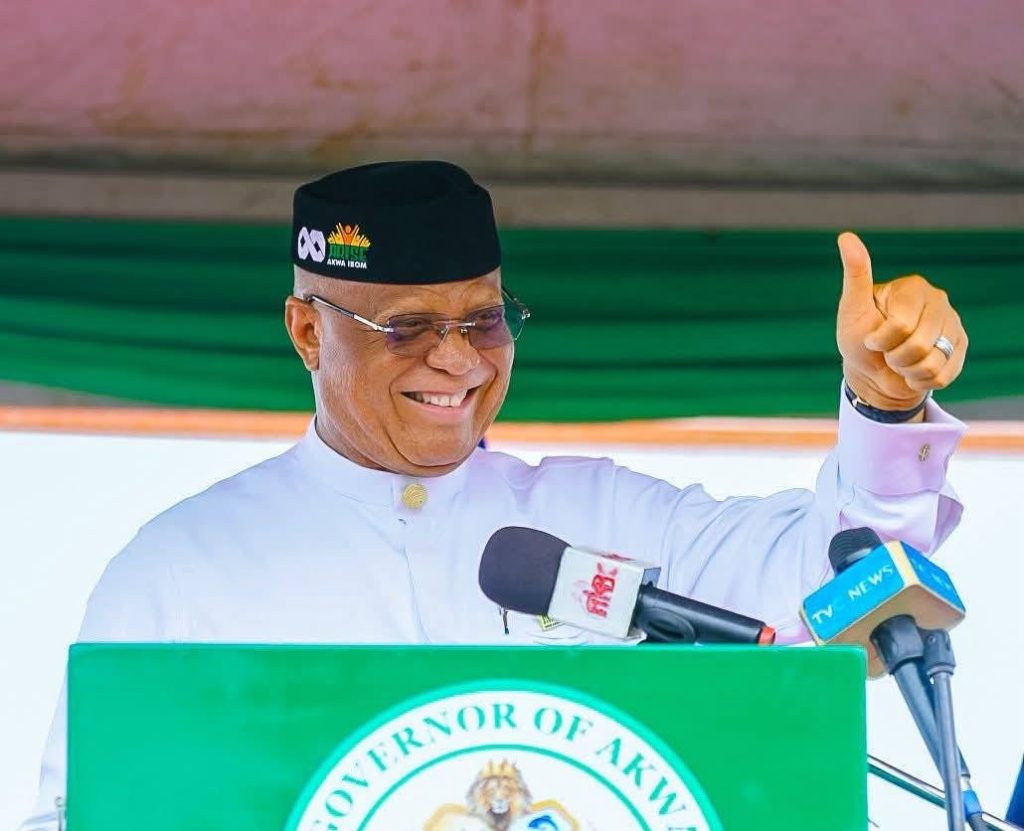
As Akwa Ibom moves steadily towards the 2027 governorship election, the debate over continuity is becoming sharper. For many observers, the issue is no longer whether Governor Umo Eno has a governing vision. The issue is whether the state should allow that vision more time to mature.
In politics, continuity is never justified by sentiment alone. It must rest on direction, delivery and public confidence. On those three measures, supporters of Governor Eno argue that his administration has laid enough groundwork to merit another term. Their case is simple. Akwa Ibom needs steady leadership, not disruption. It needs policy consistency, not another reset. It needs a government that understands where it wants to take the state and has already begun the work.
That argument begins with the ARISE Agenda. Unlike governments that drift from one announcement to another, the Eno administration came into office with a defined policy framework. The agenda places emphasis on agricultural development, rural growth, infrastructure expansion, security, education, healthcare, economic inclusion and enterprise support. Whether one agrees with every decision or not, the administration has governed with a visible structure. That matters. States do better when leadership is guided by a plan.
One of the strongest points in favour of continuity is that this administration has tried to connect its vision to public spending. Budgeting under Governor Eno has reflected a strong emphasis on capital development, with major attention given to roads, public infrastructure, health and other social services. This shows a government that is not content with managing recurrent obligations alone. It wants to build. It wants to leave physical and institutional assets behind. That is often where long-term development starts.
Infrastructure remains one of the clearest markers of this administration’s intent. Across the state, the government has sought to spread projects beyond a few urban centres. That approach carries political weight. Akwa Ibom is not just Uyo. A serious government must make people in the local government areas feel seen. Supporters of the governor say this is one of the defining qualities of his administration, a conscious effort to ensure that development is not confined to the capital or a narrow political corridor.
Road construction and related infrastructure have remained central to the administration’s message and spending priorities. This is important because roads are not cosmetic projects. They affect mobility, commerce, access to schools, movement of farm produce and the connection between rural communities and markets. A government that invests in this area is shaping the everyday economy of the state.
In healthcare, the case for continuity may be even stronger. Governor Eno’s administration has placed visible attention on primary healthcare, medical support systems and broader health-sector reforms. The effort to strengthen healthcare centres across communities speaks directly to the lives of ordinary people. For many families, the quality of local health services determines whether a sickness becomes a crisis. It determines travel time, treatment cost and survival chances.
The expansion of health insurance coverage and support for vulnerable groups has also added a social welfare dimension to the administration’s record. This is significant. Good governance is not measured only by bridges and buildings. It is measured by how government responds to the weak, the elderly and low-income households. By extending policy attention to these areas, the administration has tried to project a model of governance that combines infrastructure with human-centred planning.
The agricultural sector offers another reason supporters believe the governor should continue. Akwa Ibom cannot build a stable economy if its rural base remains weak. This administration has repeatedly shown interest in supporting farmers, stimulating agro-based livelihoods and linking agricultural policy to income generation. Grants, support packages and steps towards equipment access may not solve every structural problem overnight, but they show an understanding of where inclusive growth must begin.
This matters because agriculture in Akwa Ibom is not only about food production. It is about household survival, rural employment and local commerce. When farmers are supported, traders benefit. When production improves, markets respond. When rural incomes rise, social pressure eases. A government that keeps agriculture on the front burner is taking the right view of economic development.
Support for traders, entrepreneurs and small businesses also strengthens the argument for continuity. Akwa Ibom’s economy will not expand by government spending alone. It needs market women, artisans, small manufacturers, service providers and local business owners to thrive. Governor Eno’s administration has made visible efforts to channel support towards these groups. This is politically relevant because these are the people who feel the economy most directly. They are also the people who best understand whether government intervention is real or rhetorical.
The power sector remains one of Akwa Ibom’s biggest long-term tests. Here too, the administration has shown that it understands the scale of the challenge. Electricity reform is not a short race. It demands legal alignment, institutional clarity, technical planning, private-sector confidence and patient execution. Any government that begins to tackle this problem seriously must be judged over time, not within a narrow political window. This is one of the strongest arguments for allowing the current administration to continue. Power reform cannot be completed through stop-start leadership.
If Akwa Ibom truly wants industrial growth, stronger investment and better service delivery, then energy reform must remain central. Continuity in this sector could help the state avoid policy fragmentation and allow ongoing reforms to move from design into full implementation. A change of direction at a delicate stage can slow progress, unsettle partners and waste early gains.
Security is another area where continuity carries value. The administration has shown interest in strengthening local security architecture and improving response structures. In any state, development and security are linked. Investors do not commit where fear dominates. Farmers do not work freely where threats persist. Communities do not flourish where disorder grows unchecked. A government that is building local capacity in this area should be given room to consolidate those efforts, provided it remains accountable for outcomes.
Education also deserves attention in any honest assessment of the administration. Support for public education, payment obligations connected to examination access and broader investment in school infrastructure are not minor matters. They touch the future of families across the state. A government that protects access to education is not merely running schools. It is shaping the quality of the next generation.
Another point in the governor’s favour is tone. In many states, governance is often buried under political tension, elite quarrels and endless spectacle. Governor Eno has tried to cultivate a style that appears calmer, more development-focused and less consumed by open warfare. Style alone does not build roads or hospitals, but tone influences public stability. A government that appears measured and purposeful creates a better climate for implementation than one trapped in daily political turmoil.
There is also the issue of unfinished work. This may be the most practical reason supporters give for continuity. Many of the administration’s major goals are not one-year or two-year tasks. Infrastructure takes time. Institutional reform takes time. Health expansion takes time. Rural development takes time. Power sector progress takes time. Economic transformation takes time. If a government has established a direction and begun implementation, many voters will reasonably ask whether it makes sense to interrupt that process midway.
This does not mean continuity should be automatic. No democratic mandate should be treated as an entitlement. Governor Eno, like every incumbent, must still answer difficult questions. How much of the vision has translated into measurable impact. How many communities have felt real change. How effective have the intervention programmes been. How strong is the evidence of value for public money. These questions matter. They should matter.
Yet even with those legitimate questions, there is a credible case that Akwa Ibom may benefit more from continuity than disruption in 2027. A second term, supporters argue, would give Governor Eno the opportunity to deepen reforms, complete ongoing projects, stabilise institutions and convert early foundations into broader results. It would also allow the ARISE Agenda to be judged not as an interrupted promise, but as a full governing cycle.
The 2027 election, therefore, may come down to a simple decision for many voters. Do they believe the state is better served by sustaining a government that has shown a clear development framework, or by starting again under a new political direction. For those who believe in policy consistency, structured planning and the gradual building of results, the answer is clear. Akwa Ibom should stay the course.
Governor Umo Eno’s administration has given the state a governance narrative that is organised, people-focused and development-minded. It has shown interest in roads, healthcare, agriculture, small business support, education, social welfare, security and power reform. The work is not finished. That is precisely the point. For many in Akwa Ibom, 2027 should not be about changing direction. It should be about giving a clear vision the time required to reach full effect.