

By | Bassey Ekpenyong
Leadership does not begin on the day of swearing-in. It begins long before then, in the quiet discipline of preparation, in the shaping of ideas, and in the steady formation of purpose. That is why the story of Governor Umo Eno can be read through two powerful ideas, incubating vision and hatching results.
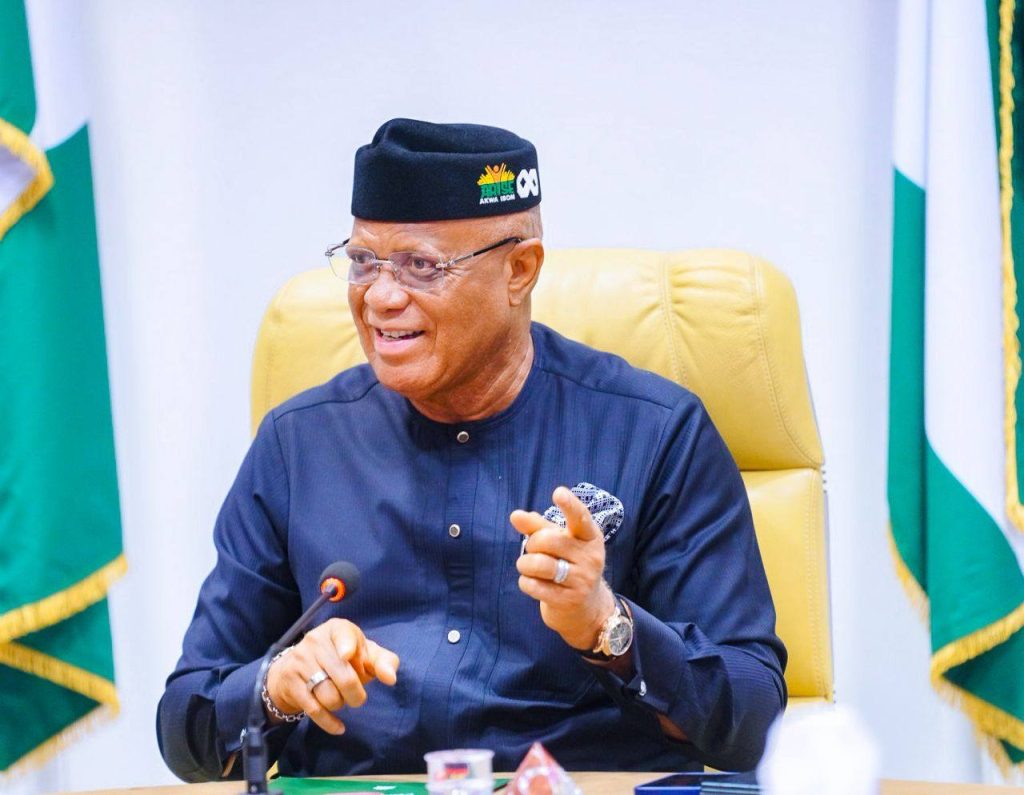
The first speaks to preparation. The second speaks to delivery.
Every serious leader must first develop a clear understanding of what government should mean to the people. That stage is often unseen. It happens away from the noise of politics. It is where priorities are formed, convictions are strengthened, and a governing philosophy begins to take shape. In Umo Eno’s case, that process appears to have produced a simple but important idea, leadership must serve the people in practical ways.
That is what makes vision important. Vision gives direction. It tells the people what a leader stands for. It defines the values that should guide policy, spending, public engagement, and development choices. But vision alone is never enough. A government cannot live on intent. It cannot survive on slogans. It must move from concept to consequence. It must turn plans into outcomes that people can see and feel.
That is where results matter.
The real value of any administration lies in its ability to translate public purpose into public benefit. For Governor Umo Eno, that means governance must be judged not only by what it promises, but by what it produces. It must be measured by the opportunities it opens, the communities it touches, the businesses it supports, and the confidence it gives to ordinary citizens who want to work, grow, and live with dignity.
This is the point at which leadership becomes real. It is no longer about words. It is about effect. A road is not an announcement. It is access. Support for small businesses is not a headline. It is survival and growth. Investment in rural communities is not political decoration. It is an economic choice that tells neglected citizens that they matter too.
That is why the phrase hatching results is so fitting. It suggests that leadership should produce. It suggests movement, output, and evidence. It presents government as a system that must generate value for the people, not merely administer structures. In this sense, the success of Umo Eno’s leadership will depend on how far his vision continues to mature into visible gains across Akwa Ibom.
This is especially important in a state where the expectations of government are both high and immediate. People want to see development in terms they can understand. They want to feel it in their communities, in their local roads, in their livelihoods, in the support available to farmers, traders, entrepreneurs, and young people searching for a foothold. They want governance that reaches beyond official buildings and enters everyday life.
That is the real test of results. They must not remain on paper. They must not be limited to speeches, ceremonies, or policy language. They must take root in the daily experience of the people. They must widen opportunity. They must strengthen local economies. They must show that government can function as a force for inclusion and progress.
For Umo Eno, the challenge is therefore clear. He must keep aligning vision with delivery. He must ensure that the promise of leadership does not lose strength in the process of governance. He must show that planning can lead to performance and that good intentions can become measurable outcomes.
That is where credibility is built. Citizens trust leadership more deeply when they can connect public policy to personal experience. They believe in government when they see signs that it is working in their favour. A young person who finds a path to employment, a farmer who gains better support, a small business owner who receives room to grow, and a rural community that sees new attention, these are the real markers of a government that is hatching results.
There is also a deeper point here. Leadership is not only about managing the present. It is about shaping the future. A governor who incubates vision well is laying the foundation for long-term progress. A governor who hatches results is proving that such progress does not have to remain distant. It can begin now, in ways that are practical, steady, and meaningful.
That is why this moment in Akwa Ibom should be viewed with seriousness. It is a moment that calls for more than applause. It calls for sustained work. It calls for a government that understands that the strength of its mandate lies in what it can deliver to the people. It calls for leadership that remains focused, human, and productive.
Umo Eno’s public journey, seen from this angle, is more than a political transition. It is a movement from preparation to proof. It is the passage from incubating vision to hatching results. That is the standard before him. That is the expectation of the people. And that is the framework through which his leadership may well be remembered.
In the end, vision gives a leader identity. Results give that leader relevance. If Governor Umo Eno continues to bridge the two with discipline and purpose, then his administration will not only be seen as one with ideas. It will be seen as one that turned ideas into value for the people of Akwa Ibom.