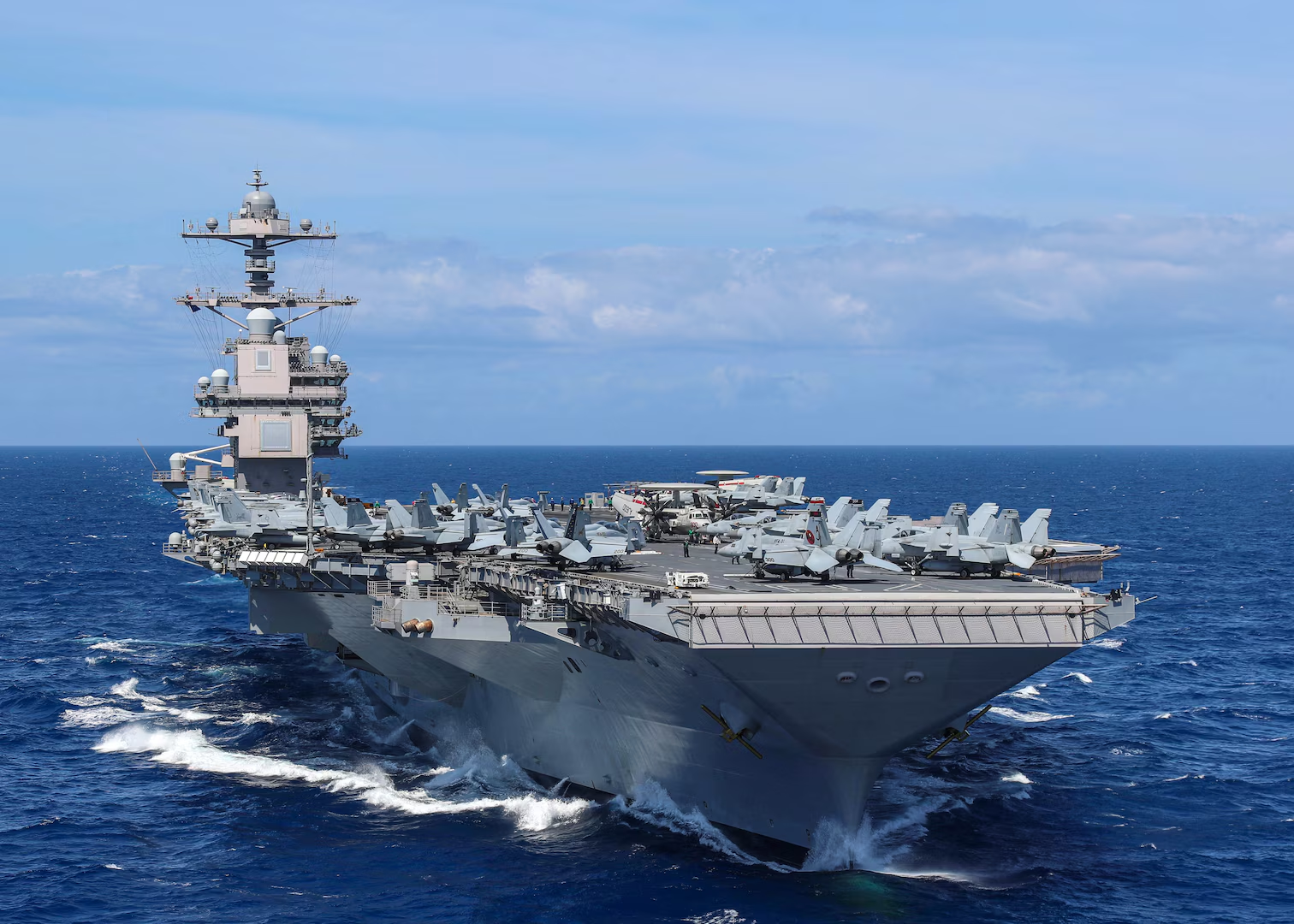


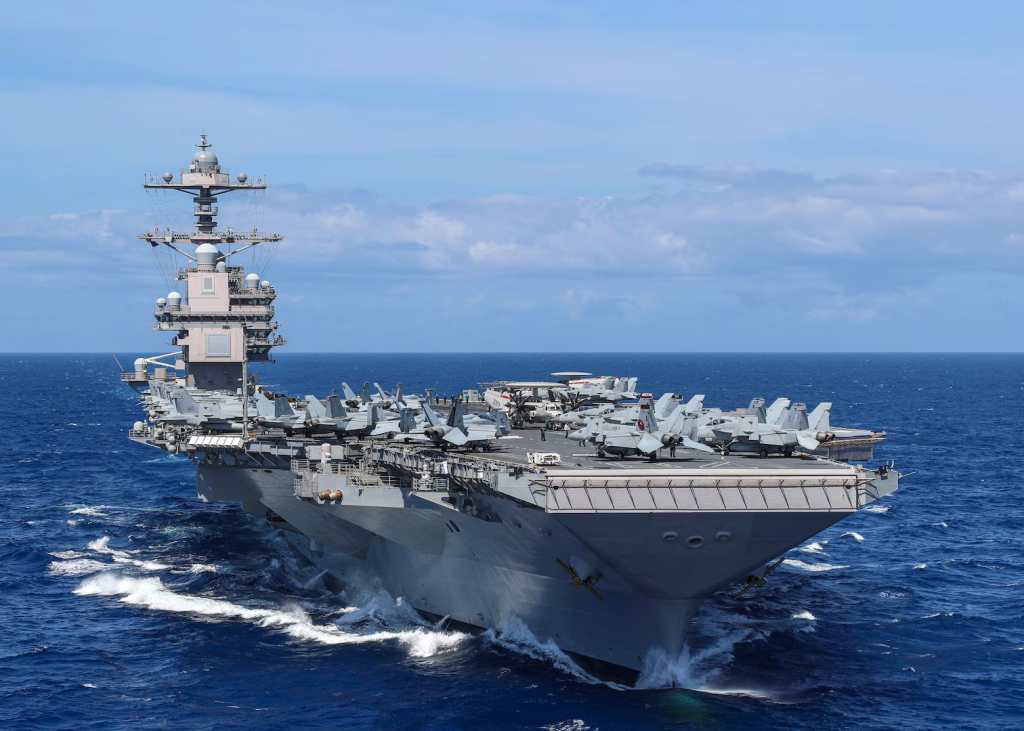
USS Gerald R. Ford, CVN 78, is the lead ship of the Ford class and the first of a new generation of United States Navy aircraft carriers built to succeed the Nimitz class. It was commissioned on 22 July 2017 and named after former US President Gerald R. Ford, who also served in the US Navy during the Second World War.
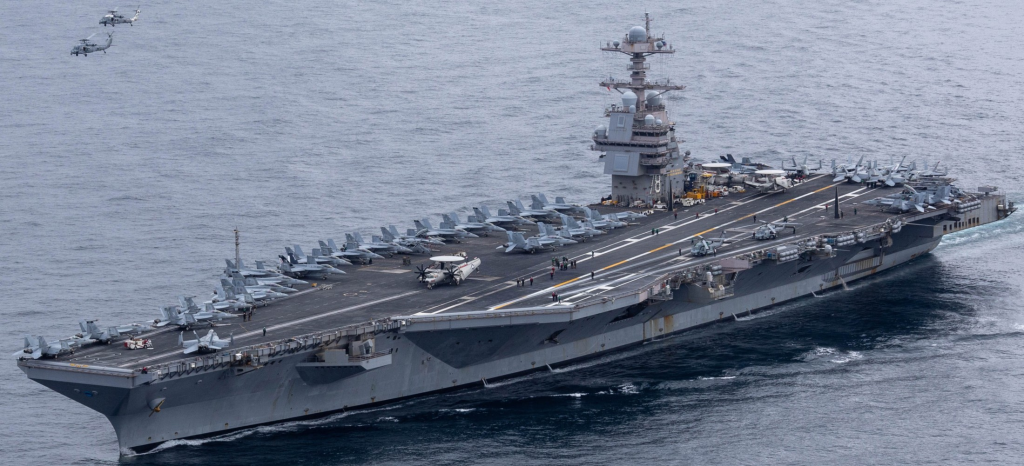
The ship serves as a mobile airbase at sea. Its primary role is to launch and recover combat aircraft, support military operations, provide air cover, gather intelligence, and project American naval power across different regions of the world. Like other major carriers, it does not operate alone. It usually functions as the centrepiece of a carrier strike group, supported by destroyers, submarines, and logistics vessels.
USS Gerald R. Ford is one of the largest warships ever built. It measures about 1,106 feet in length and has a full load displacement of roughly 100,000 tons. The carrier is powered by two nuclear reactors, which allow it to operate for long periods without the need for conventional fuel refuelling. It can also travel at speeds above 30 knots.
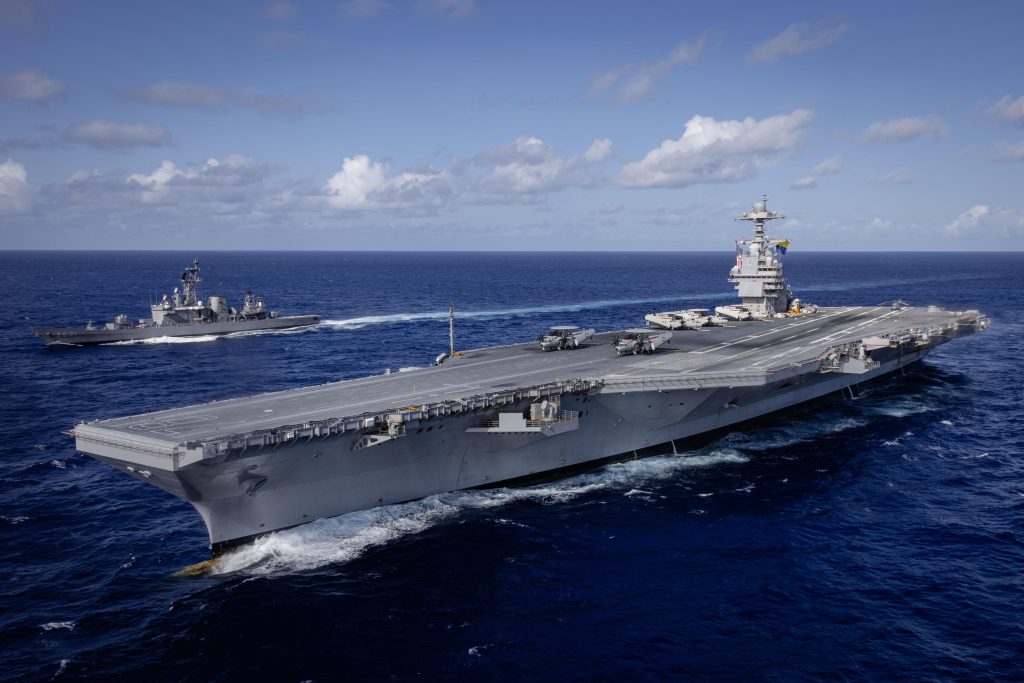
One of the ship’s most important features is its advanced launch and recovery system. Unlike older carriers that use steam catapults, USS Gerald R. Ford uses the Electromagnetic Aircraft Launch System, known as EMALS. This system launches aircraft more efficiently and is designed to support both current and future aircraft types. It also uses Advanced Arresting Gear, which helps recover aircraft when they land on the flight deck.
The carrier also introduced several other upgrades over previous classes. These include a redesigned flight deck, advanced weapons elevators, improved radar systems, and a much larger electrical power capacity. That increased power generation is important because it gives the ship room to support future technologies and weapons systems as naval warfare continues to evolve.
In terms of defence, USS Gerald R. Ford is equipped with layered protective systems. These include missile defence and close range weapons designed to deal with threats from aircraft, missiles, and other hostile platforms. Even so, a carrier’s strongest protection usually comes from the wider strike group that surrounds it and the aircraft it carries.
The ship can carry thousands of personnel, including the ship’s crew and the embarked air wing. Depending on operational requirements, the total number on board can exceed 4,000 people. This makes it not only a warship, but also a highly complex floating military community.
USS Gerald R. Ford represents a major shift in US naval capability. It was built to generate more aircraft sorties, reduce some long term operating demands, and offer greater adaptability for future missions. Beyond its size and firepower, the ship is important because it sets the standard for the rest of the Ford class and reflects how the US Navy plans to modernise its carrier fleet for the future.