

| Feature | Google Pixel 10 Pro XL | iPhone 17 Pro Max | Edge |
|---|---|---|---|
| Main camera | 50MP wide, f/1.68 | 48MP main, 24mm, f/1.78 | Pixel for higher-res main sensor, iPhone for Apple’s mature processing |
| Ultra-wide | 48MP ultra-wide with autofocus and Macro Focus | 48MP ultra-wide, 13mm, 120° FoV, macro support | Draw on hardware |
| Telephoto | 48MP 5x telephoto, Pro Zoom up to 100x | 48MP telephoto, 4x plus 12MP optical-quality 8x, digital zoom up to 40x | Pixel for long-range zoom |
| Front camera | 42MP autofocus selfie camera, 103° ultrawide FoV | 18MP Center Stage selfie camera with autofocus | Pixel on resolution, iPhone on feature set |
| Video capture | 8K at 24/30fps via Video Boost, 4K up to 60fps, Night Sight Video, Macro Focus Video | 4K Dolby Vision up to 120fps on main, ProRes up to 4K/120 with external recording, Apple Log 2, ACES, macro video | iPhone for serious video work |
| Zoom in real use | Tom’s Guide says the Pixel is better for users who care about zoom, especially at 30x and beyond | Strong at shorter telephoto ranges, but not as flexible at extreme zoom | Pixel |
| Low-light photos | Good, but Tom’s Guide says the iPhone produces brighter, more detailed night shots | Stronger night performance in that comparison | iPhone |
| Selfies in real use | Capable, but Tom’s Guide says the iPhone’s 18MP Center Stage camera delivers better-looking selfies | Better selfie output in that comparison | iPhone |
| Macro | Strong macro hardware and autofocus ultra-wide | Strong macro too, but Tom’s Guide gave the macro shootout to the Pixel 10 Pro XL | Pixel |
Google’s Pixel 10 Pro XL is the better choice for users who care most about zoom and still photography. Apple’s iPhone 17 Pro Max remains the safer pick for video, selfies and low-light consistency.
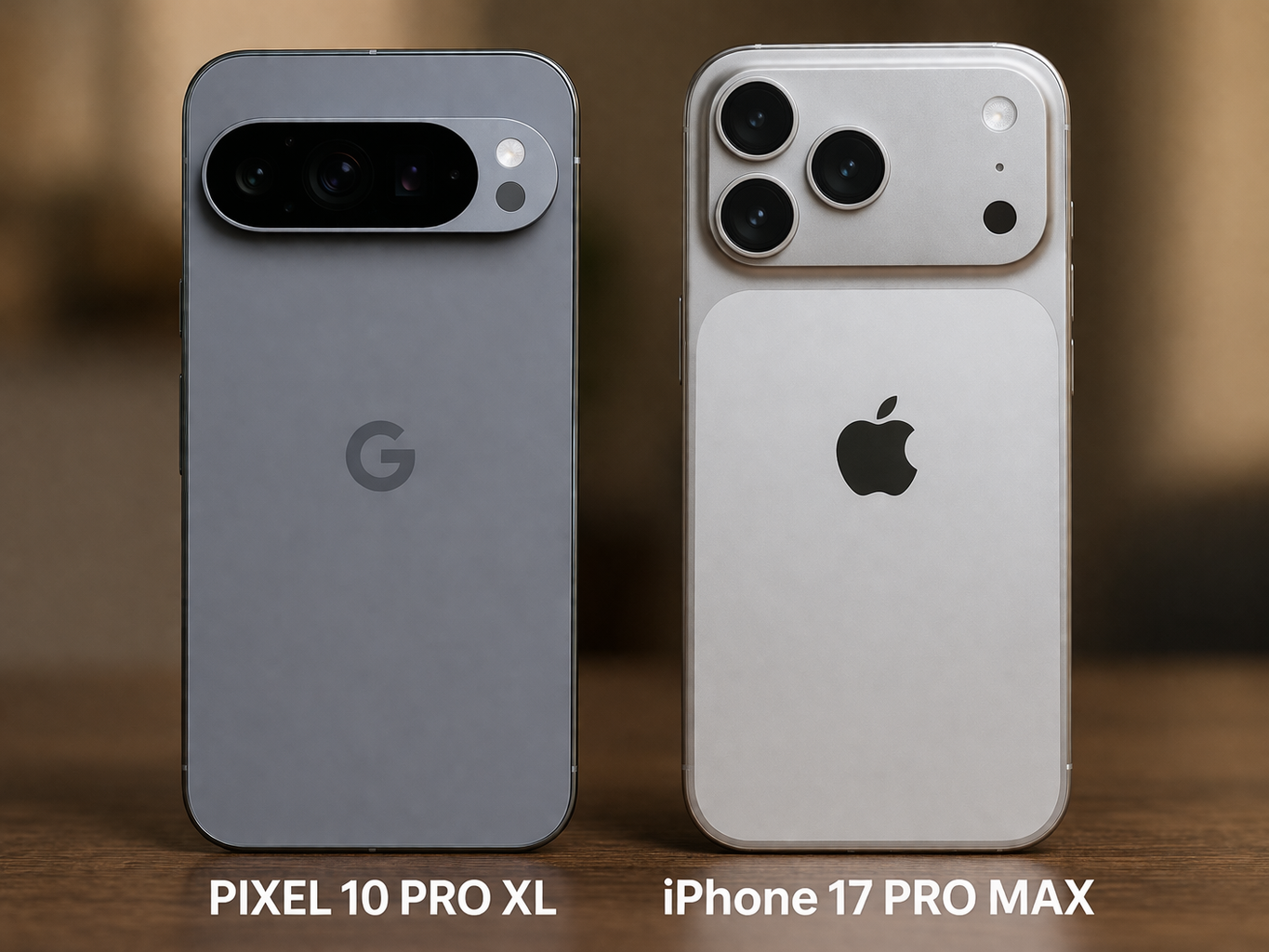
The case for the Pixel 10 Pro XL starts with reach. Google gives the phone a 50MP main camera, a 48MP ultra-wide with autofocus, a 48MP 5x telephoto lens and up to 100x Pro Zoom. That setup gives it more long-range flexibility than the iPhone 17 Pro Max, whose 48MP main and 48MP ultra-wide are joined by a telephoto system built around shorter optical steps and up to 40x digital zoom. In Tom’s Guide’s direct comparison, the Pixel pulled ahead at 10x and beyond, with the reviewer saying it was better suited to users who value zoom, especially once AI enhancement came into play at 30x and above.
For buyers who mostly take photos, that matters. The Pixel 10 Pro XL continues Google’s long-standing strength in computational photography, and its hardware gives it an advantage in scenes where detail has to be recovered from distance. If your camera roll is full of buildings, events, wildlife, signs, street scenes or travel shots taken from far away, the Pixel is the more useful tool. That is an inference from the official camera specs and Tom’s Guide’s zoom findings.
Apple, however, still has the stronger case for people who treat their phone as a video camera. The iPhone 17 Pro Max supports 4K Dolby Vision at up to 120fps, ProRes up to 4K/120 with external recording, and higher-end workflows such as Apple Log 2 and ACES. Google’s Pixel 10 Pro XL offers 8K recording through Video Boost and 4K up to 60fps, but Apple’s video stack is clearly broader and more creator-focused.
The iPhone also holds the edge after dark. In Tom’s Guide’s side-by-side comparison, the reviewer said no phone tested so far had beaten the iPhone 17 Pro Max in low-light shooting, praising its brighter and more detailed night images. The same comparison also gave the iPhone the advantage for selfies, pointing to sharper facial detail and stronger exposure from Apple’s 18MP Center Stage front camera.
The Pixel is not outclassed across the board. Its 42MP front camera is higher resolution on paper, and Google still offers a distinctive photo style that many users prefer. But the iPhone’s front camera performance appears more dependable in real-world use, while its night mode remains the stronger option for users who shoot often in dim environments, restaurants, concerts or city streets after dark.
Macro photography is closer. The official specs show both phones using high-resolution ultra-wide cameras with close-up capability. Tom’s Guide’s macro shootout found wins for both devices across different flower samples, but the reviewer often praised the iPhone for sharper detail and more reliable focus, while also noting that the Pixel could produce more dramatic contrast in some scenes.
That leaves the buying decision fairly clear. Buy the Pixel 10 Pro XL if you want the more flexible stills camera, especially for zoom-heavy photography. Buy the iPhone 17 Pro Max if you want the better all-round camera system for video, night shots and selfies. Tom’s Guide’s overall verdict favoured the iPhone 17 Pro Max, but the same comparison also made clear that the Pixel remains the stronger option for users whose priorities start with zoom performance.