

By | Destiny Young
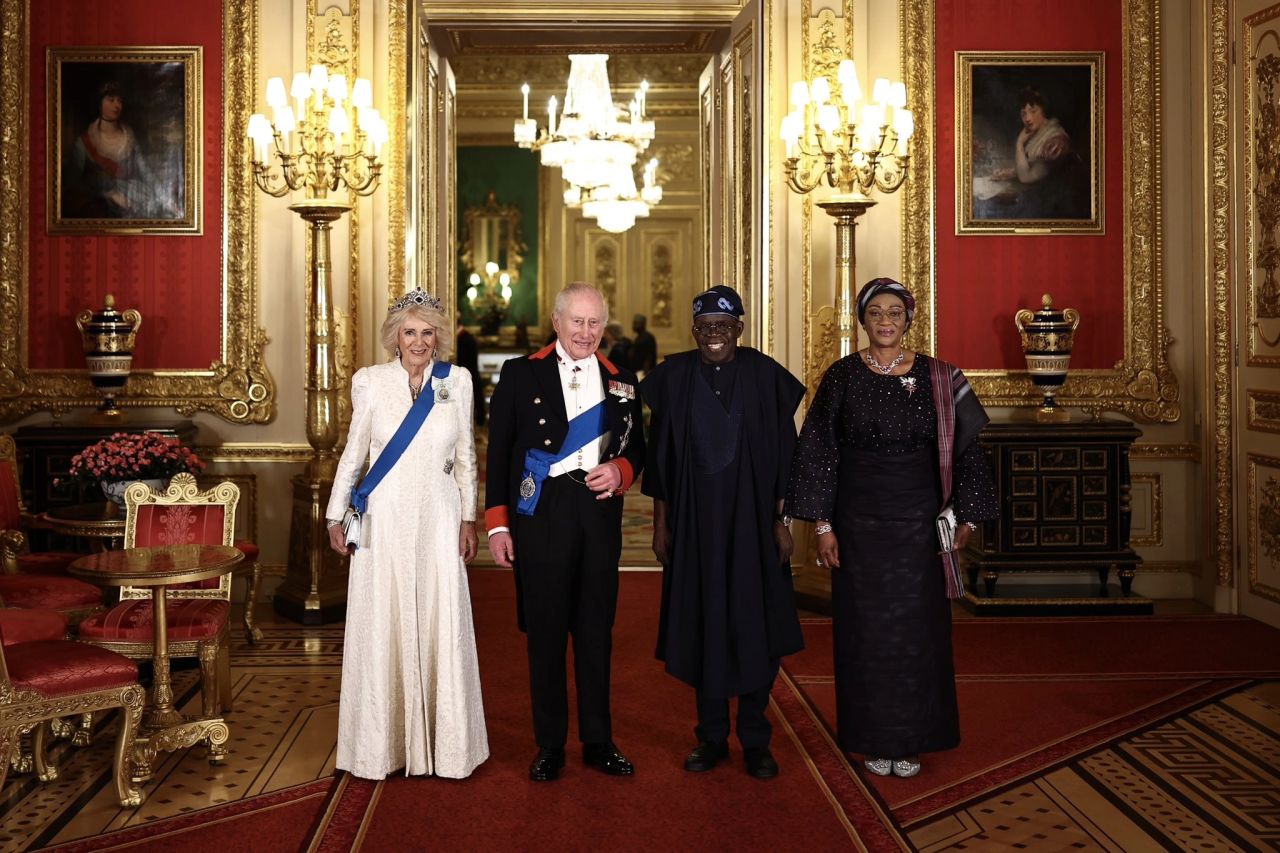
For the first time in 37 years, a Nigerian president has been accorded full State Honours by the British monarchy. As President Bola Ahmed Tinubu and First Lady Oluremi Tinubu met King Charles III and Queen Camilla at Windsor Castle, the moment carried weight beyond ceremonial pageantry. It marked an important point in the long and complex relationship between Nigeria and the United Kingdom, writes Destiny Young.
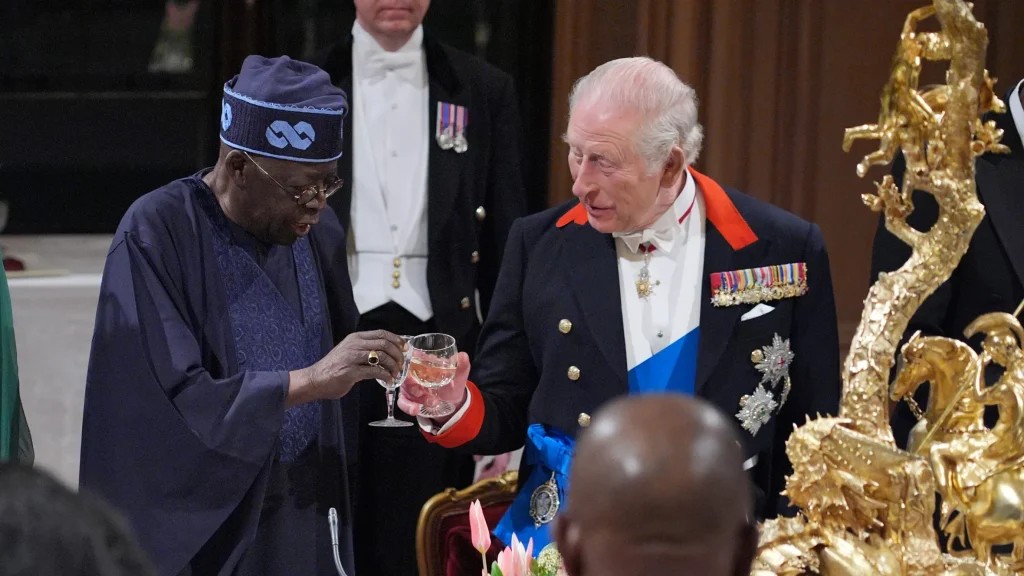
State visits remain one of the highest diplomatic honours the British Crown can extend to a foreign leader. They are rare, deliberate and politically significant. For Nigeria, the invitation signalled recognition of the country’s strategic importance, not only within Africa, but also in Britain’s wider foreign policy, trade and security calculations.
That is why this visit should be read as more than a royal spectacle. It reflects an evolving partnership grounded less in the paternal assumptions that once shaped post-colonial ties and more in the language of mutual respect, shared interests and practical cooperation.
The symbolism matters. Nigeria and Britain are linked by history, by language, by institutions and by a large and influential diaspora. But symbolism alone is never enough. What gives this visit substance is the growing emphasis on concrete areas of engagement, including investment, education, health, regulation, security and economic reform.
Nigeria remains one of Britain’s most important partners in Africa. It is a major market, a regional power and a country whose stability has implications far beyond its borders. For Britain, deepening ties with Nigeria is both an economic and strategic calculation. For Nigeria, stronger engagement with Britain offers access to capital, expertise, market opportunities and diplomatic leverage.
That mutual interest helps explain the tone surrounding the visit. Recent bilateral discussions between both countries have focused less on aid language and more on trade facilitation, financial regulation, technology, manufacturing and institutional collaboration. This is a more mature framework. It places Nigeria not as a passive recipient, but as a negotiating partner with weight of its own.
That shift is important. For too long, relations between former imperial powers and African states were often framed through hierarchy. Nigeria’s presence at Windsor under full State Honours offered a different image. It suggested a relationship that now has to be managed through reciprocity, not sentiment. It also reflected the reality that Britain, like Nigeria, now operates in a more competitive and multipolar world.
Trade is central to this recalibration. Britain has increasingly sought to strengthen commercial links with major African economies, and Nigeria stands out because of its population, entrepreneurial base and long-term economic potential. Recent announcements around the visit have highlighted investment flows in both directions, with Nigerian firms expanding in the UK and British companies deepening operations in Nigeria.
This commercial focus matters because diplomacy without economic follow-through rarely changes outcomes. If the visit succeeds in unlocking more investment, stronger private sector partnerships, expanded education links and better institutional cooperation, then it will have achieved something more lasting than favourable headlines.
Security is another pillar of the relationship. Nigeria’s internal security challenges, from insurgency to organised crime and wider regional instability, remain issues of international concern. Britain has an interest in supporting a stable Nigeria, not only because of bilateral ties, but because of Nigeria’s role in West Africa. A strong Nigeria matters to regional security, migration management, energy politics and international commerce.
At the same time, security cooperation cannot stand apart from governance. Any serious reset in relations must contend with the need for stronger institutions, accountability and public trust. A durable Nigeria-UK partnership will depend not only on high-level meetings, but on whether both countries can build ties that support real reform and credible state capacity.
The visit also carried cultural and political significance. Nigeria is deeply woven into modern British life through migration, education, business, religion, medicine, media and public service. The Nigerian diaspora in the UK forms one of the strongest living bridges between both nations. That human connection gives the bilateral relationship a depth that formal diplomacy alone cannot create.
For President Tinubu, the visit provided an opportunity to project Nigeria as a serious partner at a time when the government is seeking foreign investment and external confidence amid difficult domestic conditions. For Britain, hosting the visit sent a message that Nigeria remains a country it wants to engage at the highest level.
Yet the true meaning of the moment will be determined after the flags are lowered and the ceremonies end. State visits can elevate relations, but they do not by themselves solve economic hardship, insecurity or governance deficits. Their value lies in what follows. Agreements must translate into implementation. Diplomatic warmth must produce measurable gains.
That is the standard by which this visit will be judged. Not by the grandeur of Windsor Castle, nor by the photographs from the state banquet, but by whether the visit helps shape a more balanced, practical and productive relationship between Nigeria and the United Kingdom.
The historical reset is clear. The challenge now is to make it count.