
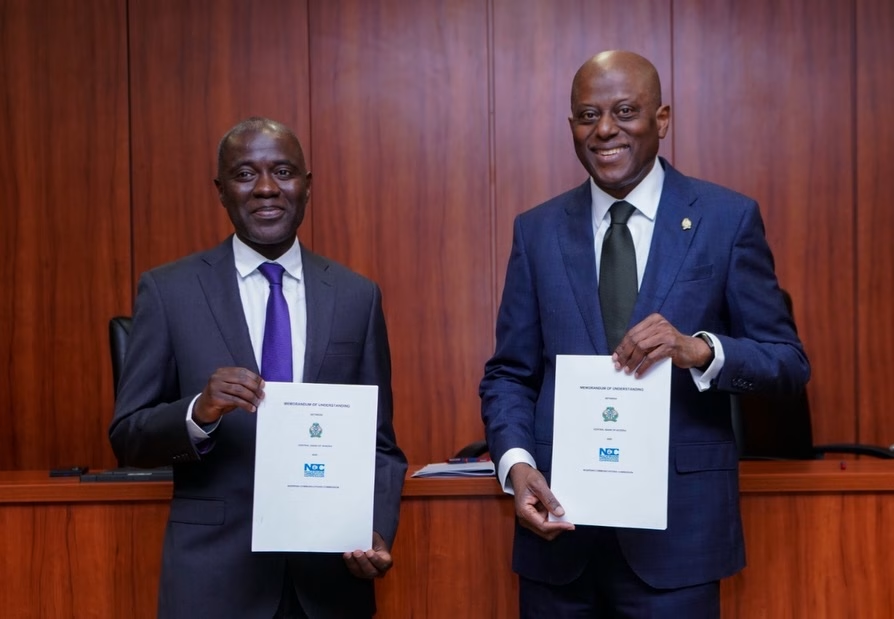

The Central Bank of Nigeria and the Nigerian Communications Commission have signed a formal agreement aimed at tightening fraud controls and improving consumer protection across the country’s digital financial ecosystem.
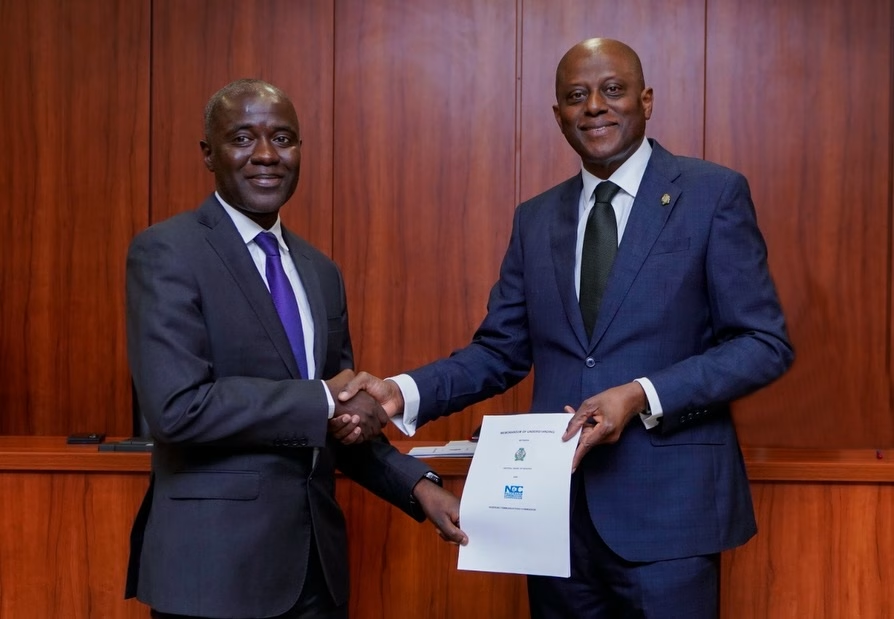
The memorandum of understanding, signed on Monday at the CBN headquarters in Abuja, is designed to strengthen coordination between the financial and telecommunications sectors, with a focus on SIM-related fraud, payment-system integrity and consumer safety.
At the centre of the agreement is the Telecom Identity Risk Management System portal, a shared platform expected to help banks, fintechs and other digital service providers verify the status of mobile numbers in real time.
The system is intended to flag risks linked to recycled, swapped, blacklisted or otherwise compromised numbers, a move regulators say will help reduce identity-related fraud and improve trust in digital transactions.
CBN Governor Olayemi Cardoso described the agreement as a practical step in the national interest, saying the rapid expansion of digital payments and financial services requires closer cooperation between regulators overseeing telecoms and finance.
He said the partnership would improve coordination on approvals, technical standards and innovation testing, while also strengthening the response to rising electronic fraud.
NCC Executive Vice Chairman Aminu Maida said the agreement marks an important step in protecting consumers and reinforcing confidence in Nigeria’s digital economy. He said the partnership would also support digital inclusion and help deliver quicker resolution of complaints linked to telecom and payment services.
Two joint committees were inaugurated to drive implementation. One will focus on payment systems and consumer protection, while the other will oversee the Telecom Identity Risk Management System portal.
The agreement also builds on earlier collaboration between both regulators, including work on mobile money frameworks, the resolution of the USSD debt impasse, and recent efforts to address failed airtime and data transactions.
While some reports have described the new framework as giving banks real-time access to telecom data, the publicly available details suggest a narrower arrangement centred on real-time verification of mobile-number risk status rather than unrestricted access to telecom databases.
Regulators say the platform will operate within Nigeria’s data-protection framework, with the use of encryption, safeguards and consent protocols.
The new pact is expected to deepen confidence in digital payments, reduce fraud exposure and improve coordination between financial institutions, telecom operators and regulators as Nigeria expands its digital economy.