

By | Destiny Young

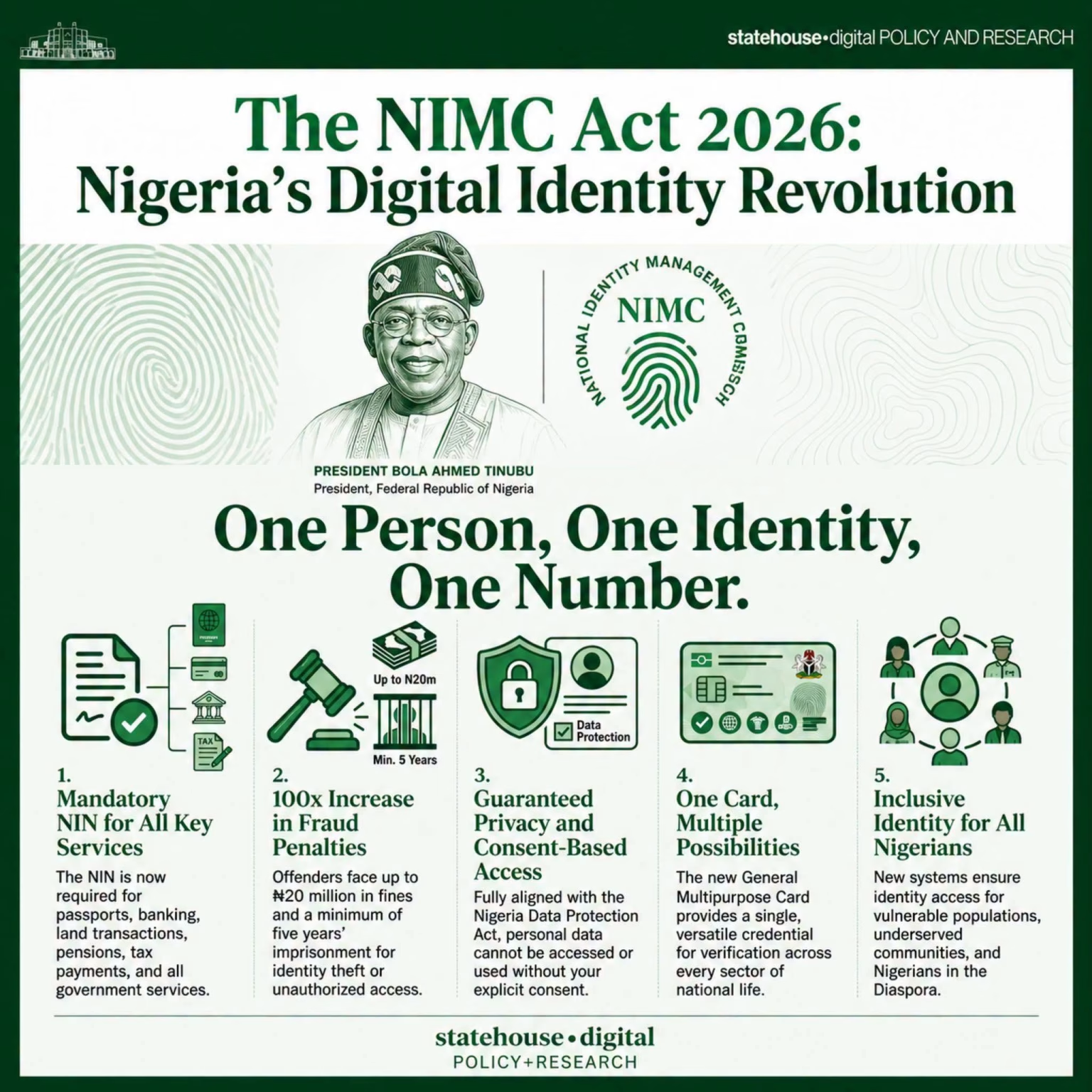
The introduction of a General Multipurpose Card under the NIMC Act 2026 could significantly improve how Nigerians prove their identity and access public and private services. From a technology point of view (mine), the strongest value of the card lies in its potential to serve as a single, trusted identity credential across multiple sectors.
At present, many Nigerians depend on different documents for banking, travel, pensions, taxation, healthcare, education and government transactions. This creates duplication, delays and inconsistent verification procedures. A multipurpose identity card linked to the National Identification Number can simplify this process. Instead of presenting several documents, an individual may use one credential that authorised institutions can verify through a secure national identity system.
This matters because effective identity verification is the foundation of digital trust. Banks must confirm the identity of customers. Government agencies must ensure that benefits reach legitimate recipients. Telecommunications companies must verify subscribers. Employers, schools and healthcare providers also need reliable methods of identifying individuals. A secure multipurpose card can support these processes while reducing dependence on paper documents that may be lost, damaged, altered or forged.
From a cybersecurity perspective, the card could strengthen protection against identity theft, impersonation and fraudulent account creation. If properly implemented, verification would not depend only on the information printed on the card. Institutions could validate the credential electronically against an authorised identity database. The use of secure chips, biometric confirmation, digital certificates, cryptographic authentication and controlled access mechanisms could make identity fraud more difficult.
However, centralising many services around one identity credential also creates serious security responsibilities. A compromised multipurpose card could expose an individual to several forms of fraud at once. NIMC and participating institutions must therefore apply strong encryption, access controls, continuous monitoring, secure authentication and rapid incident response. Citizens should also be able to report a lost card immediately, suspend its use and obtain a replacement without losing access to essential services.
Privacy must remain central to the system. A bank should not gain access to a citizen’s healthcare information simply because both services use the same identity card. Each institution should only access the minimum information required for a specific transaction. Consent, purpose limitation and audit trails must guide every verification request.
When properly governed, it can become more than an identification document. It can provide a secure foundation for Nigeria’s expanding digital economy and public service system.