


By | Destiny Young
Akwa Ibom State Government’s decision to introduce free biometric registration for commercial tricycle and minibus operators is a timely security intervention. It is one initiative that can help curb crime, protect commuters, and bring greater order to the public transport system.
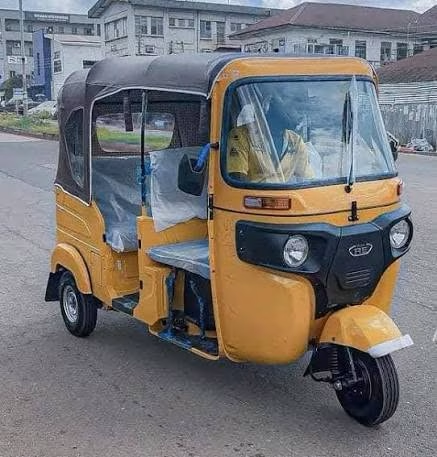
Across many cities, commercial transport remains one of the easiest channels through which criminals can hide. Some criminal elements use Keke and minibuses to rob passengers, snatch phones, move stolen items, monitor victims, or disappear quickly after committing offences. This happens mostly because many operators and vehicles are not properly identified in a central government managed database.
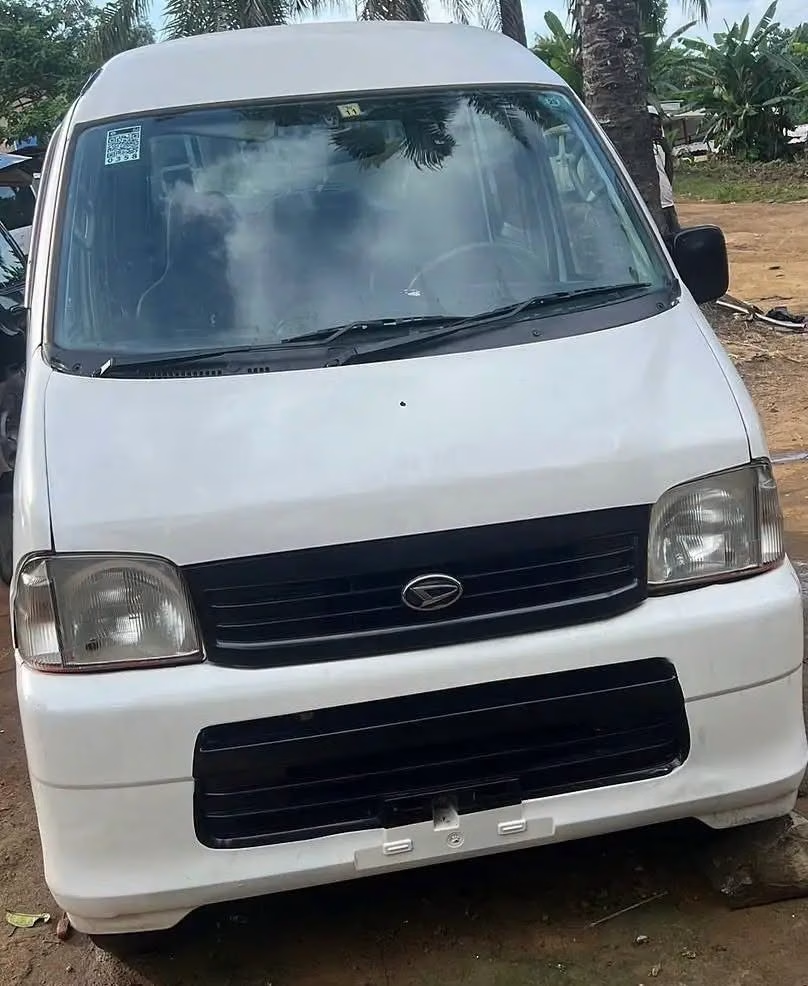
This new biometric registration exercise can change that.
By capturing the identity of each operator and linking it to a registered vehicle, the government is building a reliable system that can separate genuine transport operators from impersonators. Once every driver and vehicle can be traced, it becomes harder for criminals to hide under the cover of commercial transport.
The introduction of the State Vehicle Identification Number, SVIN, with a unique scannable QR code, gives the initiative a stronger security value. Passengers will be able to verify the identity of the driver, confirm the registered vehicle, and check the validity of the day’s ticket. This gives commuters more confidence before entering a vehicle.
It will also help security agencies. When a crime occurs, investigations will no longer depend only on vague descriptions such as “one Keke driver” or “a minibus.” With biometric records, vehicle details, and a scannable identification system, law enforcement agencies can trace suspects faster and act with better information.
This initiative will also protect genuine operators. Many law abiding Keke and minibus drivers suffer reputational damage because of the activities of criminals who infiltrate the transport sector. With proper biometric registration, genuine operators will have proof of identity, while fake operators will find it harder to operate freely.
The fact that the exercise is free is also important. No operator is required to pay any fee, open a bank account, or create a digital wallet before registration. This removes barriers, reduces exploitation, and makes it easier for all genuine operators to comply.
Beyond crime control, the initiative will support orderliness, transparent revenue collection, and better regulation of the commercial transport sector. Daily tickets paid through AkwaRemit into the Treasury Single Account will also reduce leakages and promote accountability.
For me, this is not just a transport policy. It is a public safety strategy. It shows that Akwa Ibom State is using technology, identity management, and data driven enforcement to close the gaps criminals often exploit.
A safer transport system means safer passengers, safer operators, and safer communities.
If properly implemented, the free biometric registration of Keke and minibus operators will become one of the practical steps through which Akwa Ibom State can curb crime and strengthen public confidence in daily commuting.
—
Destiny Young serves as Special Assistant (New Media & Digital Communication) to the Executive Governor of Akwa Ibom State, H.E Pastor Umo Eno, Ph.D