

By | Destiny Young
When you plan to buy, replace or upgrade your smartphone, choosing the right device can be difficult, especially when you must work within a specific budget.
The decision becomes more important when you are a professional who depends on a smartphone to deliver high-quality work and requires strong performance, reliability and advanced features.
In such a situation, you can use your preferred Large Language Model, LLM, to research available options, compare specifications, assess performance and identify the device that best fits your needs and budget. This allows you to make an informed decision without relying entirely on a technology expert.
It is time for an AI prompt:
Compare [Phone A] vs [Phone B] as premium flagship smartphones. Give a detailed, technically grounded comparison across the following categories, using current publicly available specs and real-world review data (not just marketing numbers):
Peak Performance – Chipset, CPU/GPU benchmarks (sustained vs burst), thermal throttling behavior under load, RAM/storage speed (UFS/LPDDR generation).
Durability – Build materials (frame, glass type e.g. Gorilla Glass Armor/Ceramic Shield), IP rating, drop-test performance if available.
Camera – Sensor sizes, aperture, optical zoom range, low-light performance, video capabilities (codecs, stabilization, max resolution/fps), computational photography quality.
Display Brightness – Peak HDR nits, sustained outdoor nits, panel type, refresh rate, PWM dimming behavior.
Software – OS version, update commitment (years of OS + security patches), UI bloat/customization, AI features, long-term smoothness/optimization track record of the brand.
Hardware Functionality – Battery capacity & real-world endurance, charging speed (wired/wireless), biometrics, connectivity (5G bands, Wi-Fi standard, satellite features), haptics, speakers.
Overall Composition – Ergonomics, weight/thickness, design cohesiveness, value for price relative to the segment.
Additional factors you think are relevant – e.g. resale value, repairability/parts cost, ecosystem lock-in, ownership costs (insurance, accessories), regional software support/carrier restrictions, brand longevity/support reliability.
Present this as a structured comparison (table or clearly labeled sections), noting where data is uncertain or based on early reviews vs confirmed specs.
Finally, give a clear verdict: state which phone you’d recommend overall, and also break it down by use case (e.g. best for photography, best for gaming/performance, best for longevity, best value) in case the two phones excel in different areas.
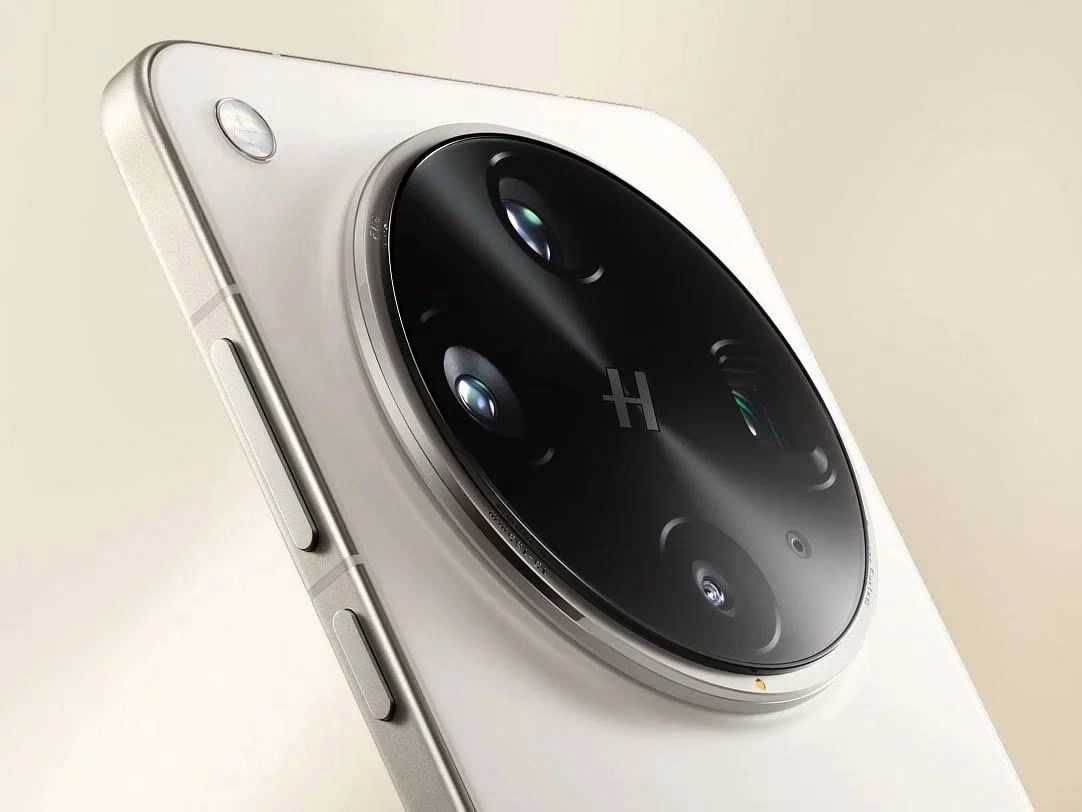
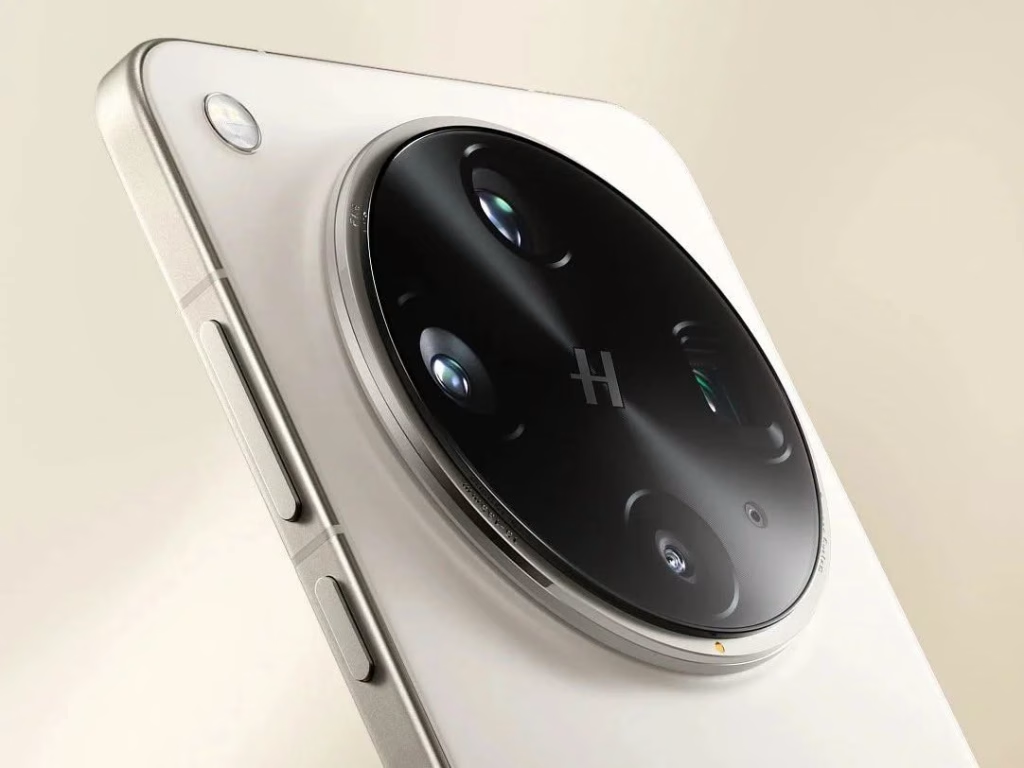
Photo 1: OPPO Find X9 Ultra
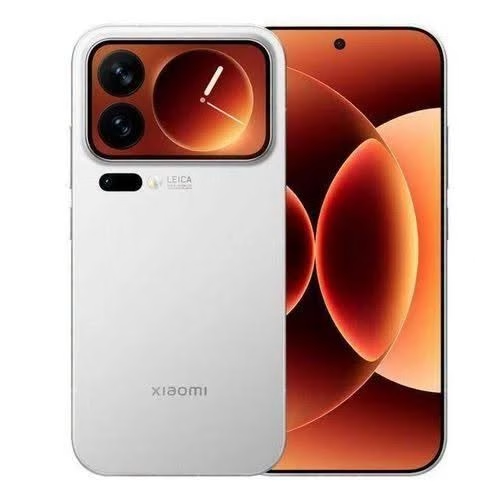
Photo2 : Xiaomi 17 Pro Max 6.9
OPPO Find X9 Ultra vs Xiaomi 17 Pro Max: Which Premium Flagship Is Better?
The OPPO Find X9 Ultra and Xiaomi 17 Pro Max are premium Android smartphones designed for users who require flagship performance, advanced photography, long battery life and high-end hardware.
Both devices feature Qualcomm’s Snapdragon 8 Elite Gen 5 processor, LPDDR5X memory and UFS 4.1 storage. However, they differ significantly in camera capability, display design, battery endurance, software support and international availability.
Quick Comparison Table
| Category | OPPO Find X9 Ultra | Xiaomi 17 Pro Max | Advantage |
|---|---|---|---|
| Display | 6.82-inch QHD+ LTPO OLED | 6.9-inch LTPO AMOLED | OPPO for sharpness, Xiaomi for size |
| Refresh rate | Up to 144Hz in supported applications | Up to 120Hz | OPPO |
| Processor | Snapdragon 8 Elite Gen 5 | Snapdragon 8 Elite Gen 5 | Tie |
| Memory | LPDDR5X | Up to 16GB LPDDR5X | Tie |
| Storage | UFS 4.1 | Up to 1TB UFS 4.1 | Tie |
| Main camera | 200MP | 50MP Leica camera | OPPO |
| Telephoto system | 200MP medium telephoto and 50MP 10x telephoto | 50MP 5x periscope telephoto | OPPO |
| Front camera | 50MP autofocus | Standard front camera with rear-display assistance | Xiaomi for main-camera selfies |
| Battery | 7,050mAh | 7,500mAh | Xiaomi |
| Wired charging | 100W SuperVOOC | 100W | Tie |
| Wireless charging | Supported | 50W | Xiaomi |
| Water resistance | IP66, IP68 and IP69 | Premium water-resistant construction | OPPO |
| Software | ColorOS 16 based on Android 16 | HyperOS based on Android 16 | OPPO for international users |
| Weight | Approximately 236g | Approximately 219g | Xiaomi |
| International support | Wider global software and service support | Mainly China-market support | OPPO |
| Best use case | Photography, video and professional use | Battery life, value and enthusiast features | Depends on user needs |
Performance
Both phones use the Snapdragon 8 Elite Gen 5 processor and provide excellent performance for gaming, photography, video editing and demanding productivity applications.
The Xiaomi 17 Pro Max delivers strong peak benchmark results. However, independent testing has identified performance throttling and higher surface temperatures during extended gaming and stress tests.
The OPPO Find X9 Ultra also offers flagship-level performance. Its main strength lies in combining processing power with advanced photography, video production and productivity features.
For short gaming sessions and benchmark performance, the Xiaomi remains highly competitive. For overall professional use, the OPPO offers a more balanced package.
Performance Winner: Tie for raw performance. OPPO for overall balance.
Durability
The Find X9 Ultra carries IP66, IP68 and IP69 ratings. These certifications provide protection against dust, water immersion and high-pressure water jets.
The Xiaomi 17 Pro Max also uses premium materials. However, its secondary rear display introduces another exposed glass surface, which may increase repair costs if damaged.
There are no widely available controlled drop tests covering both devices under identical conditions. Neither phone should therefore be considered drop-proof.
Durability Winner: OPPO Find X9 Ultra.
Camera
The Find X9 Ultra features one of the most advanced camera systems available on a smartphone.
Its camera configuration includes:
A 200MP main camera.
A 200MP medium-range telephoto camera.
A 50MP ultrawide camera.
A 50MP 10x optical telephoto camera.
A 50MP autofocus front camera.
The dual-telephoto arrangement gives the OPPO a wider usable optical zoom range. It is particularly suitable for portraits, events, wildlife, architecture and distant subjects.
Its professional video features include 8K recording, high-frame-rate 4K recording, Dolby Vision HDR, Log recording and support for professional filmmaking accessories.
The Xiaomi 17 Pro Max uses a Leica-branded triple 50MP camera system with a 5x periscope telephoto camera. It produces strong colour, detail and portrait results, but it cannot match the OPPO’s wider optical range and dual-200MP camera hardware.
The Xiaomi has one major advantage. Its rear display can function as a camera viewfinder, allowing users to take high-quality selfies with the main cameras.
Camera Winner: OPPO Find X9 Ultra.
Display
The OPPO has a 6.82-inch QHD+ LTPO OLED display. Its higher resolution produces sharper text and images. It also supports refresh rates of up to 144Hz in selected applications and games.
The Xiaomi has a larger 6.9-inch LTPO AMOLED display with a refresh rate of up to 120Hz. Its large screen is suitable for gaming, video consumption and document viewing.
Independent testing has shown that the Xiaomi display can achieve very high brightness in smaller HDR areas. However, its pulse-width modulation behaviour may cause discomfort for users who are sensitive to OLED screen flicker.
Display Winner: OPPO for sharpness and refresh rate. Xiaomi for screen size.
Software and Updates
The global Find X9 Ultra runs ColorOS 16 based on Android 16. OPPO provides a defined long-term software support commitment, including major Android upgrades and extended security support.
ColorOS offers extensive customisation, multitasking tools, artificial intelligence features and strong integration with Google services.
The Xiaomi 17 Pro Max was initially designed mainly for the Chinese market. Imported units may run the Chinese version of HyperOS.
Potential limitations include:
Pre-installed Chinese applications.
Limited regional language support.
No officially supported global ROM for some variants.
Possible Android Auto limitations.
Uncertain compatibility with some banking and notification services.
More complicated warranty support outside China.
These limitations make the OPPO easier to recommend for users in Nigeria, Europe and other international markets.
Software Winner: OPPO Find X9 Ultra.
Battery and Charging
The Xiaomi has a 7,500mAh battery, compared with the OPPO’s 7,050mAh battery.
Both phones support 100W wired charging. The Xiaomi also supports 50W wireless charging and reverse charging.
The Xiaomi’s larger battery gives it an advantage during extended gaming, video playback, navigation and mobile data use.
The OPPO still provides strong endurance and should comfortably last a full day under demanding use. Its international charging and software support may also make it more convenient to own outside China.
Battery Winner: Xiaomi 17 Pro Max.
Biometrics, Audio and Connectivity
Both phones provide ultrasonic under-display fingerprint scanners, stereo speakers, advanced vibration motors, Wi-Fi 7 and modern 5G connectivity.
The Xiaomi’s rear display can show notifications, clocks, camera previews and selected controls. It is useful, but it does not provide the full functionality of the main display.
The precise 4G and 5G bands available may depend on the model and sales region. Buyers considering an imported Xiaomi should confirm compatibility with their mobile network before purchase.
Functionality Winner: Xiaomi for the secondary display. OPPO for international compatibility.
Design and Ergonomics
The OPPO weighs approximately 236g and features a large circular camera system. It feels substantial and strongly camera-focused.
The Xiaomi is also a large phone but weighs approximately 219g. Its rear display gives it a distinctive appearance and provides practical camera functionality.
The Xiaomi is lighter, while the OPPO offers a more cohesive professional-camera design.
Design Winner: Xiaomi for weight. OPPO for design cohesion.
Ownership Costs and Support
The OPPO is the safer option for international users because it provides better access to official software, warranty coverage, accessories, spare parts and authorised repairs.
The Xiaomi may provide more hardware for the price when purchased in China. However, an imported unit can become expensive to repair if its rear display, main screen, battery or motherboard develops a fault.
The OPPO is also likely to maintain stronger resale value in markets where it receives official distribution and support.
Ownership Winner: OPPO Find X9 Ultra.
Final Verdict
The OPPO Find X9 Ultra is the better overall premium flagship.
It offers a more advanced camera system, stronger professional video capabilities, a sharper display, better water-resistance certification and fewer software compromises for international users.
The Xiaomi 17 Pro Max remains an excellent alternative for users who prioritise battery endurance, a larger screen, lower purchase cost and the secondary rear display.
Best for Photography: OPPO Find X9 Ultra
Best for Professional Video: OPPO Find X9 Ultra
Best for Battery Life: Xiaomi 17 Pro Max
Best for Main-Camera Selfies: Xiaomi 17 Pro Max
Best for Display Sharpness: OPPO Find X9 Ultra
Best for Raw Performance: Tie
Best for International Software Support: OPPO Find X9 Ultra
Best Hardware Value: Xiaomi 17 Pro Max
Best Overall Premium Flagship: OPPO Find X9 Ultra
For a professional who depends on a smartphone for photography, video production, communication, navigation, banking and productivity, the OPPO Find X9 Ultra is the safer and more complete investment.
The Xiaomi 17 Pro Max is better suited to an enthusiast who values battery life, unusual hardware and competitive pricing and is prepared to manage the limitations associated with an imported China-market device.