

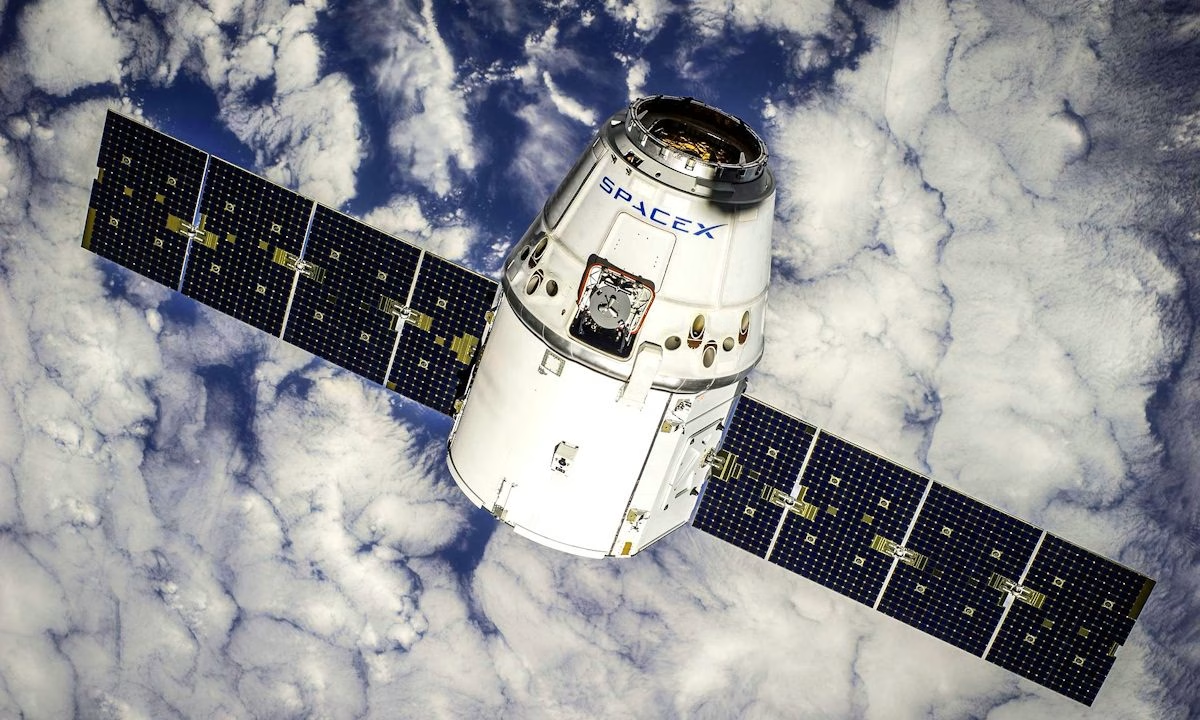

The Global Positioning System, widely known as GPS, is entering a new phase with the deployment of GPS III, a modern generation of satellites built to deliver better accuracy, stronger anti-jam capability and improved resilience for users around the world.
The upgrade is significant because GPS now supports far more than everyday navigation. The system helps guide aircraft and ships, supports emergency response, powers digital mapping services and provides precise timing for telecoms networks, banking infrastructure and other critical systems.
Unlike the earlier generations of GPS satellites, GPS III is designed to perform more reliably in demanding environments where signals may be weak, disrupted or deliberately interfered with. That added resilience is one of the programme’s main strengths, especially as governments, businesses and security agencies depend more heavily on satellite-based positioning, navigation and timing services.
The newer GPS III satellites also improve the quality of positioning data. That means more precise location information for both civilian and military users. In practical terms, stronger performance at the satellite level can improve the reliability of many services that depend on GPS in daily life, from transport and logistics to communications and digital transactions.
Another major feature of GPS III is its stronger anti-jam performance. This matters because GPS signals are vulnerable to interference, whether accidental or intentional. A more jam-resistant system gives users a better chance of maintaining dependable service in contested or congested operating conditions.
For defence users, GPS III also supports modernised military capabilities, including more secure signal features designed for protected operations. That has made the programme an important part of broader efforts to strengthen the resilience of space-based infrastructure.
The rollout of GPS III marks the completion of a key stage in the modernisation of the U.S. Global Positioning System. It also lays the foundation for the next phase, known as GPS IIIF, which is expected to introduce further improvements in signal protection and mission capability.
What this means is simple. GPS III does not change the meaning of GPS. It remains the Global Positioning System. What has changed is the capability behind it. The newer generation is more accurate, more resistant to jamming and better prepared to support the growing demands of a world that depends on reliable positioning and timing every day.