


The United States Trade and Development Agency has announced support for a feasibility study to expand wireless connectivity in Nigeria and three other West African countries.
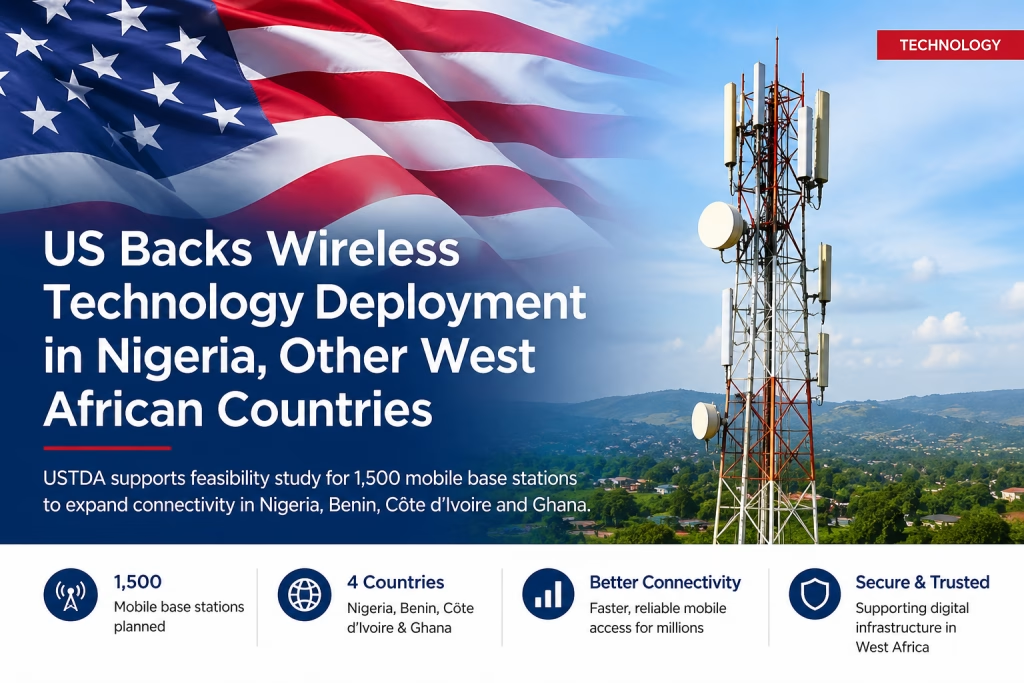
The project is expected to support the deployment of about 1,500 mobile communications base stations across Nigeria, Benin, Côte d’Ivoire and Ghana.
The initiative, according to information released by the United States Embassy in Abuja, is designed to close the urban-rural connectivity gap and provide faster, more reliable mobile access to communities that remain underserved or dependent on older 2G and 3G networks.
The feasibility study will be conducted for Vanu Côte d’Ivoire, which has selected Vernonburg Group LLC, a United States-based firm, to provide technical expertise.
The study will assess existing network infrastructure, market conditions, legal and regulatory requirements across the four countries, and develop a financing plan for the proposed deployment.
USTDA Deputy Director, Thomas R. Hardy, said the agency was supporting private-sector solutions that could expand affordable and trusted internet access in off-grid communities across West Africa.
Hardy said the project would also help American companies compete in major digital infrastructure markets while providing secure technology options for developing economies.
The technology is linked to Vanu Inc., a Massachusetts-based company known for mobile base station solutions. The company’s Chief Executive Officer, Andrew Beard, said the project would show how mobile network operators could deliver broadband internet and voice services in difficult markets.
Beard said the study would help attract investment, increase United States exports and accelerate the deployment of secure digital infrastructure across underserved communities.
The proposed deployment is expected to support economic activity, strengthen digital inclusion and improve access to online services in rural and hard-to-reach communities across West Africa.