
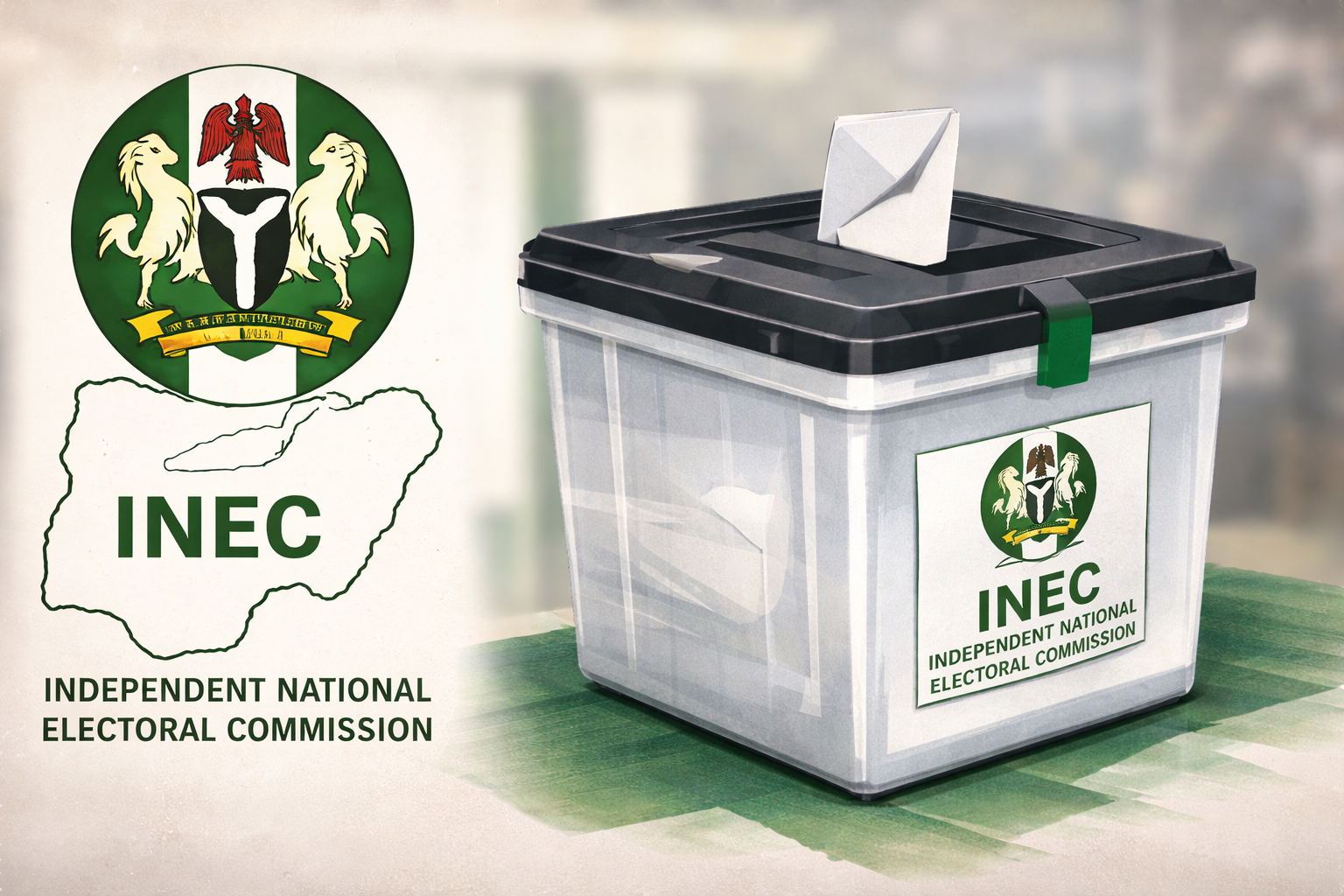

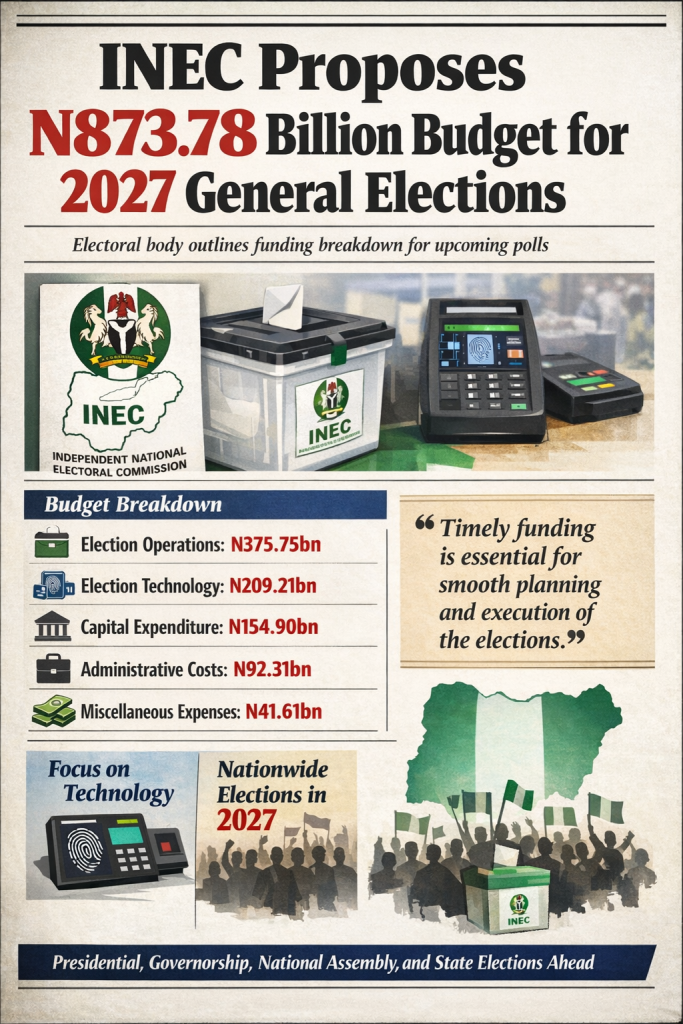
The Independent National Electoral Commission has proposed a budget of N873.78 billion for the conduct of Nigeria’s 2027 general elections, signalling the formal commencement of preparations for the nationwide polls.
The proposal was presented to the joint committee of the Senate and House of Representatives on Electoral Matters at the National Assembly in Abuja, where the commission outlined the financial requirements needed to organise presidential, governorship, National Assembly, and state assembly elections.
INEC explained that the budget proposal aligns with statutory requirements that mandate early funding approval to allow adequate planning, procurement, and operational readiness ahead of the elections.
A breakdown of the proposed budget shows that N375.75 billion has been allocated for election operations, covering logistics, personnel deployment, and field activities across the country. Election technology accounts for N209.21 billion, reflecting continued reliance on digital systems to support voter accreditation, results management, and other electoral processes.
The commission also earmarked N154.90 billion for capital expenditure, which includes the acquisition of equipment and infrastructure needed for election delivery. Administrative costs are projected at N92.31 billion, while N41.61 billion has been set aside for miscellaneous operational requirements.
INEC noted that the increasing complexity of election management, combined with inflation, rising logistics costs, and expanded use of technology, has significantly influenced the overall budget estimate.
The commission stressed that timely approval and release of funds will be critical to ensuring efficient planning and smooth conduct of the elections.
Nigeria’s general elections, conducted every four years, remain one of the largest democratic exercises globally, involving millions of voters across the country’s 36 states and the Federal Capital Territory.