

Akwa Ibom Opens New Chapter in Quest for Electricity Sufficiency
By Destiny Young
At a small barbing salon in Uyo, the sound of a petrol generator often decides the rhythm of business.
When public power supply is stable, the clippers move from one customer to another. The fan runs. Phones charge. The television keeps customers engaged. But when supply fails, the business owner has to make a hard choice. He either buys more fuel or watches customers leave.
In another part of the State, a cold-room operator worries about frozen fish. A school administrator thinks about computer classes. A health worker checks the backup power before attending to patients at night. A welder, a fashion designer, a small manufacturer and a household all face the same concern in different ways.
Can electricity become reliable enough to support daily life, enterprise and development?
Akwa Ibom State has now taken a major step towards answering that question.
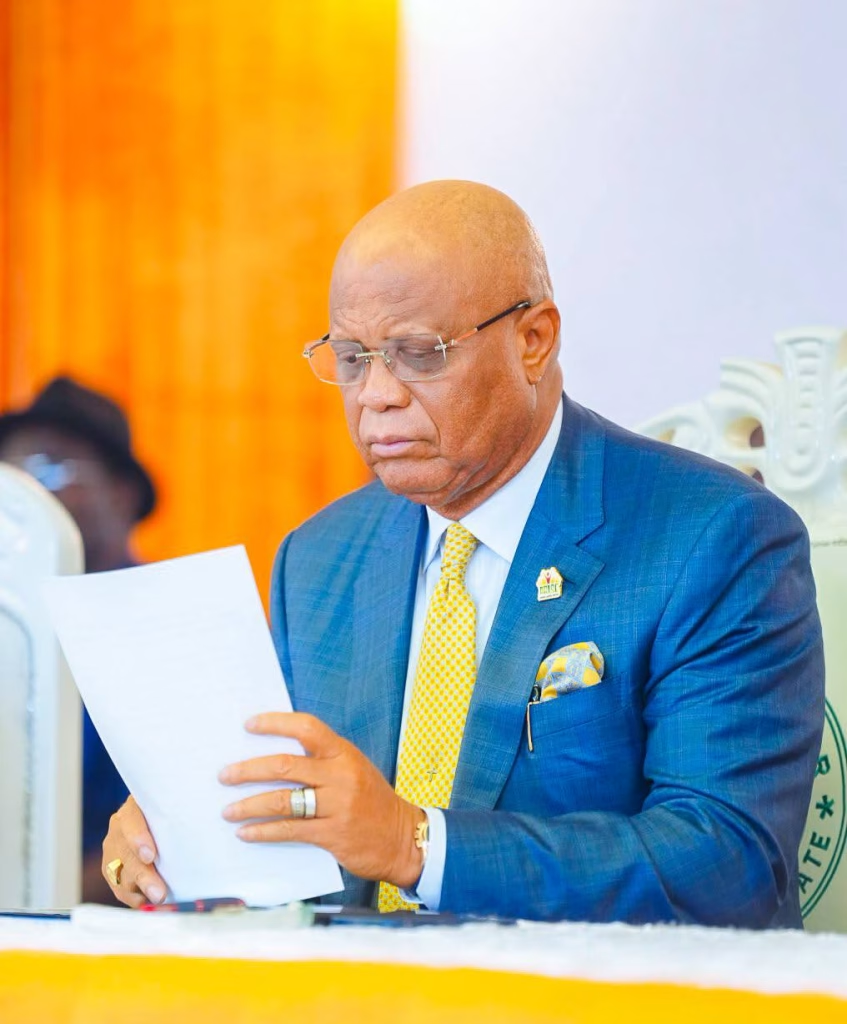
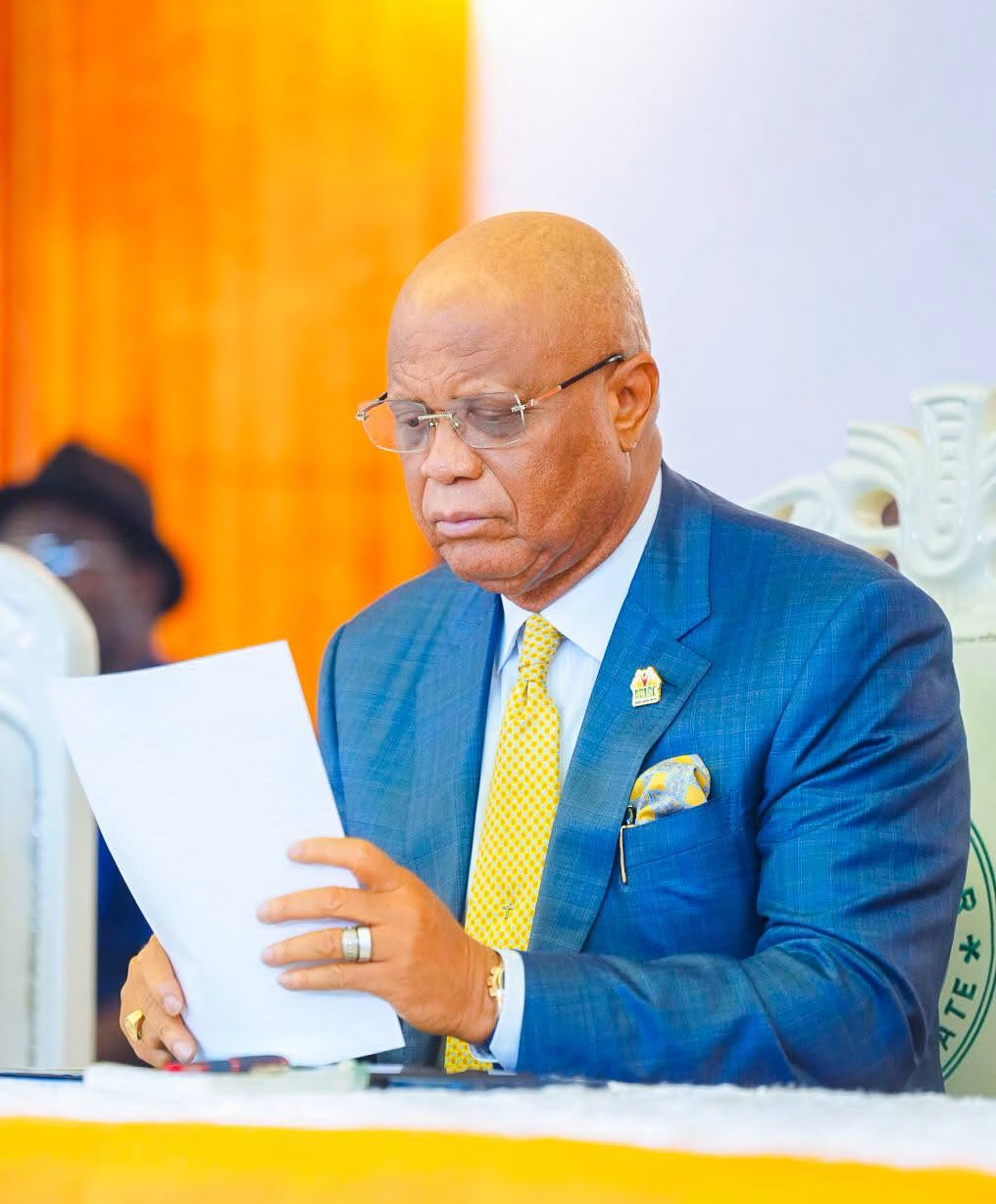
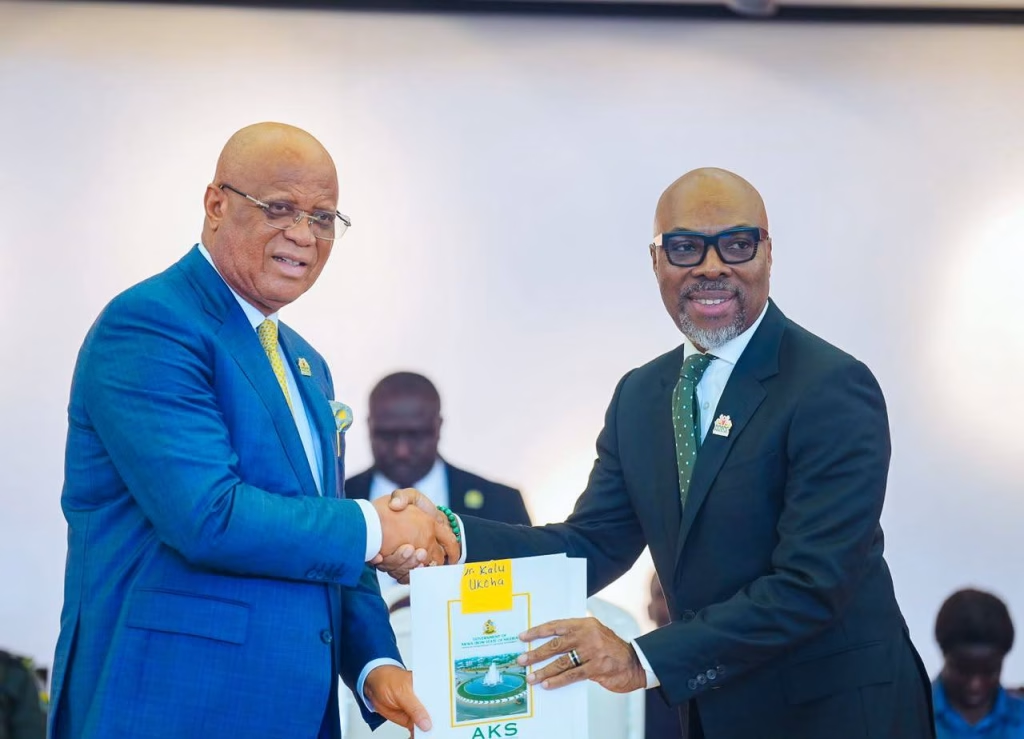
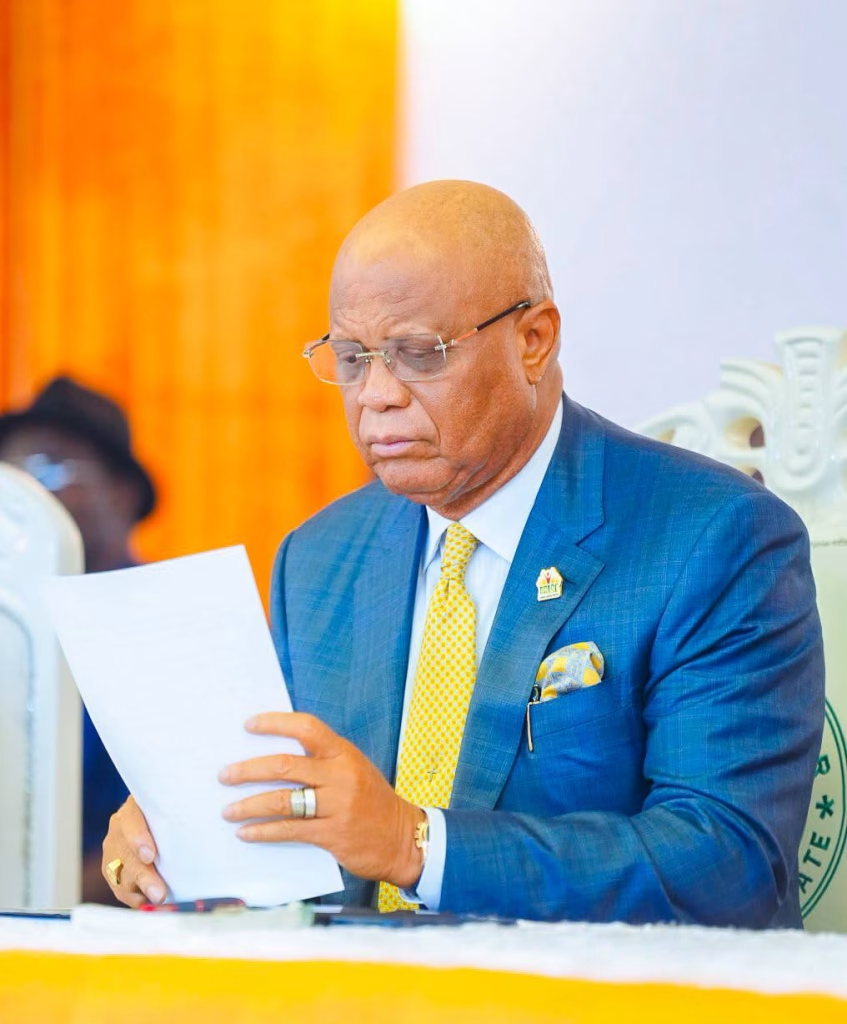
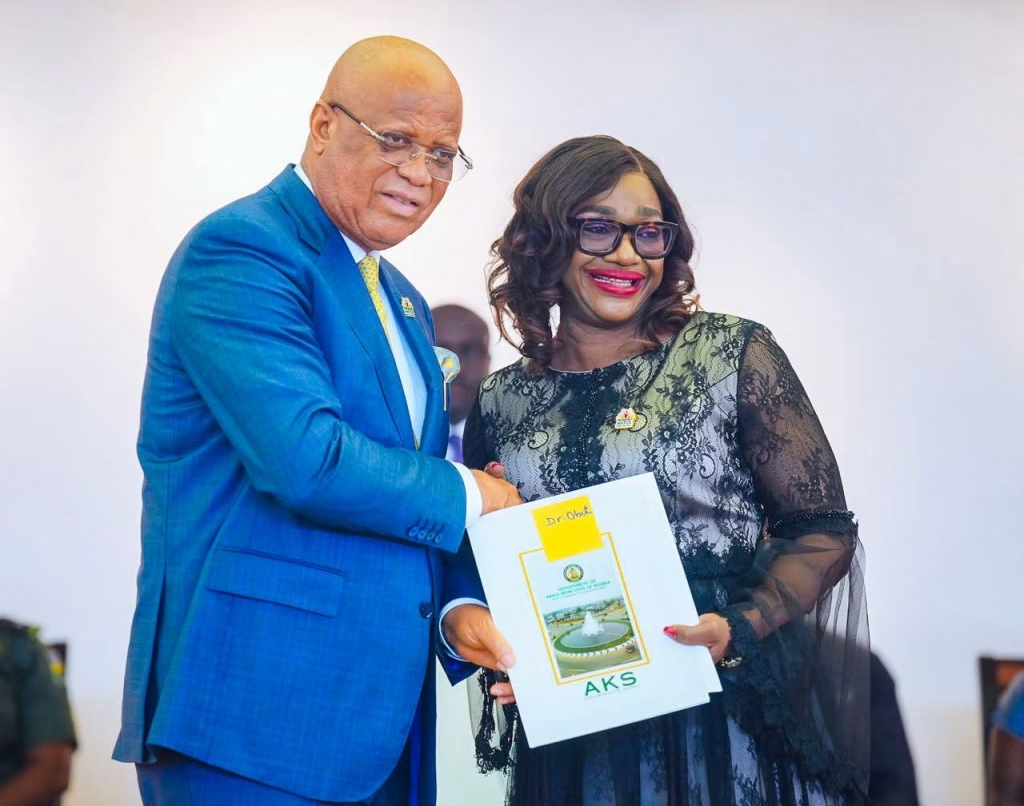
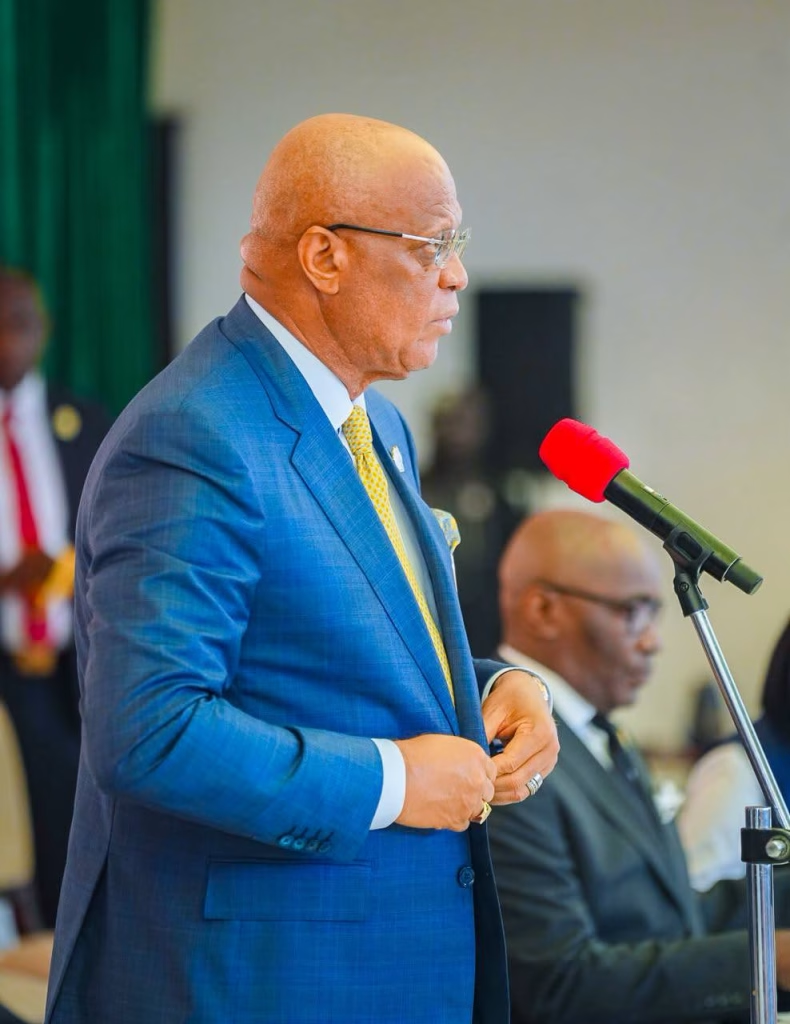
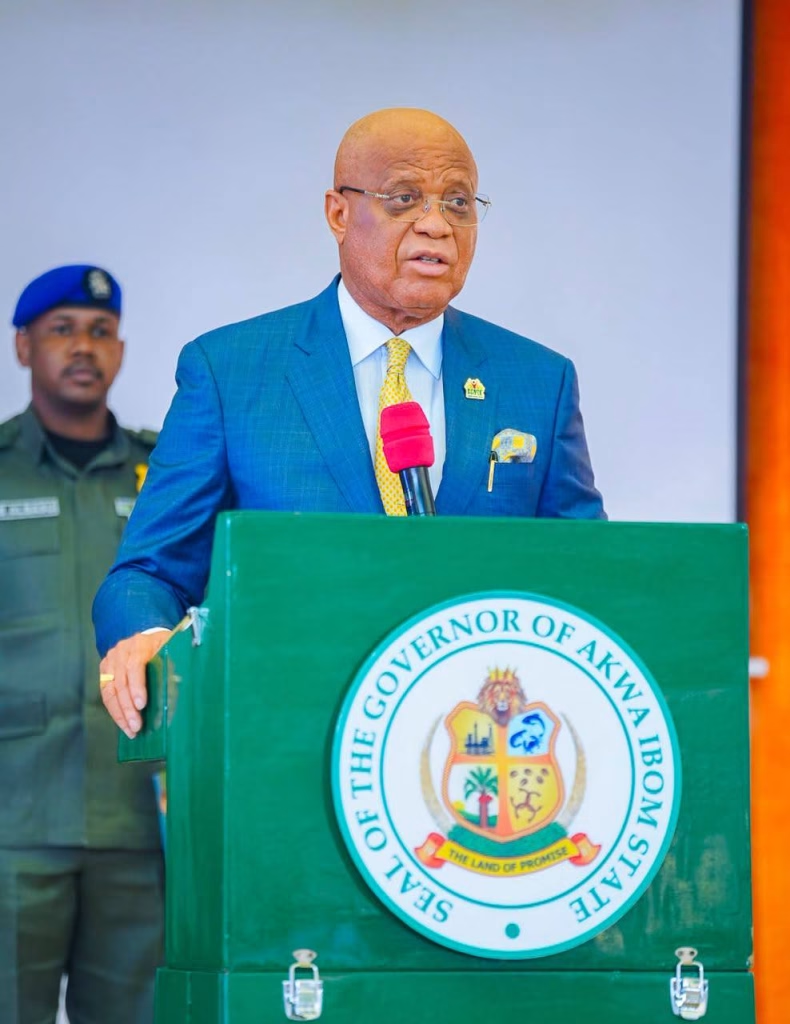
With the inauguration of the Board of the Akwa Ibom State Electricity Regulatory Commission by Governor Umo Eno, the State has opened a new chapter in its quest for electricity sufficiency.
The ceremony was more than another official event. It marked the formal beginning of a regulatory journey that could reshape how electricity is planned, delivered, priced and managed across the State.
For decades, electricity in Nigeria has remained a difficult public challenge. Many homes and businesses have adjusted to uncertainty. They plan around outages. They buy generators. They spend heavily on fuel. They repair appliances damaged by unstable supply. They lose productive hours that could have supported growth.
Akwa Ibom has not been spared from this reality.
Yet the State stands in a unique position. It has gas resources. It has power assets. It has industrial ambition. It has expanding urban centres, rural communities that need access, and businesses that require stable energy to compete.
The problem has not been lack of potential. The challenge has been how to convert that potential into reliable electricity for the people.
That is where the new electricity reform comes in.
The Akwa Ibom State Electricity Policy sets out a clear goal, reliable, affordable and universal access to electricity. It seeks to reduce dependence on self-generation, support private-sector participation, expand access to underserved communities and make electricity a driver of economic growth.
By inaugurating the Board of the Akwa Ibom State Electricity Regulatory Commission, Governor Eno has moved the State from policy intention to institutional action.
The Commission is expected to regulate the State electricity market. It will help set rules, protect consumers, support fair pricing, improve service quality and create a clearer environment for investors interested in generation, distribution, embedded power, mini-grids and renewable energy solutions.
This matters because electricity reform cannot succeed by good intentions alone. It requires institutions. It requires rules. It requires monitoring. It requires accountability. It requires trust.
A trader in Eket does not need a policy document to understand that power matters. He needs his freezer to work. A hospital in Ikot Ekpene does not need a speech to understand electricity. It needs stable supply for equipment, lighting and patient care. A student in Oron does not need a technical explanation of energy markets. She needs power to read, learn and connect to digital tools.
The real test of the new Commission will be whether the reform moves from official language into real-life improvement.
The policy direction suggests that Akwa Ibom wants a more practical electricity model. Instead of waiting only for distant solutions, the State can now plan closer to its own needs. Communities that are poorly served can be identified. Their energy demand can be studied. The best option can then be designed for each area.
For some communities, the answer may be mini-grids. For others, it may be solar systems. For industrial clusters, it may be embedded generation or dedicated power arrangements. For urban centres, it may be better metering, distribution upgrades, customer service reform and stronger technical management.
This localised approach is important.
Electricity needs differ from one place to another. A riverine community, a market, a school, a hospital, a farm settlement and an industrial estate do not have the same demand profile. A good electricity system must understand these differences and plan accordingly.
Akwa Ibom’s reform also places attention on underserved and unserved communities. This gives the new journey a social meaning. Electricity sufficiency should not only serve cities and industrial layouts. It should also reach rural homes, health centres, schools, small businesses and communities that have waited too long for reliable supply.
The economic impact could be far-reaching.
A tailor who spends less on fuel can invest more in equipment. A cold-room operator with stable supply can reduce losses. A farmer with access to power can support processing and storage. A school with reliable electricity can improve digital learning. A health centre with stable energy can provide safer service. A manufacturer with dependable power can produce at lower cost and employ more people.
This is why electricity sits at the centre of development. It affects productivity, education, healthcare, security, investment and the cost of living.
For Governor Eno’s ARISE Agenda, the power-sector reform connects directly with infrastructure, rural development, industrialisation, enterprise support and job creation.
The State’s policy also recognises the role of gas and renewable energy. Akwa Ibom’s gas advantage can support electricity generation and energy security, while renewable energy can help extend access to locations where conventional grid expansion may be slow or costly.
This gives the State a balanced pathway. Akwa Ibom can use its natural resources to stabilise supply while also preparing for cleaner and more flexible energy systems.
But the journey ahead will require discipline.
The Board of the Commission must build public confidence. It must support clear rules. It must ensure transparency. It must treat consumers fairly. It must support credible investors. It must help remove uncertainty from the State electricity market.
People will judge the reform by results.
They will ask if supply has improved. They will ask if billing has become clearer. They will ask if complaints receive faster attention. They will ask if businesses now spend less on generators. They will ask if rural communities are being connected. They will ask if the State’s energy assets are producing real value.
These are fair questions.
The inauguration of the Board does not mean Akwa Ibom has solved its electricity challenge. It means the State has started a structured journey towards solving it.
That journey will require cooperation among the State Government, the Commission, Ibom Power, distribution operators, investors, local governments, communities, federal institutions and consumers.
It will also require patience. Power-sector reform is complex. It takes time to build rules, attract investment, improve infrastructure and expand access.
Still, the importance of this moment should not be understated.
For the small business owner waiting for stable supply, for the student who wants to study at night, for the hospital that needs uninterrupted power, for the manufacturer seeking lower production cost, and for the rural community seeking inclusion, the inauguration of the Akwa Ibom State Electricity Regulatory Commission Board offers a signal of new possibility.
Akwa Ibom has the resources. It has the ambition. It now has a dedicated regulatory institution to guide the process.
The task before the new Board is clear.
It must help turn electricity from a daily struggle into a dependable platform for growth.
With this step, Akwa Ibom has opened a new chapter in its quest for electricity sufficiency. The next test is implementation.