
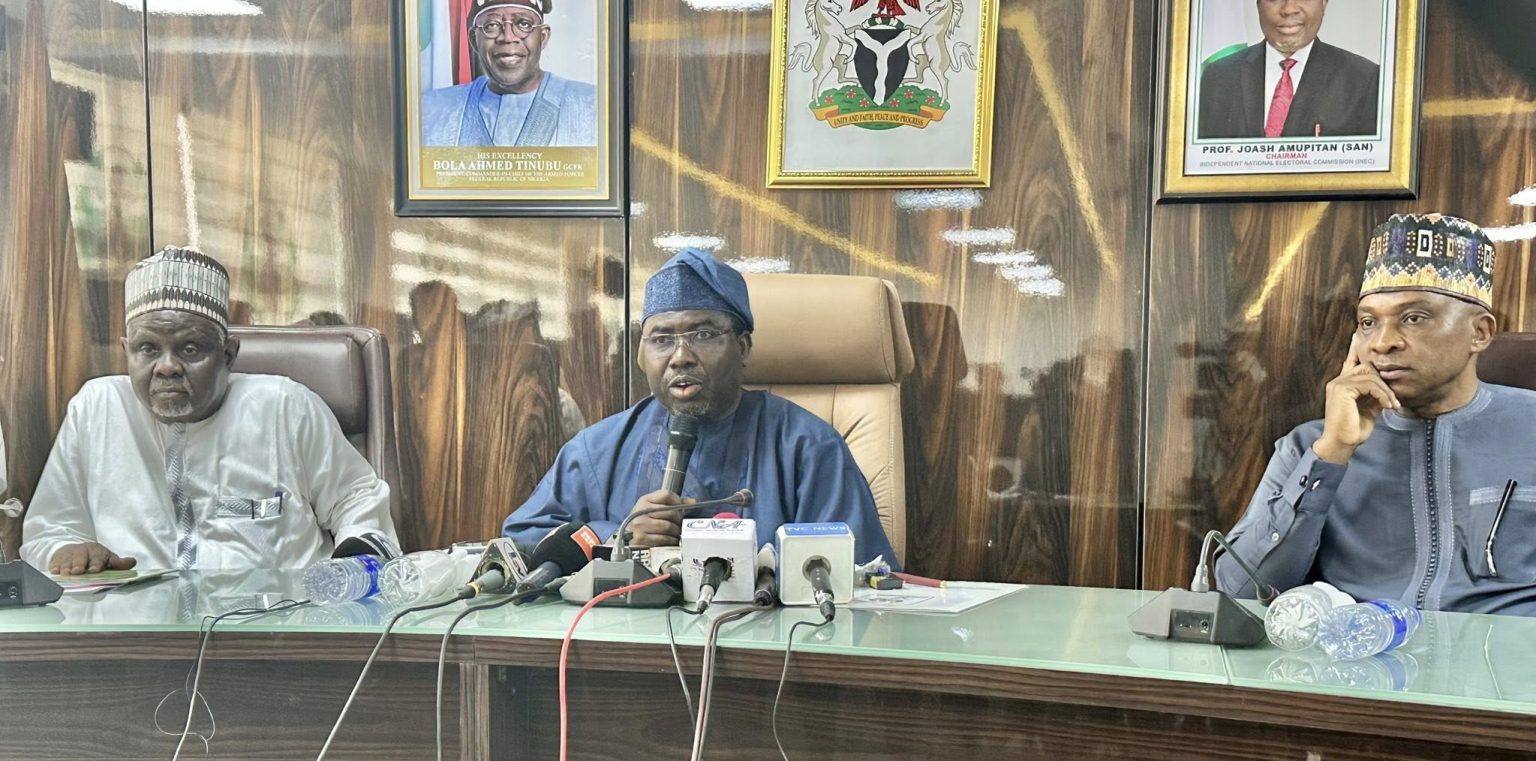

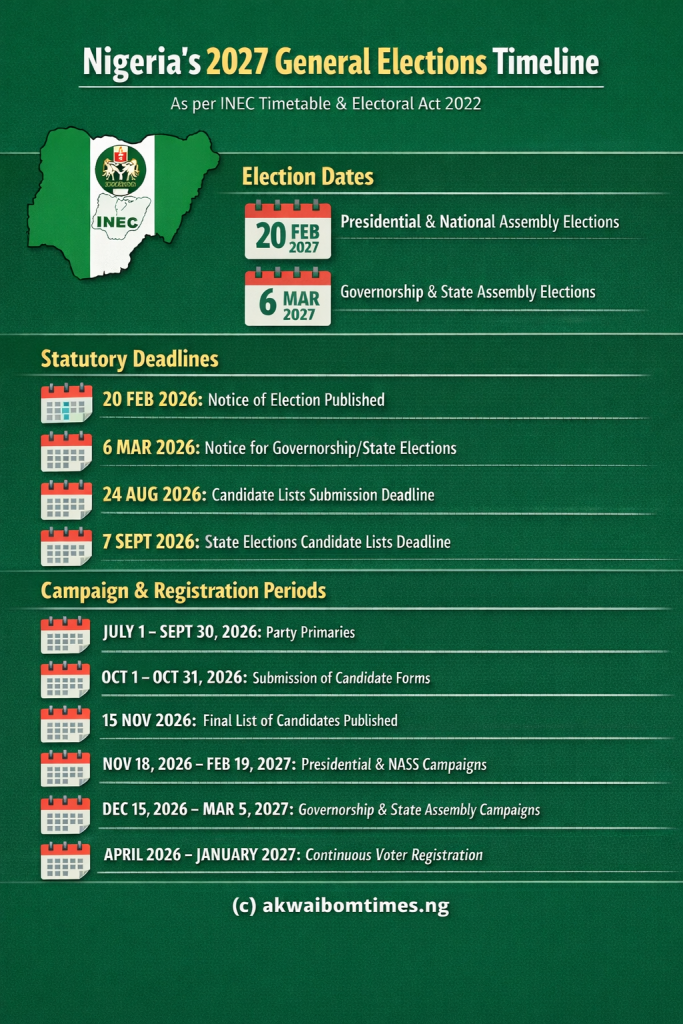
The Independent National Electoral Commission has fixed February 20, 2027, for the Presidential and National Assembly elections, while governorship and state assembly polls will follow on March 6, 2027.
The announcement was made in Abuja on Friday by the INEC Chairman, Professor Joash Ojo Amupitan, who described it as both a constitutional duty and a step forward in strengthening Nigeria’s democratic practice.
According to the timetable released by the Commission, the first phase of the elections will cover the offices of President, Vice President, and members of the National Assembly. The second phase will elect Governors, Deputy Governors, and members of the State Houses of Assembly, except in states where off-cycle polls are conducted.
Professor Amupitan explained that the notice of election complies with the provisions of the 1999 Constitution and Section 28(1) of the Electoral Act 2022, which requires publishing the election date at least 360 days before the polls. He stated that the Commission’s adherence to legal timelines reflects its dedication to due process and electoral integrity.
Responding to earlier rumours about possible election dates, the INEC Chairman dismissed misinformation circulated by unauthorised sources. He reminded Nigerians that only the Commission has the constitutional power to schedule national elections, urging the public to disregard speculative reports.
Professor Amupitan also noted that INEC is following ongoing legislative efforts to amend the Electoral Act. However, until any new provisions are passed, the Commission, he said, will operate strictly under the existing framework.
“The early release of the election calendar gives all political actors and institutions the opportunity to plan responsibly,” he said. “Political parties, civil society groups, and citizens now have sufficient time to prepare for an orderly electoral process.”
The approved timetable, he disclosed, outlines clear periods for party primaries, submission of nomination forms, and political campaigns, which must conclude one day before the election. INEC, he cautioned, would impose sanctions for breaches of electoral regulations.
Emphasising transparency and operational readiness, the INEC Chairman listed several priorities for the 2027 elections. These include wider deployment of election technology, continuous voter register updates, sustained voter education, and expanded cooperation with security agencies to maintain peace throughout the voting period.
He appealed to political parties to conduct internal processes responsibly, avoid hate speech, and ensure fairness in candidate selection. He also urged citizens to remain calm and engaged as the nation moves toward another major democratic exercise.
Professor Amupitan described the coming elections as a shared national responsibility, calling for collective support from government bodies, the media, security operatives, and the electorate.
“As we begin preparations for the 2027 general elections, Nigerians can be assured that the Commission is fully committed to delivering a credible process that upholds the will of the people,” he stated.