
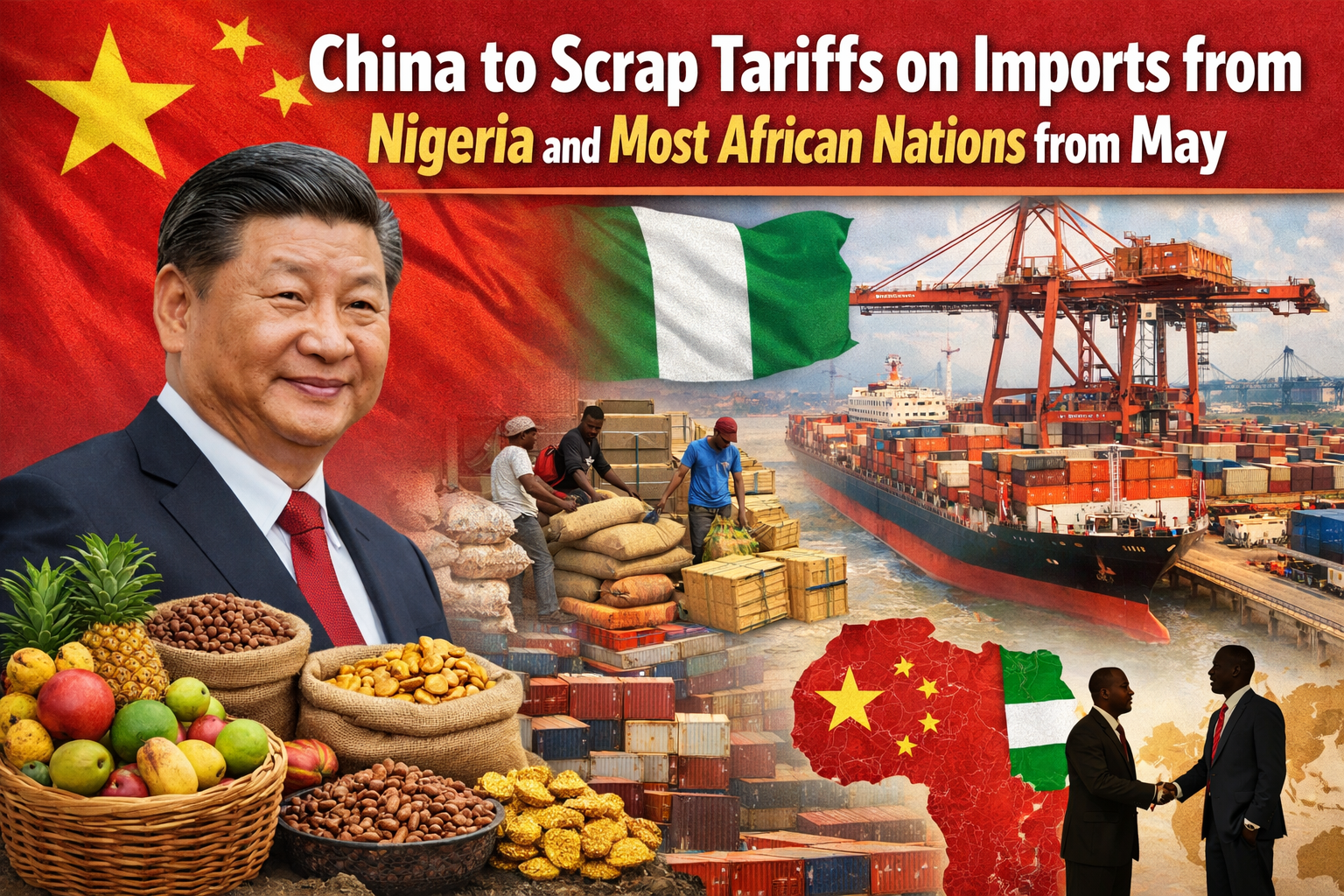

China will remove tariffs on imports from most African countries from May, expanding a zero duty policy aimed at boosting trade and deepening economic ties with the continent, President Xi Jinping has announced.
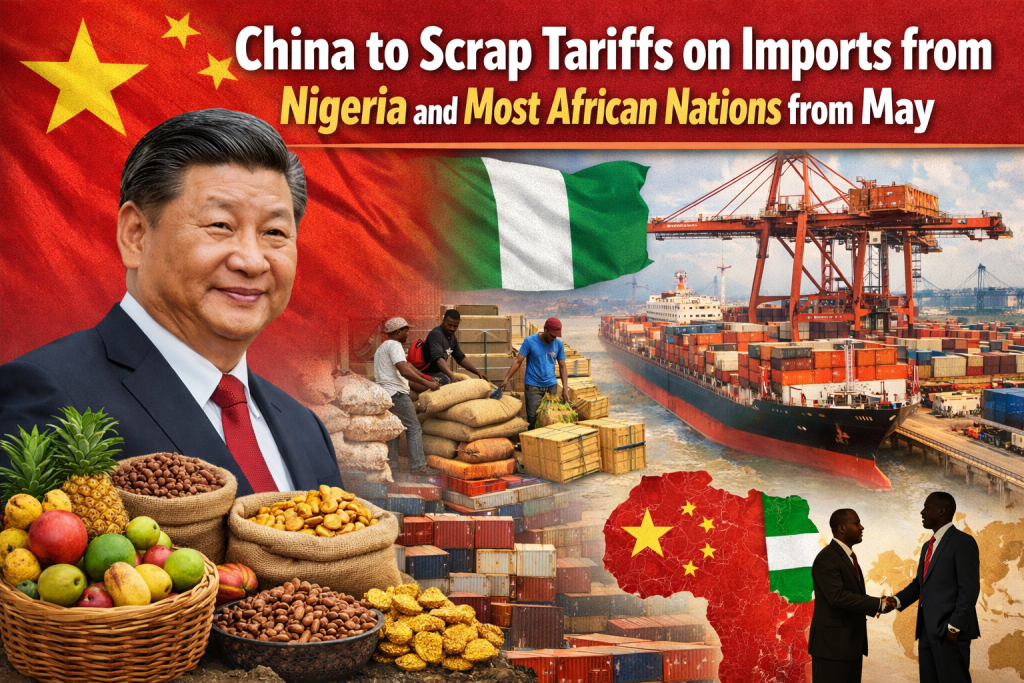
AkwaIbomTimes learnt, the decision applies to 53 African countries that maintain diplomatic relations with China, including Nigeria. It extends an existing arrangement that already grants duty free access to goods from a smaller group of African states. Eswatini is excluded because it does not have formal diplomatic ties with Beijing.
According to Chinese officials, the policy will cover almost all categories of goods and is expected to take effect from May 1. The move forms part of broader efforts by Beijing to widen market access for African exports and support economic development across the continent.
Xi made the announcement in a message to African leaders, describing the tariff removal as a practical step to create new trade opportunities and strengthen long term cooperation. He said China would also work with African partners to improve customs procedures and ease market entry for eligible products.
China has remained Africa’s largest trading partner in recent years, with bilateral trade continuing to expand despite global economic pressures. The relationship has been driven largely by African exports of raw materials and Chinese investment in infrastructure, manufacturing and energy projects.
Analysts say the expanded zero tariff regime could improve the competitiveness of African exports such as agricultural produce, minerals and light manufactured goods. However, they note that the scale of benefits will depend on each country’s production capacity, logistics networks and ability to meet Chinese quality and regulatory standards.
Some African governments have welcomed the announcement as a chance to diversify exports and reduce reliance on traditional markets. Others caution that tariff free access alone will not address structural challenges such as limited industrial capacity and high transport costs.
The policy shift also comes amid wider geopolitical competition, as China seeks to reinforce its role as a key economic partner to developing regions at a time of rising trade restrictions in other parts of the world.
Implementation of the new tariff regime is expected to begin in May, with further details to be issued by Chinese trade authorities in the coming weeks. African exporters are now assessing how best to position their products to take advantage of the expanded access to the Chinese market.