
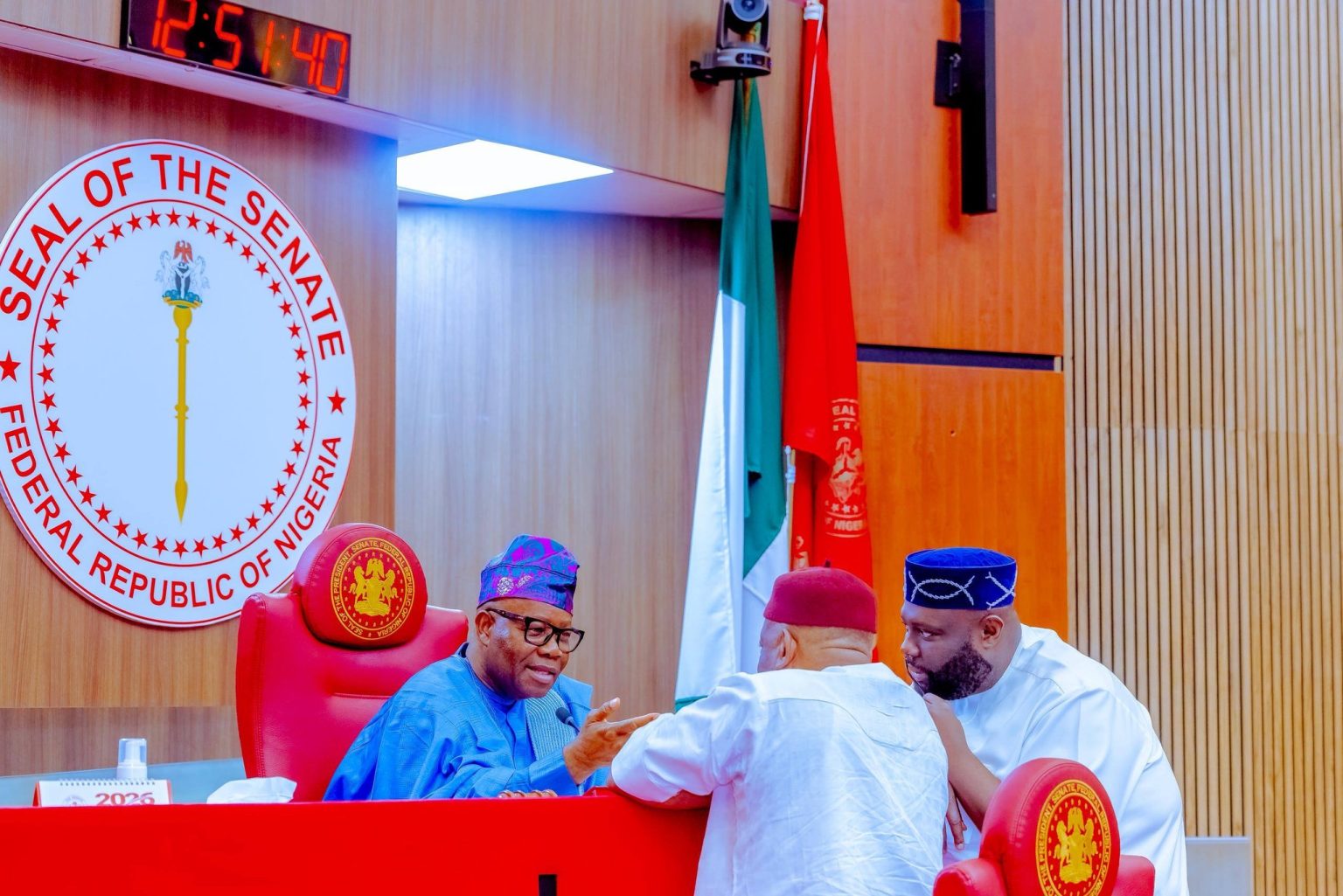

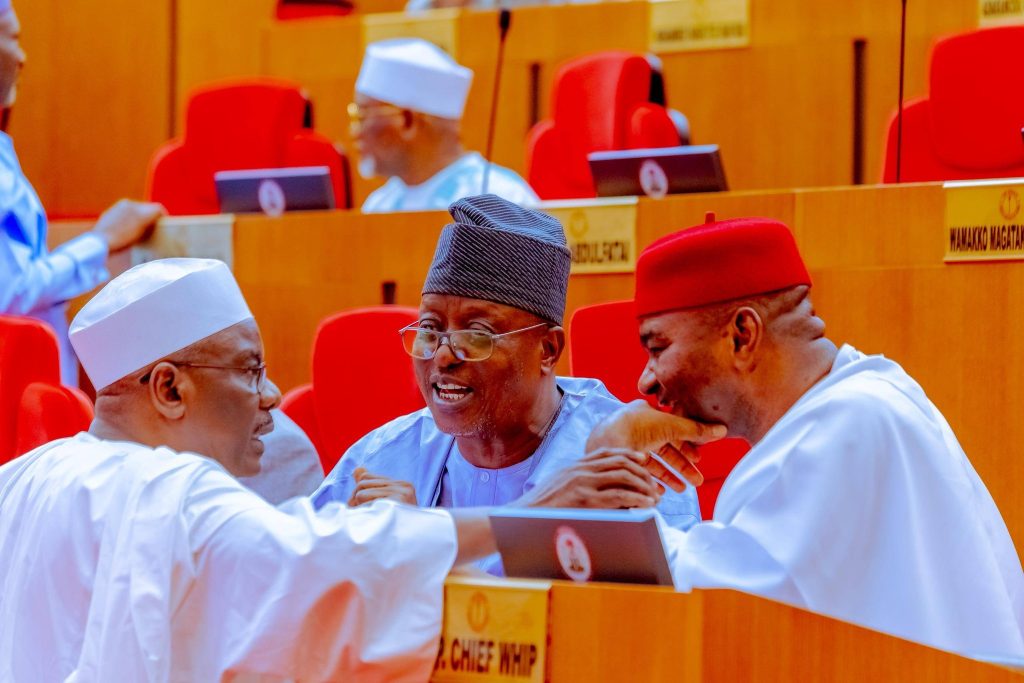
Nigeria’s Senate on Tuesday approved the Electoral Act 2022 Repeal and Re-Enactment Bill 2026 after a tense session marked by procedural disputes and sharp divisions among lawmakers over the electronic transmission of election results.
The sitting opened with controversy when Senator Enyinnaya Abaribe of the African Democratic Congress representing Abia South demanded a division on Clause 60 of the bill. Senate President Godswill Akpabio initially claimed the motion had been withdrawn, but opposition lawmakers quickly rejected the assertion and pressed for a clear vote.
Deputy Senate President Barau Jibrin cited Senate Order 52(6), arguing that it would be out of order to reopen a matter already ruled upon. However, Senate Leader Opeyemi Bamidele reminded his colleagues that he had earlier sponsored a motion for rescission, which effectively nullified previous decisions. He insisted that Senator Abaribe’s request was legitimate under the renewed deliberation process.
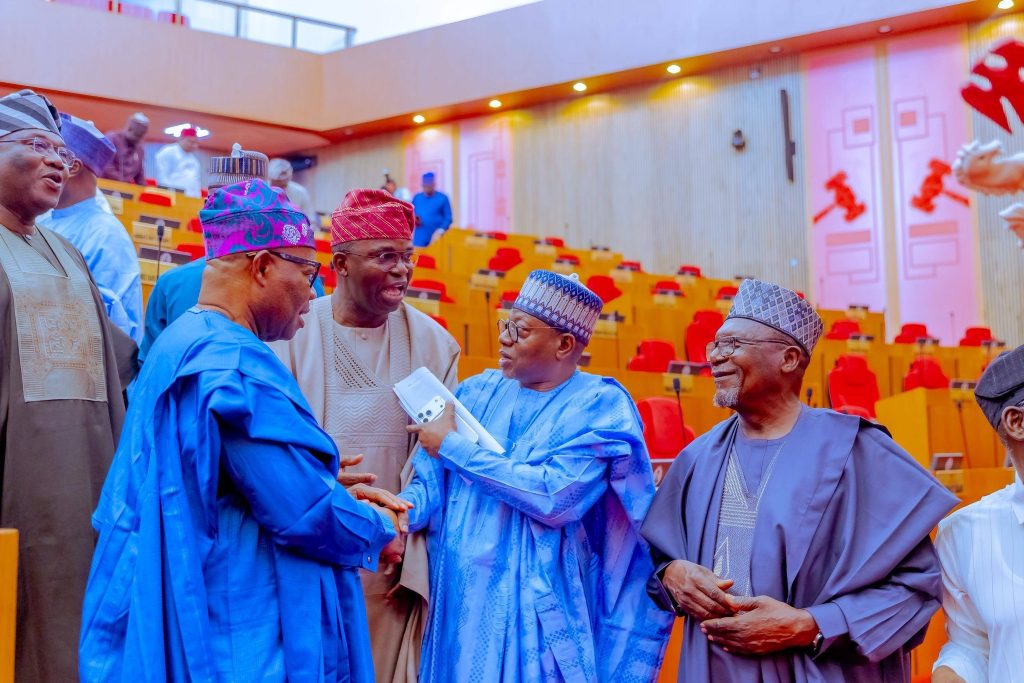
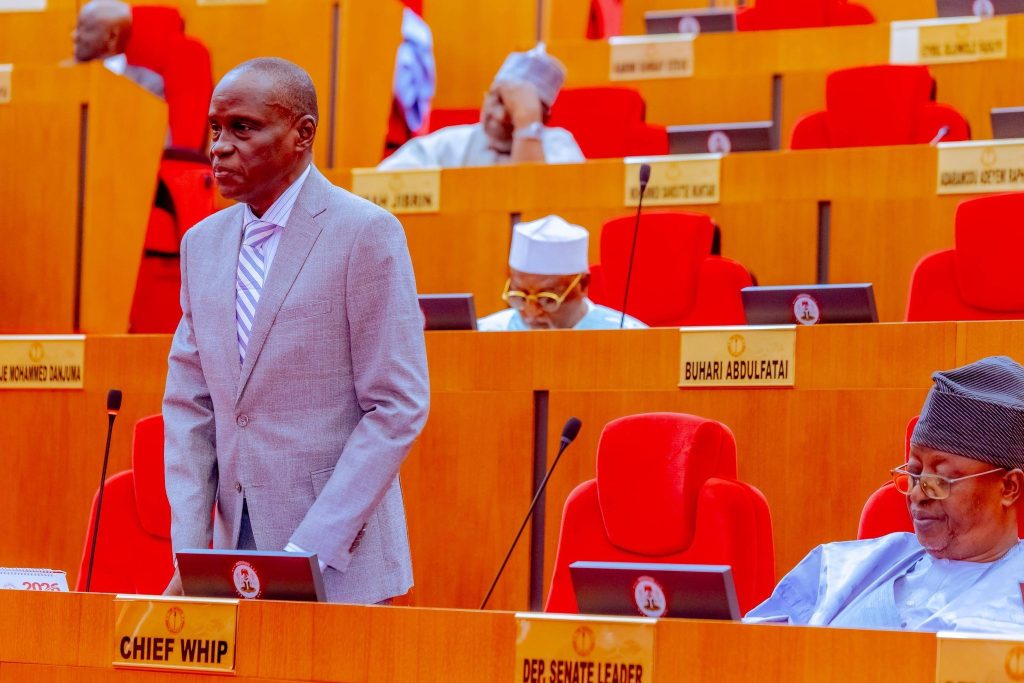
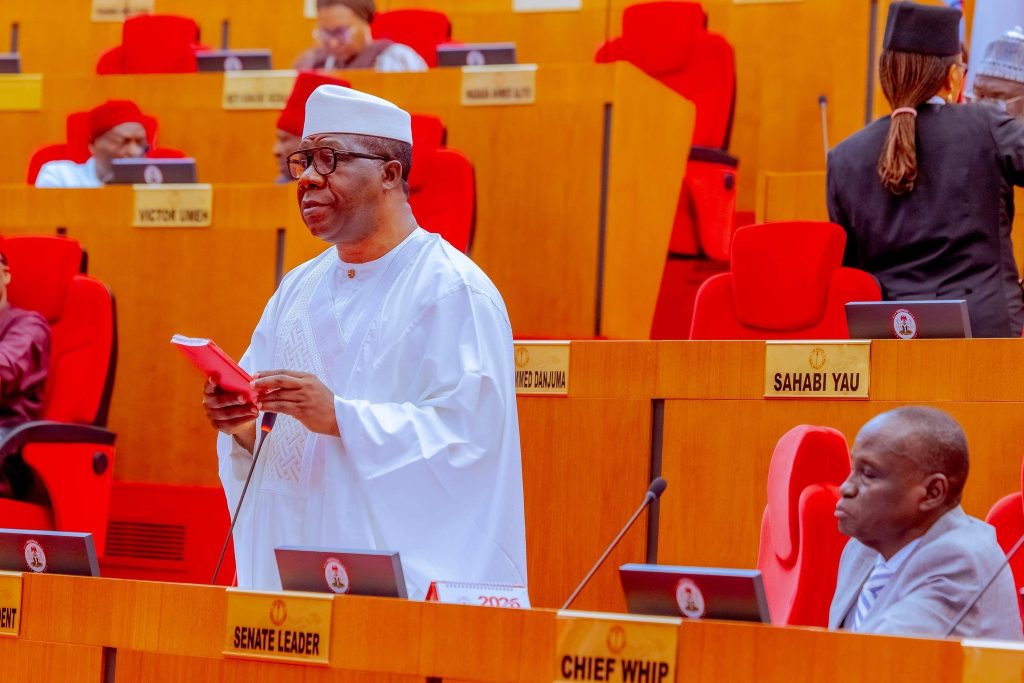
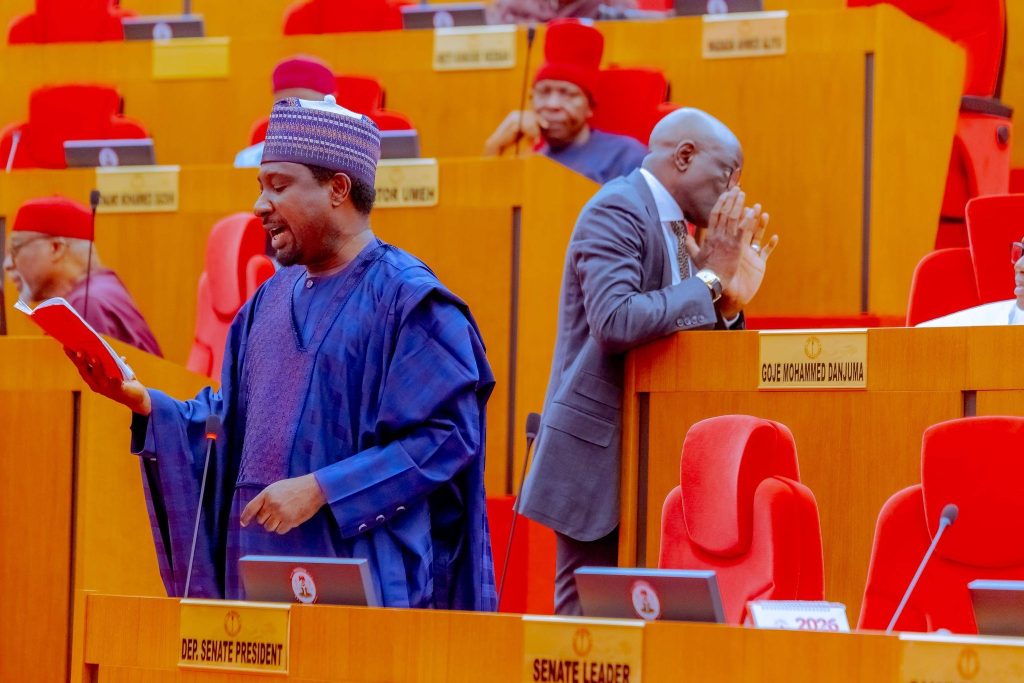
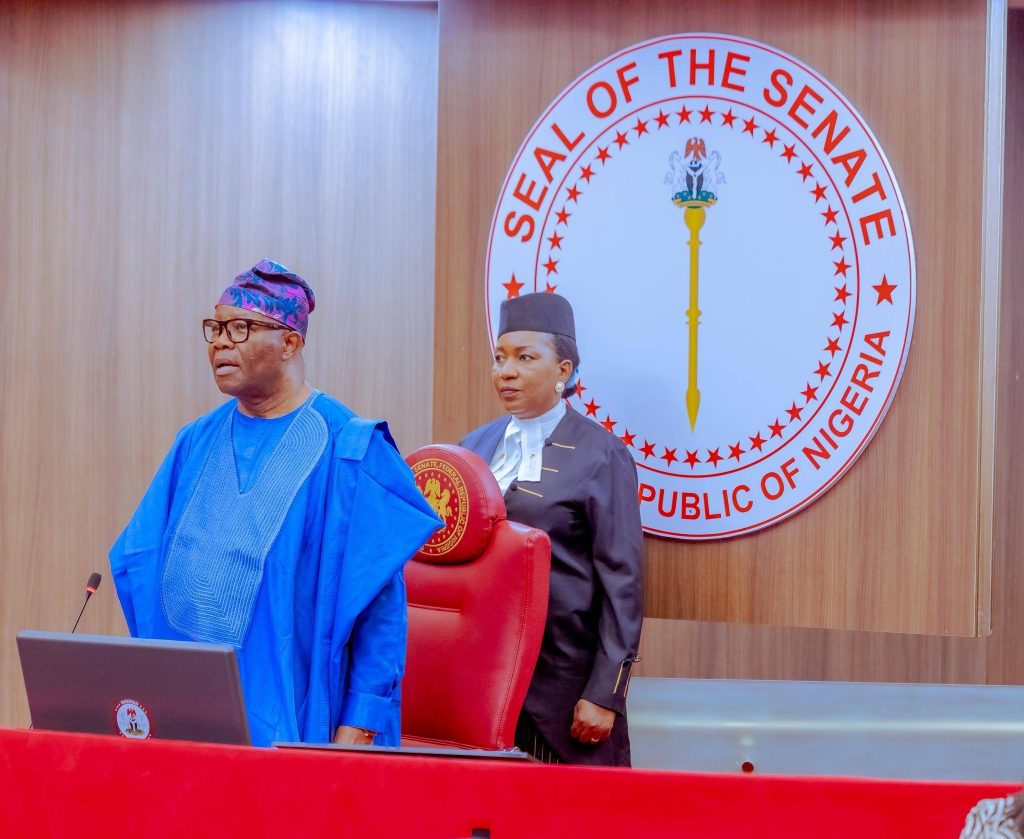
The commotion underscored widening tension between the leadership and opposition members. Akpabio maintained that Abaribe’s move appeared intended to make a political statement rather than alter the substance of the bill, a claim the Abia senator strongly denied.
When the Senate President called for a division, lawmakers took turns standing to register their positions. Fifteen senators opposed the controversial proviso that permits manual transmission of results when electronic systems fail, while 55 voted in favour of retaining it. The outcome reaffirmed the Senate’s backing for a hybrid transmission approach.
The chamber later adopted the motion to rescind its earlier decision on the entire bill, allowing it to dissolve into the Committee of the Whole for clause-by-clause reconsideration. The exercise was briefly halted once more when Clause 60 returned to the floor, prompting another procedural objection and leading to a closed-door session.
Before the final passage, the Senate revisited the broader context of the amendment, particularly concerns about the timetable for the 2027 general elections. Senator Bamidele noted that the Independent National Electoral Commission had fixed the polls for February 2027 after consultations with the National Assembly. He warned that the current timeline may clash with legal provisions mandating that elections occur not later than 360 days before the end of tenure.
Lawmakers also expressed unease that the 2027 polls could coincide with the Ramadan period, potentially affecting voter turnout, logistics, and the credibility of the process. Bamidele urged a review of the relevant clauses to avoid disenfranchisement and ensure national inclusivity.
The motion further identified technical inconsistencies in several parts of the bill, including clauses related to cross-referencing, numbering, and internal coherence. Affected sections span more than a dozen provisions, among them Clauses 6, 9, 10, 22, 28, 47, 60, 64, and 143. Senators agreed that these issues would require further legislative scrutiny before the bill is transmitted to the House of Representatives for concurrence.