

By | Ekaette Okon-Joseph
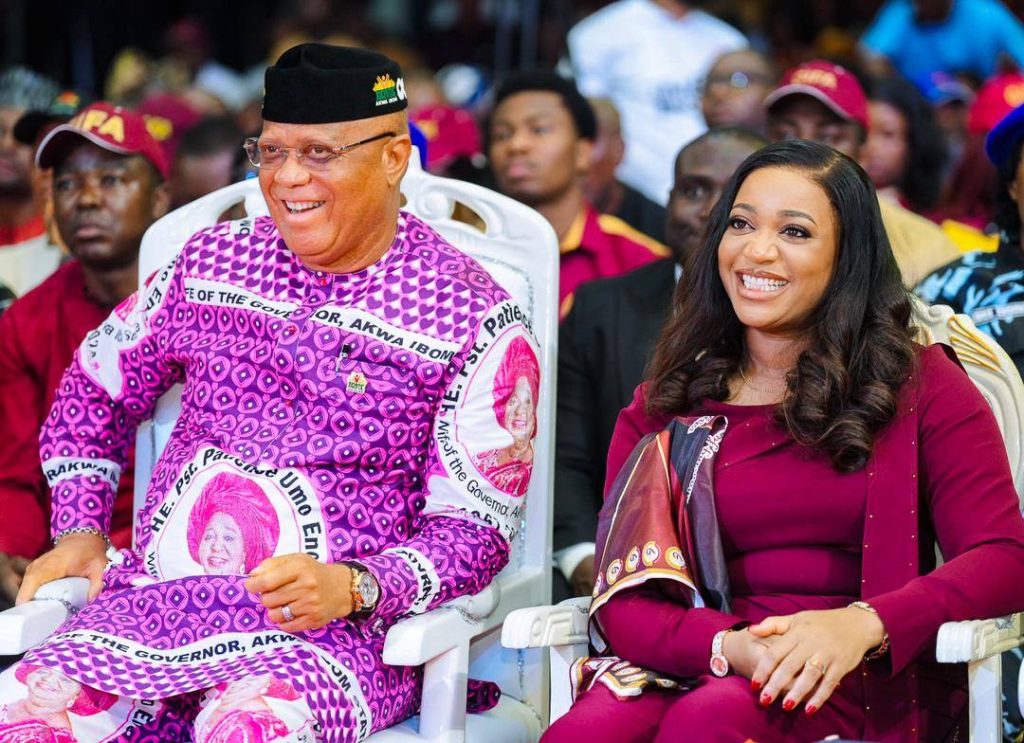
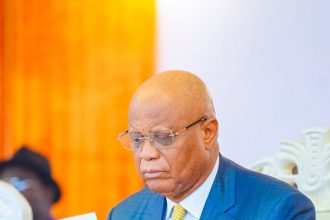
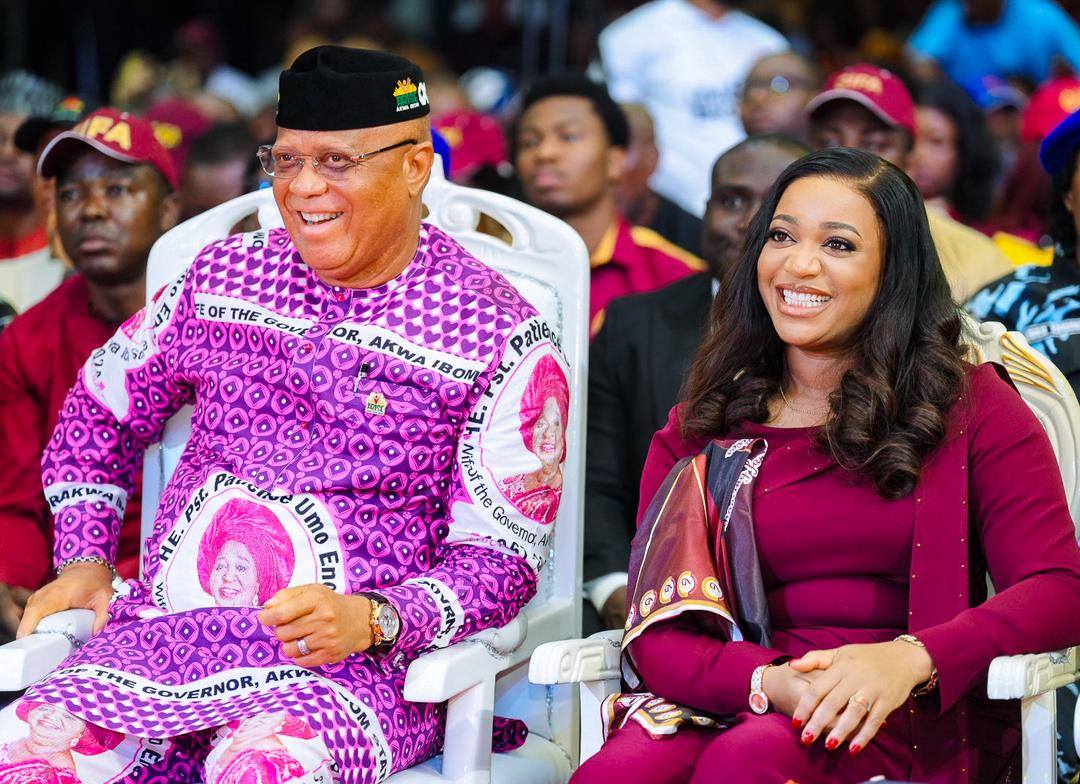
When Governor Umo Eno rose to speak at the second anniversary of the Golden Initiative For All (GIFA) at Ibom Hall in Uyo on Saturday, the moment was reflective, solemn and resolute. The event coincided with the posthumous birthday of his late wife, Pastor (Mrs.) Patience Umo Eno, whose humanitarian vision gave birth to GIFA.
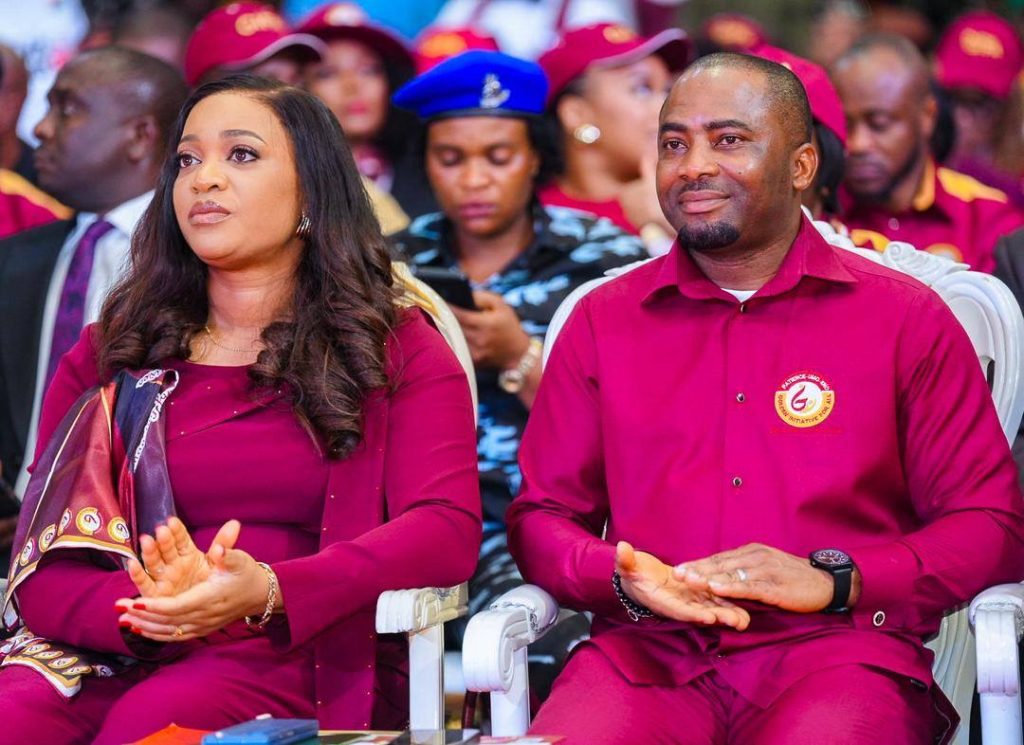
The Governor commended Coordinator of the Office of the First Lady and Chairman of GIFA, Noble Lady Helen Obareki for her commitment in advancing the vision of her mother saying, “I am happy to note that this Initiative is living up to the foundational ideals and objectives of its founding. You have kept faith with the implementation of the eight thematic areas and the record of achievements so far recorded as attested to by the statistics and the impact you have just reeled off”.
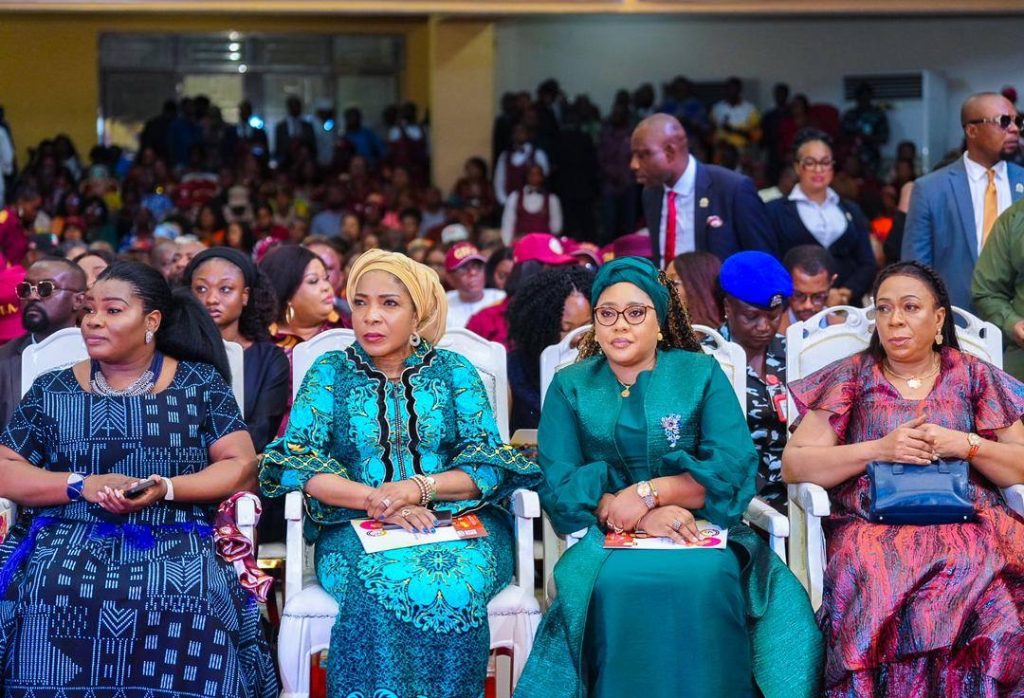
The Deputy Governor of Akwa Ibom State, Senator Akon Eyakenyi, on behalf of the women, felicitated GIFA for its impactful projects and programmes, appreciated Governor Eno for his gender- friendly disposition and assured that women will continue to remain strong partners of GIFA.
Speaking on behalf of the wives of Governors in attendance, Wife of Abia State Governor, Mrs.Priscilla Otti, commended Coordinator of the office of the First Lady, Lady Helen Obareki for the impact recorded by the pet project, and assured of support and collaboration where necessary to achieve more.
But beyond the tributes and testimonies, what emerged was a policy decision with far-reaching implications: a directive to the Ministry of Water Resources and Sanitation and the Akwa Ibom State Rural Water Supply and Sanitation Agency (AKRUWATSAN) to partner with GIFA to deliver a functional borehole in each of the state’s 369 wards within one year.
The announcement was both symbolic and strategic, a legacy project in memory of a departed First Lady, and a systemic intervention in one of Nigeria’s most urgent development challenges: access to safe water.
The water challenge in context.
Water scarcity is not abstract. It is measurable, and it is urgent.
According to the World Bank, “only about 70 percent of Nigerians have access to at least basic water supply services, and access in rural areas is significantly lower”. The disparities between urban and rural communities remain stark, with millions relying on unsafe surface water.
Globally, the United Nations reports that 2.2 billion people lack safely managed drinking water services.
Contaminated water contributes to preventable diseases, lost productivity and school absenteeism, burdens that fall disproportionately on women and girls.
Nigeria’s WASH (Water, Sanitation and Hygiene) deficit has economic consequences. The World Bank has estimated that poor sanitation alone costs Nigeria about 1.3 percent of its GDP annually due to health costs and lost productivity.
For Akwa Ibom, a coastal, oil-producing state with riverine and rural communities, access challenges are shaped by geography, groundwater variability and infrastructure gaps. Addressing them requires both capital investment and community-based models.
From tribute to policy directive.
At the Ibom Hall event, Governor Eno moved from commendation to commitment.
He directed AKRUWATSAN and the Ministry of Water Resources and Sanitation to immediately establish modalities with GIFA “to ensure that within the next one year, every ward in every local government area of the state has a GIFA Water Project.”
The initiative is designed to be functional, not ceremonial: each ward will host a borehole serving as a reliable water source. By anchoring implementation in state agencies, the plan embeds civil society partnership within public infrastructure systems, a model development practitioners often advocate.
Dr. Akinwumi Adesina, immediate past president of the African Development Bank (AFDB), has repeatedly stressed that “water is life, and access to clean water is a fundamental human right”.
Policy analysts argue that ward-level targeting increases equity by preventing political concentration of projects in urban centers.
In practical terms, a ward-based distribution ensures geographical balance. It also aligns with decentralized service delivery frameworks that the World Bank has promoted in Nigeria’s rural water reform efforts.
Scaling WASH under the ARISE Agenda.
The borehole initiative is not occurring in isolation. It aligns with Governor Eno’s ARISE Agenda, an acronym for Agricultural Revolution, Rural Development, Infrastructure Maintenance and Advancement, Security Management, and Educational Advancement.
Rural development, in particular, places water at the center of health, agriculture and micro-enterprise. Boreholes reduce the time women spend fetching water, enabling economic participation. They support agro-processing clusters, smallholder irrigation and food safety, all pillars of the agricultural revolution component.
Over the past year, the state has invested in rural roads to ease farm-to-market access, launched women-focused agro-processing projects and expanded cooperative financing. These interventions complement water infrastructure: clean water underpins food processing hygiene, small-scale fisheries and cassava value chains.
Sanitation agencies in Nigeria have long emphasized that WASH integration, combining water supply with hygiene education and sanitation facilities, multiplies impact. UNICEF Nigeria notes that access to safe water is critical for reducing child mortality and waterborne diseases.
By directing AKRUWATSAN to lead technical collaboration with GIFA, the state positions the initiative within regulated water quality standards and sustainability frameworks, rather than as standalone charity projects.
SDG alignment and measurable targets
The initiative directly advances Sustainable Development Goal 6: Ensure availability and sustainable management of water and sanitation for all.
SDG 6.1 calls for universal and equitable access to safe and affordable drinking water by 2030. Ward-level mapping creates measurable units: 369 wards, 369 boreholes, a quantifiable baseline.
Development economist Dr. Mfon Ekpo, who delivered the anniversary lecture at the GIFA event, emphasized the multiplier effect of targeted interventions. “Community-based infrastructure catalyzes behavioral change and local ownership,” she noted, underscoring the importance of accountability and maintenance systems.
Policy experts often caution that boreholes fail without community management and budgeted maintenance. The World Bank’s rural water programs in Nigeria highlight the need for trained local water committees and tariff systems to ensure sustainability.
Embedding GIFA’s social mobilization capacity with state technical oversight could address that gap, blending grassroots trust with institutional continuity.
A gendered legacy
The emotional resonance of the announcement lies in its origin. Pastor Patience Umo Eno founded GIFA around eight thematic pillars, including health and social welfare. Water access intersects with maternal health, child nutrition and women’s dignity.
Globally, the UN Water notes that women and girls spend an estimated 200 million hours each day collecting water. Reducing that burden transforms educational outcomes and household income potential.
At the anniversary event, women leaders, including visiting governors’ wives, affirmed the initiative’s gender impact. Deputy Governor Akon Eyakenyi described women as “strong partners” in community development, underscoring the political support base for WASH expansion.
From model to movement
Nigeria has declared a state of emergency on WASH in recent years, but implementation gaps persist. If Akwa Ibom achieves full ward coverage within a year, it will establish a replicable governance template: clear numerical targets, civil society partnership, agency-led oversight and time-bound delivery.
Development analysts often cite Rwanda’s community water models and Ethiopia’s decentralized rural systems as examples of scalable reform. Subnational governments in Nigeria can play a similar catalytic role.
For Akwa Ibom, the borehole plan is more than infrastructure. It is a test of coordination, between government and philanthropy, between memory and mandate, between aspiration and measurable progress.
As Governor Eno framed it at Ibom Hall, a job well done means more work to be done. In translating tribute into tangible pipes and pumps across 369 wards, the state seeks to turn grief into governance and legacy into liquid impact.
If successful, clean water flowing from each ward will not only honor a life of service; it will anchor rural development in one of the most elemental rights of all, safe water for every home.
Ekaette Okon-Joseph is Special Assistant on Media to the Akwa Ibom State governor on media and can be reached via ([email protected]).