
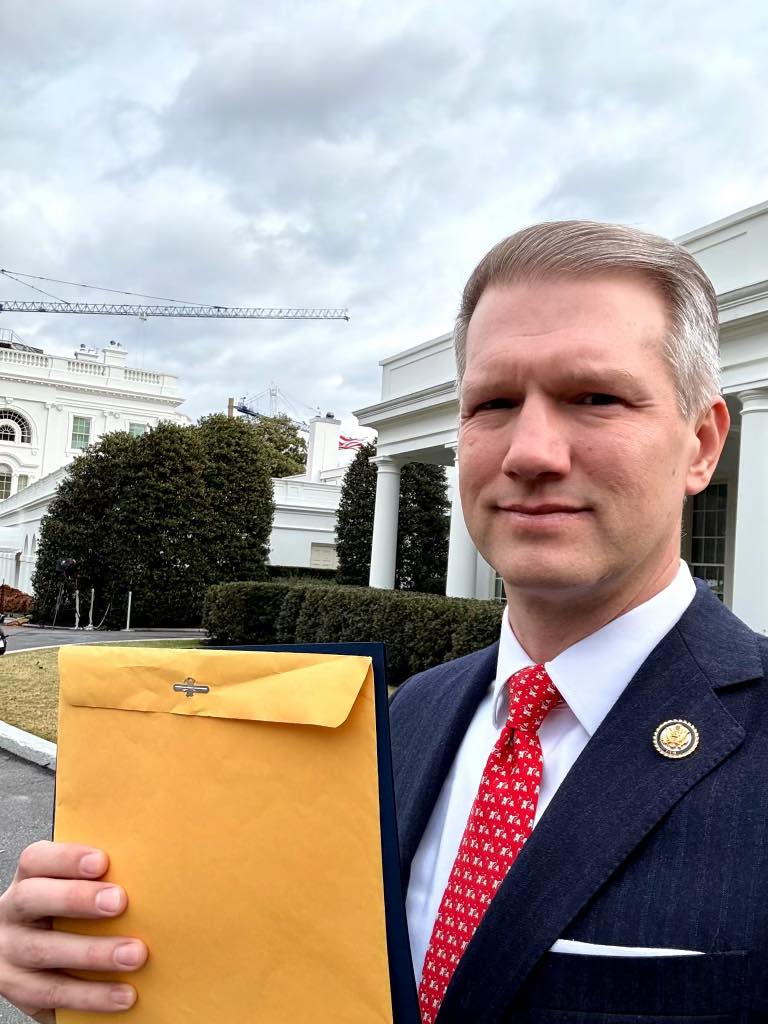

Prepared Following Presentation to the White House
Led by Riley M. Moore
February 2026
- Executive Summary
- 1. Background and Context
- 2. Scope and Methodology of the Investigation
- 3. Key Findings
- 4. U.S. Policy Recommendations
- 1. Bilateral Security Cooperation
- 2. Conditional Foreign Assistance
- 3. Targeted Sanctions and Visa Restrictions
- 4. Legal Reform Advocacy
- 5. Multilateral Coordination
- 5. Diplomatic and Strategic Implications
- 6. Broader Analytical Perspective
- 7. Conclusion
Executive Summary
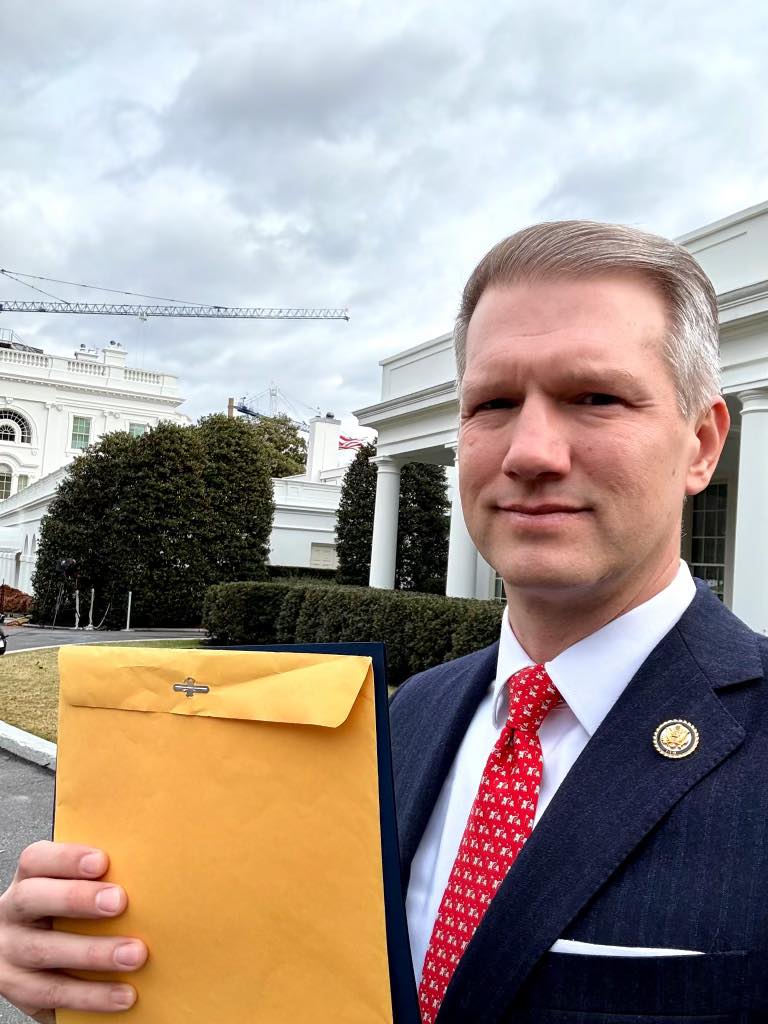
In February 2026, Congressman Riley M. Moore formally presented a congressional investigative report to the White House detailing findings on the ongoing persecution of Christians in the Federal Republic of Nigeria. The report outlines patterns of violence, systemic governance failures, and policy recommendations aimed at strengthening religious freedom protections and enhancing U.S.–Nigeria cooperation.
The findings conclude that Christian communities in several regions of Nigeria face persistent threats from extremist groups, armed militias, and criminal networks, compounded by inadequate state protection and limited accountability. The report proposes a framework combining diplomatic engagement, conditional foreign assistance, targeted sanctions, and structural legal reforms.
1. Background and Context
Nigeria, Africa’s most populous nation, has long grappled with complex security challenges. These include insurgency, banditry, ethno-religious tensions, farmer–herder conflicts, and regional disparities in governance capacity.
According to the congressional investigation, Christian populations—particularly in northern and central regions—have experienced:
- Targeted killings and mass casualty attacks
- Destruction of churches and community infrastructure
- Kidnappings for ransom, including clergy and students
- Forced displacement into internally displaced persons (IDP) camps
The report situates these incidents within broader instability while emphasizing that religious identity frequently overlaps with patterns of violence.
2. Scope and Methodology of the Investigation
The congressional report was developed through:
- Fact-finding travel and security briefings
- Engagement with Nigerian civil society leaders and religious representatives
- Consultations with Nigerian federal authorities and security officials
- Review of human rights documentation and intelligence assessments
- Policy hearings within relevant U.S. House committees
The investigation sought to assess both the scale of violence and the effectiveness of Nigerian state response mechanisms.
3. Key Findings
A. Persistent Security Threats
The report identifies multiple armed actors operating across Nigeria, including jihadist factions, bandit groups, and militant networks. Christian communities in vulnerable rural regions face recurring attacks, with limited early warning systems and insufficient rapid response capability.
While violence in Nigeria is multi-causal—often involving land disputes, ethnic tensions, and economic grievances—the congressional findings assert that religious targeting remains a significant factor in numerous documented incidents.
B. Governance and Accountability Gaps
Investigators concluded that:
- Arrest and prosecution rates for perpetrators remain low.
- Security deployments are often reactive rather than preventative.
- Victims report distrust in protective institutions.
The report stops short of declaring uniform state complicity but stresses the urgent need for measurable improvements in accountability.
C. Legal and Structural Concerns
The investigation raises concerns about:
- The application of Sharia-based criminal codes in certain northern states
- Blasphemy laws that may disproportionately affect religious minorities
- Uneven enforcement of constitutional religious freedom guarantees
These legal frameworks are cited as contributing to a broader climate of vulnerability for minority communities.
4. U.S. Policy Recommendations
The report outlines a multi-tiered strategy:
1. Bilateral Security Cooperation
Develop a strengthened U.S.–Nigeria security framework to improve intelligence sharing, counter-terror operations, and protection of vulnerable civilian populations.
2. Conditional Foreign Assistance
Condition specific categories of U.S. foreign aid on measurable benchmarks, including:
- Demonstrable reductions in sectarian violence
- Increased prosecution of perpetrators
- Enhanced protection mechanisms for at-risk communities
3. Targeted Sanctions and Visa Restrictions
Authorize sanctions and travel bans against individuals credibly implicated in organizing, financing, or facilitating religiously motivated violence.
4. Legal Reform Advocacy
Encourage review and reform of laws that may undermine equal religious protection, consistent with Nigeria’s constitutional commitments and international human rights obligations.
5. Multilateral Coordination
Work with allied governments to align diplomatic messaging and security assistance programs to avoid duplication and increase leverage.
5. Diplomatic and Strategic Implications
The report frames religious freedom not only as a human rights priority but also as a matter of regional stability and U.S. national security. Instability in Nigeria—given its population size, economic weight, and geographic centrality in West Africa—has implications for:
- Counterterrorism strategy
- Migration flows
- Economic partnerships
- Regional democratic resilience
The recommended approach emphasizes partnership rather than punitive isolation, encouraging constructive engagement between Washington and Abuja.
6. Broader Analytical Perspective
Independent analysts note that violence in Nigeria often stems from overlapping drivers:
- Competition over land and grazing routes
- Climate-related resource stress
- Ethnic militancy
- Criminal opportunism
- Religious radicalization
The congressional report acknowledges these intersecting dynamics while maintaining that religious persecution remains a critical and distinct component of the crisis in affected regions.
7. Conclusion
The February 2026 presentation to the White House marks a significant moment in U.S. legislative engagement on religious freedom in Nigeria. The report led by Congressman Riley M. Moore presents a structured policy roadmap aimed at:
- Protecting vulnerable Christian communities
- Strengthening institutional accountability
- Reinforcing bilateral cooperation
- Promoting long-term stability
Sustained progress will depend on coordinated diplomatic engagement, measurable reforms within Nigeria’s security architecture, and continued oversight by U.S. policymakers.