
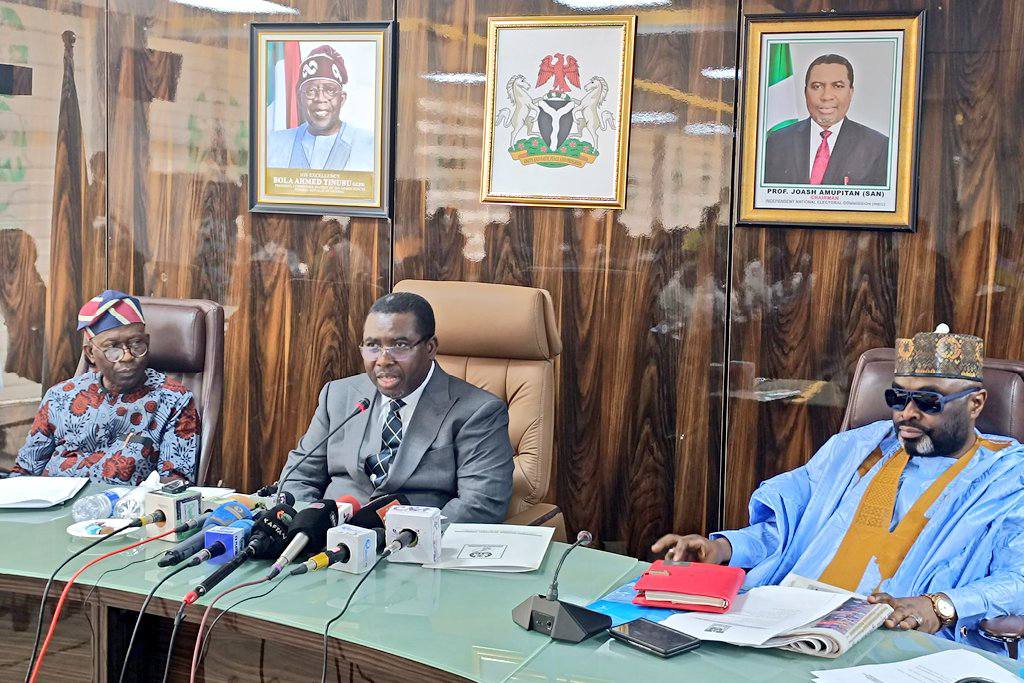

The Chairman of the Independent National Electoral Commission, Professor Joash O Amupitan, on Tuesday used a series of engagements in Abuja to underline a tougher approach to electoral administration, with a focus on accountability, voter confidence, and preparation for major polls ahead.
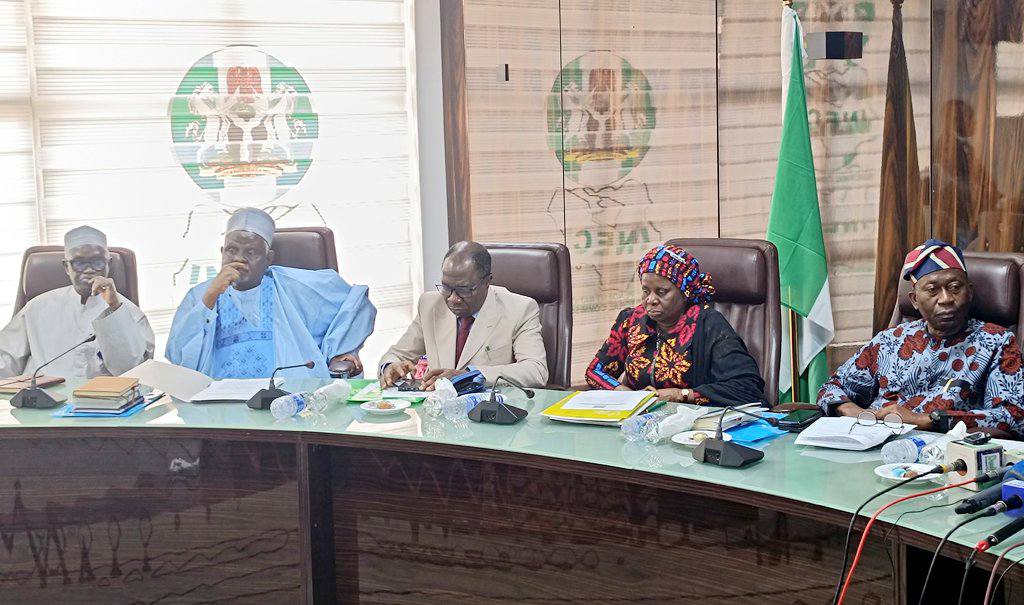
At the Commission headquarters, Professor Amupitan met with Resident Electoral Commissioners from the thirty six states and the Federal Capital Territory, received a delegation from the Forum of State Independent Electoral Commissions of Nigeria, and administered the oath of office to Dr Chukwu Chukwuemeka Joseph as the Resident Electoral Commissioner for Enugu State.
The engagements came against the backdrop of a review of the recent Area Council and state constituency elections in the Federal Capital Territory, Kano, and Rivers States, as well as early planning for the Ekiti and Osun governorship elections and the 2027 General Election.
Earlier, the INEC Chairman welcomed the FOSIECON delegation led by its National Chairman, Mamman Nda Eri, who congratulated him on his appointment and praised INEC for what he described as steady improvements in election management and innovation. Mr Eri proposed closer cooperation between INEC and state electoral bodies, including shared training programmes, adapted use of election technology, structured policy engagement, and joint voter education efforts. Professor Amupitan responded by affirming INEC’s openness to collaboration, stressing that credible elections depend on cooperation across institutions.
In his address to the Resident Electoral Commissioners, the INEC Chairman delivered a blunt assessment of the conduct of the 21 February 2026 elections. He acknowledged progress in voter participation in the FCT, where about 239,000 voters turned out, representing roughly fifteen percent turnout compared with about nine percent recorded in 2022. Despite the increase, he described voter apathy as a continuing concern that must be addressed through sustained public engagement.
Professor Amupitan also highlighted improvements in transparency, noting that more than ninety three percent of polling unit results were uploaded to the INEC Result Viewing portal by early Sunday afternoon, rising later to an average of ninety seven percent. He dismissed claims of voter migration in 2026, clarifying that the redistribution of voters followed the 2022 polling unit expansion exercise designed to decongest overcrowded units. In the FCT alone, he said hundreds of thousands of voters had been reassigned to newly created polling units, and urged electoral officials to intensify voter education so citizens could confirm their correct locations.
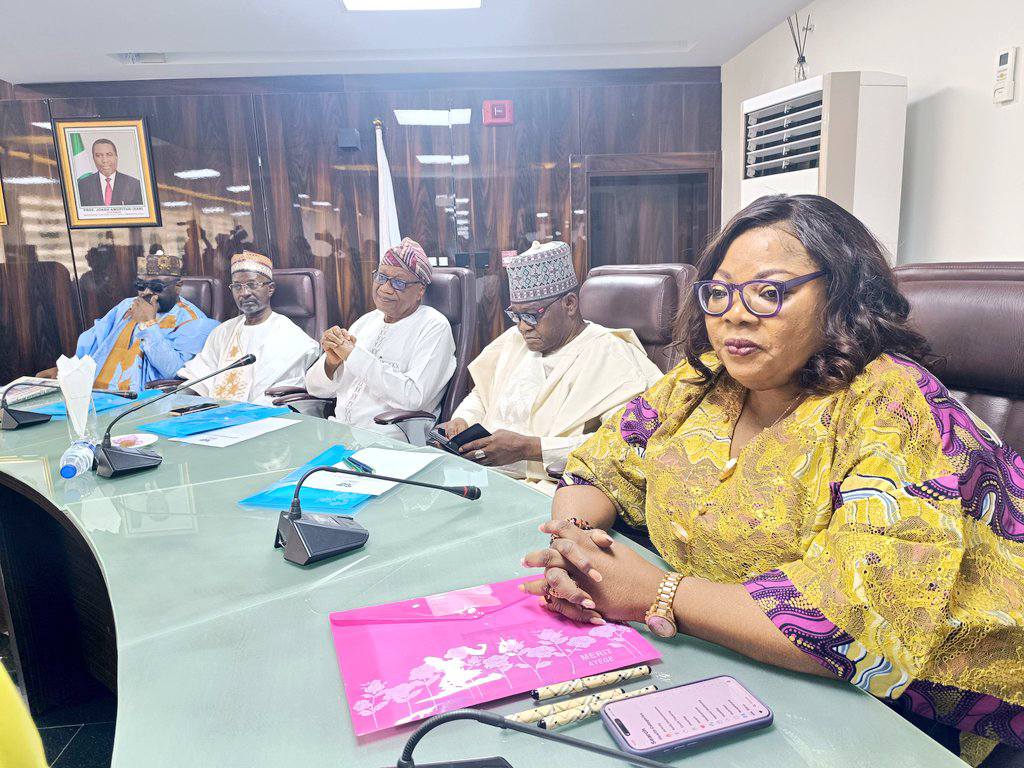
The Chairman expressed strong dissatisfaction with delays in the opening of polling units. INEC data showed that less than half of polling units in the FCT opened by the stipulated 8.30 am, although all were operational by 10.00 am. He described the delays as unacceptable and announced disciplinary measures, including queries to staff in Kuje Area Council and Kabusa Ward, and the blacklisting of a transport contractor linked to delays in Kwali Area Council.
Addressing concerns about result integrity, Professor Amupitan explained new safeguards that require Presiding Officers to manually input scores into the Bimodal Voter Accreditation System, which automatically flags inconsistencies such as over voting and calculation errors. He referred to a widely circulated allegation of result inflation at a polling unit in Kwali Area Council, which an internal review traced to a counting correction made openly at the polling unit and accurately reflected in the official collation system. While the process was found to be transparent, he said the episode showed the level of scrutiny facing the Commission.
He reminded the Resident Electoral Commissioners that they bear direct responsibility for INEC’s performance in their respective states and warned that absenteeism or negligence, particularly at local government offices, would attract sanctions. Looking ahead, he informed them that a new Electoral Act passed in 2026 would guide future operations, and that a revised timetable for the 2027 General Election would be released soon. He also confirmed that the second phase of Continuous Voter Registration would continue until mid April 2026, with the overall exercise ending in late August.
The day’s programme concluded with the swearing in of Dr Joseph as Enugu State Resident Electoral Commissioner. Professor Amupitan congratulated him on his reappointment and urged him to maintain high standards of professionalism and integrity. He ended the meeting with a clear message to all officials that strong performance was no longer optional but a core expectation.