
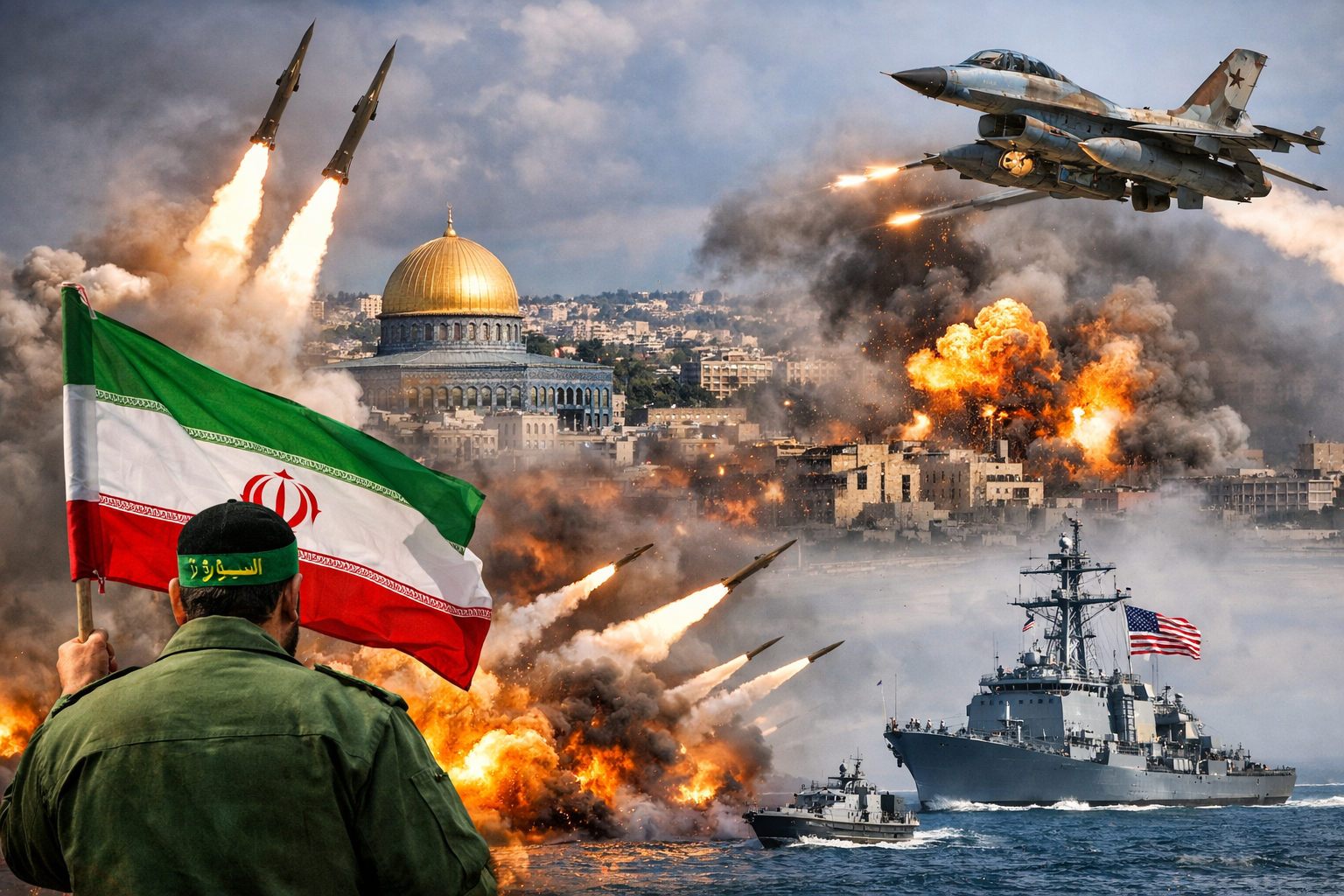

Iran has widened the conflict with the United States and Israel through a series of coordinated military responses across multiple fronts, raising fears of a prolonged regional confrontation.
In the hours after the initial strikes by the United States and Israel, Iran launched ballistic missiles and armed drones towards Israeli territory. Israeli defence systems intercepted many of the incoming projectiles, though some struck military positions and strategic infrastructure. Israeli authorities confirmed casualties and damage but limited operational disclosures for security reasons.
Tehran described the attacks as a lawful act of self defence. Iranian officials insisted that their targets were military installations and that their response was calibrated to deter further action rather than escalate the war.
The confrontation quickly extended beyond Israel. Armed groups aligned with Iran carried out rocket and drone attacks on United States facilities in Iraq and Syria. The Pentagon confirmed that some bases activated emergency defence systems and sustained limited damage. Washington warned that any direct harm to its personnel would draw a firm response.
Tensions also intensified along Israel’s northern border. Hezbollah increased rocket fire from southern Lebanon into Israeli territory, prompting retaliatory Israeli airstrikes against suspected launch sites. Civilians on both sides of the frontier were forced into shelters, and local authorities implemented precautionary evacuations in vulnerable communities.
Maritime security has become a growing concern. Iran signalled that it could challenge shipping movements through the Strait of Hormuz, a vital corridor for global energy exports. Iranian naval patrols increased their presence in nearby waters, while the United States expanded its maritime deployments in response. Oil markets reacted sharply, reflecting anxiety over possible supply disruptions.
Several Gulf states heightened military readiness and reinforced security around key energy and diplomatic assets. Governments across the region called for restraint while preparing for the possibility of further escalation.
Iran’s broader strategy appears to focus on deterrence through multi front pressure. By engaging through missile strikes, allied militia activity and maritime signalling, Tehran is demonstrating its ability to project influence across land and sea. At the same time, the expansion of hostilities complicates efforts to contain the conflict.
Diplomatic channels remain active but strained. International actors have urged immediate de escalation, warning that sustained exchanges could destabilise the wider Middle East and disrupt global energy markets.
The situation remains fluid, with both sides maintaining a heightened military posture and no clear timeline for de escalation.