
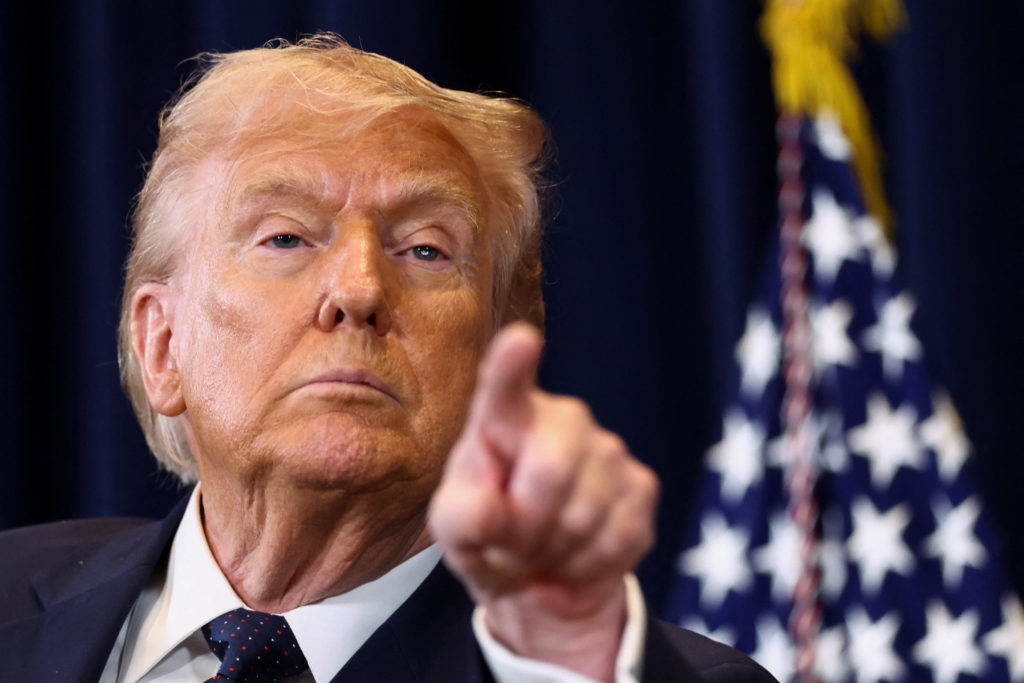

United States President Donald Trump has said the US Israeli war on Iran could be over very soon, presenting the military campaign as being close to completion despite fresh threats from Tehran and continued instability across the region.
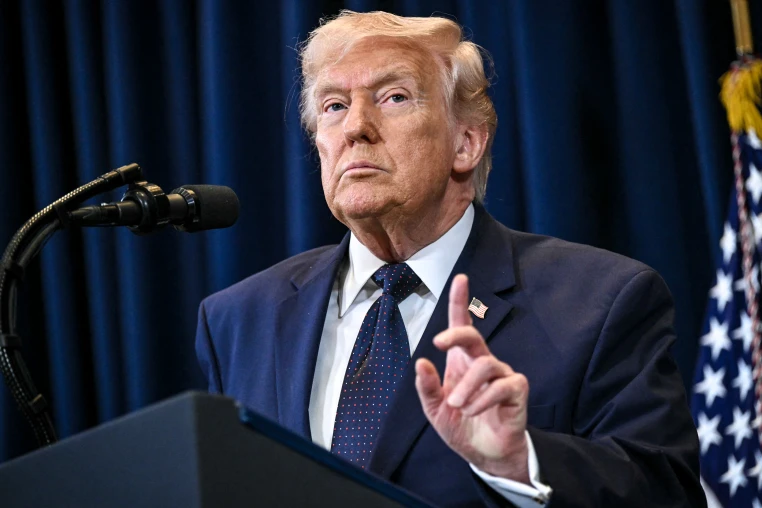
Trump made the remark on Monday during a media appearance in Florida, where he said the war was already “very complete, pretty much” and claimed events were moving faster than his earlier estimate of four to five weeks.
His comments came as Iran signalled that it was not ready to back down. Iranian officials warned that any continued attacks would carry consequences, especially around oil exports and shipping routes in the Gulf. The threat has raised concern over the Strait of Hormuz, a key global energy corridor that remains central to the crisis.
While Trump’s remarks were aimed at projecting confidence, there is still no public sign of a ceasefire agreement or any confirmed framework for ending the war. That gap has fuelled doubts over how soon the fighting can actually stop.
The situation remains fluid because the United States and Israel do not appear to be using exactly the same language on the war’s final objective. Israeli leaders have taken a harder line on the future of Iran’s political system, while Washington has focused more on military and strategic targets, including Iran’s missile and nuclear capabilities.
Trump has also indicated that any decision to end the conflict would not be his alone. In earlier remarks, he said the timing of an end to the war would be a mutual decision taken with Israeli Prime Minister Benjamin Netanyahu. That position suggests his latest statement was more of a political signal than an announcement of a settled diplomatic outcome.
The broader impact of the conflict has already spread beyond the battlefield. Oil markets have reacted sharply to the threat of disruption in Gulf shipping, with prices swinging as traders respond to every new statement from Washington and Tehran. Fears over energy supply have also pushed governments and investors to watch developments more closely.
Iran’s recent leadership move has added another layer of uncertainty. The naming of Mojtaba Khamenei as supreme leader has been interpreted in some quarters as a sign that Tehran is preparing for continued confrontation rather than a quick settlement.
Taken together, Trump’s claim that the war will end very soon reflects confidence in the scale of damage already inflicted on Iran. However, the available facts do not yet show that both sides are close to an agreed end. For now, the conflict appears to remain active, with military pressure, political uncertainty and energy market risk still shaping events.