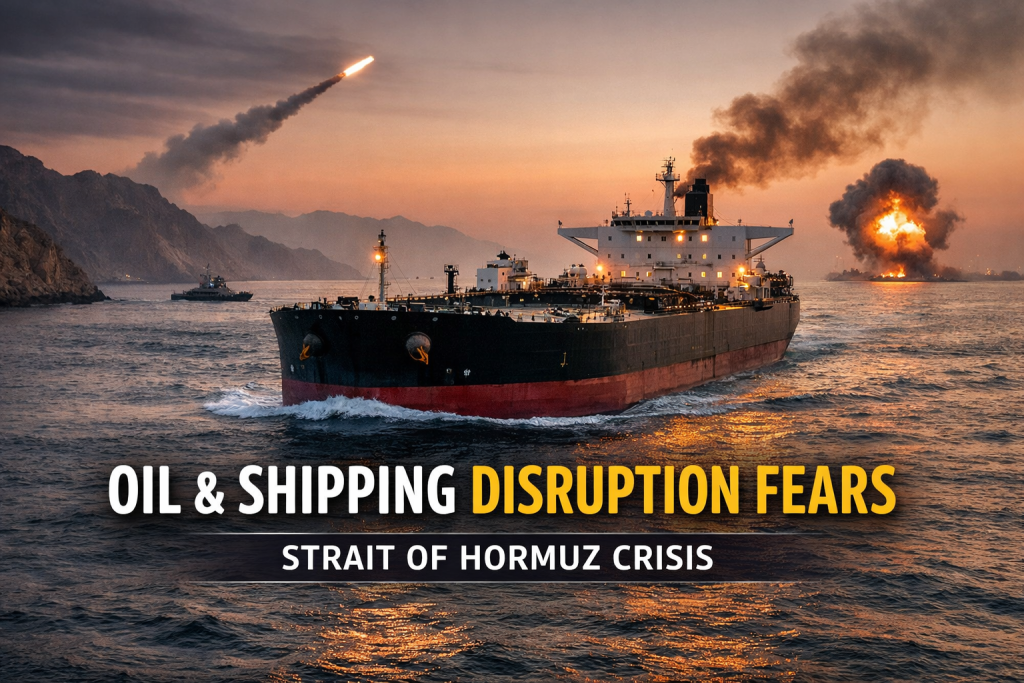

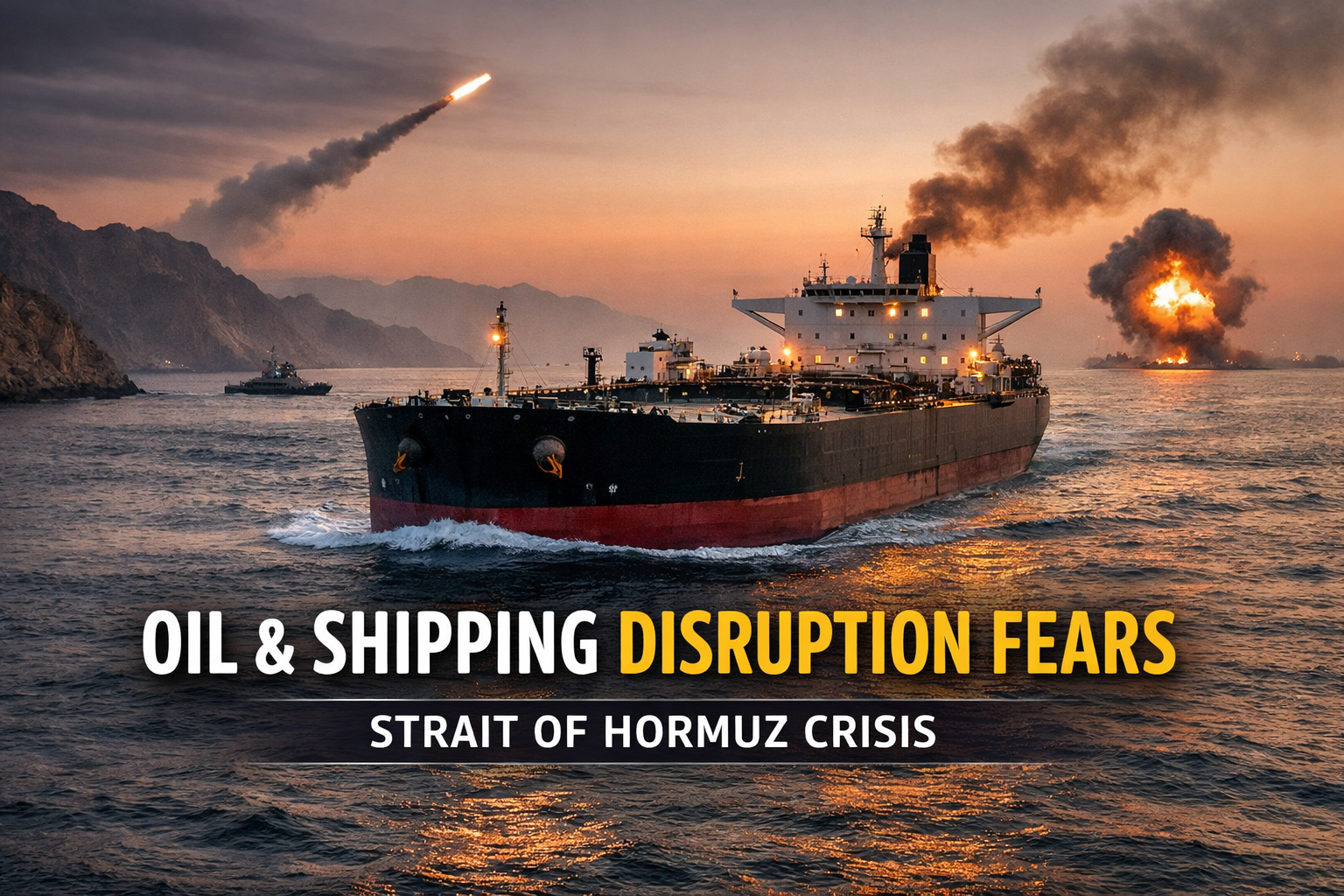

Fresh fears over oil supply and maritime trade disruption are rippling through global markets as conflict in the Middle East threatens one of the world’s most important energy corridors.
The Strait of Hormuz, a narrow waterway between Iran and Oman, has again become the focus of global concern. The route carries about a fifth of the world’s oil and liquefied natural gas supplies, making any threat to shipping there a major risk to energy prices, inflation and wider trade flows.
Brent crude has surged above 100 dollars a barrel as traders react to mounting disruption concerns. The jump reflects fears that any prolonged blockage, tanker attacks, mining activity or damage to export infrastructure could sharply tighten global supply.
The latest anxiety comes as the United States intensified pressure on Iran and warned against any continued interference with shipping lanes. At the same time, regional producers are already adjusting operations, with some Gulf exporters cutting output or redirecting crude through alternative routes to reduce exposure to Hormuz.
Saudi Arabia has increased the use of its Red Sea export route through Yanbu, offering one of the clearest signs yet that producers are trying to protect shipments from further escalation in the Gulf. Even so, alternative routes cannot fully replace the scale and speed of oil traffic that normally passes through Hormuz.
Analysts say the disruption is no longer a theoretical market risk. Tanker flows have slowed sharply, insurance costs have risen and charter rates have climbed as shipowners weigh the danger of sailing through contested waters. Some operators have reportedly continued voyages despite the risks, drawn by soaring freight earnings as supply pressure builds.
Banks and energy analysts are now revising forecasts higher. Some expect Brent to remain elevated if disruption eases within weeks, while others warn that prices could move significantly higher if the crisis drags on or worsens. In the most severe scenarios, supply losses could run into millions of barrels per day, leaving refiners and importing nations scrambling for alternatives.
The threat goes beyond crude oil. A prolonged disruption would also hit supplies of diesel, jet fuel, liquefied petroleum gas and naphtha, raising costs across transport, manufacturing and household energy use. Asia and Europe are seen as especially exposed because of their reliance on Middle East energy flows.
The economic impact is already spreading beyond commodity markets. Rising oil prices are reviving inflation concerns just as major central banks assess whether to cut interest rates. Higher fuel costs could also weigh on aviation, shipping, logistics and consumer prices in the coming weeks.
Governments in parts of Asia have begun discussing emergency responses, including conservation measures, market support and supply chain adjustments. The broader concern is that a regional conflict is now colliding with global trade vulnerabilities at a time when many economies are still dealing with fragile growth.
For markets, the immediate question is whether shipping through Hormuz can remain open and secure. For the wider world, the stakes are larger. Any lasting disruption in the Gulf would not only raise oil prices, it could become a fresh shock to trade, inflation and economic stability worldwide.