



By | Destiny Young
The Central Bank of Nigeria’s decision to tighten the rules governing Bank Verification Number operations is one of the more practical anti-fraud measures introduced in recent years. It is direct. It is targeted. It addresses a real weakness in the banking security chain.
From an IT security standpoint, this is not a minor administrative update. It is a control measure with real security value, writes Destiny Young
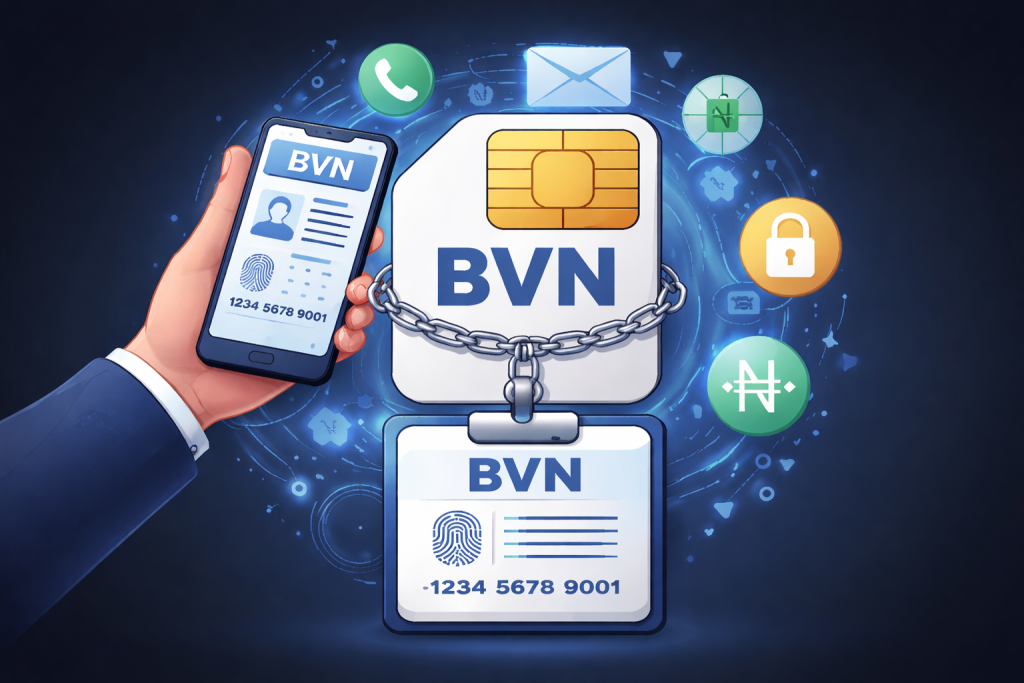
The decision to allow only one change to the phone number linked to a BVN strikes at a sensitive point in the fraud cycle. In today’s banking environment, a registered mobile number is no longer just a contact detail. It has become part of the identity and access framework. It supports alerts, authentication, recovery processes and transaction validation.
That is why this move matters.
When fraudsters gain control of the phone number tied to a customer’s banking identity, they often move closer to controlling the account itself. They can intercept alerts, manipulate recovery channels and weaken the safeguards meant to protect legitimate users. Repeated or weakly verified phone number changes create room for social engineering, insider compromise and identity abuse.
By restricting that process, the CBN has introduced friction into a space where criminals often depend on speed, confusion and poor controls. That friction is necessary.
The 24-hour temporary watchlist for BVNs linked to suspicious transactions is another strong step. Financial crime moves quickly. Fraudulent transfers can be initiated, layered and dispersed in a short time. A limited watchlist window gives banks and payment operators time to verify unusual activity before losses deepen. In security practice, that response time can make the difference between early containment and wider compromise.
This matters because fraud prevention is no longer only about stopping unauthorised withdrawals. It is about protecting digital identity. Once identity controls are weak, every other control becomes easier to bypass.
The significance of this reform lies in its simplicity. It focuses on identity assurance, traceability and risk containment. These are not cosmetic changes. They are practical controls that can reduce abuse if properly enforced.
Banks, however, must not treat the directive as a routine compliance matter. They need stronger internal verification for profile changes, tighter staff access controls, clearer audit trails and better monitoring of high-risk customer update requests. Fraud often succeeds through process failure, not just technical failure.
Customers also have a role. A phone number linked to a BVN should now be seen as a security asset. It deserves the same level of protection as a PIN, password or banking app login. Public awareness will matter if this policy is to deliver its full value.
This reform alone will not end financial crime in Nigeria. Fraud actors will adapt. They will look for new openings through phishing, SIM swap schemes, insider collusion and identity laundering. But that does not reduce the value of what the CBN has done. Stronger security is built by closing real gaps one after another.
That is what this rule does.
Nigeria’s financial system needs more controls of this kind. Clear. Enforceable. Risk-based. Focused on the points where identity, access and transaction integrity meet. On that standard, the CBN has taken a bold step in the right direction.
Destiny Young is a Technology and IT Infrastructure Executive with research interests in digital technology, cybersecurity and business risk.