

By | Destiny Young
The reported 50-year concession of the Ibom Deep Sea Port to the Bolloré Consortium marks an important moment in the long journey of one of Akwa Ibom State’s most ambitious infrastructure projects. For many people in the state, the announcement brings renewed hope that the seaport may finally move from promise to practical execution. It also raises a pressing question. Does the consortium have the capacity to deliver a project of this scale?
That question deserves a careful answer. Public enthusiasm is justified, but so is public caution. A deep seaport is not a routine civil works contract. It is a capital-intensive, technically demanding and commercially strategic project that requires strong execution across marine engineering, port operations, logistics, finance and long-term asset management. Judged against those demands, the consortium associated with the project appears to have a credible basis for success.
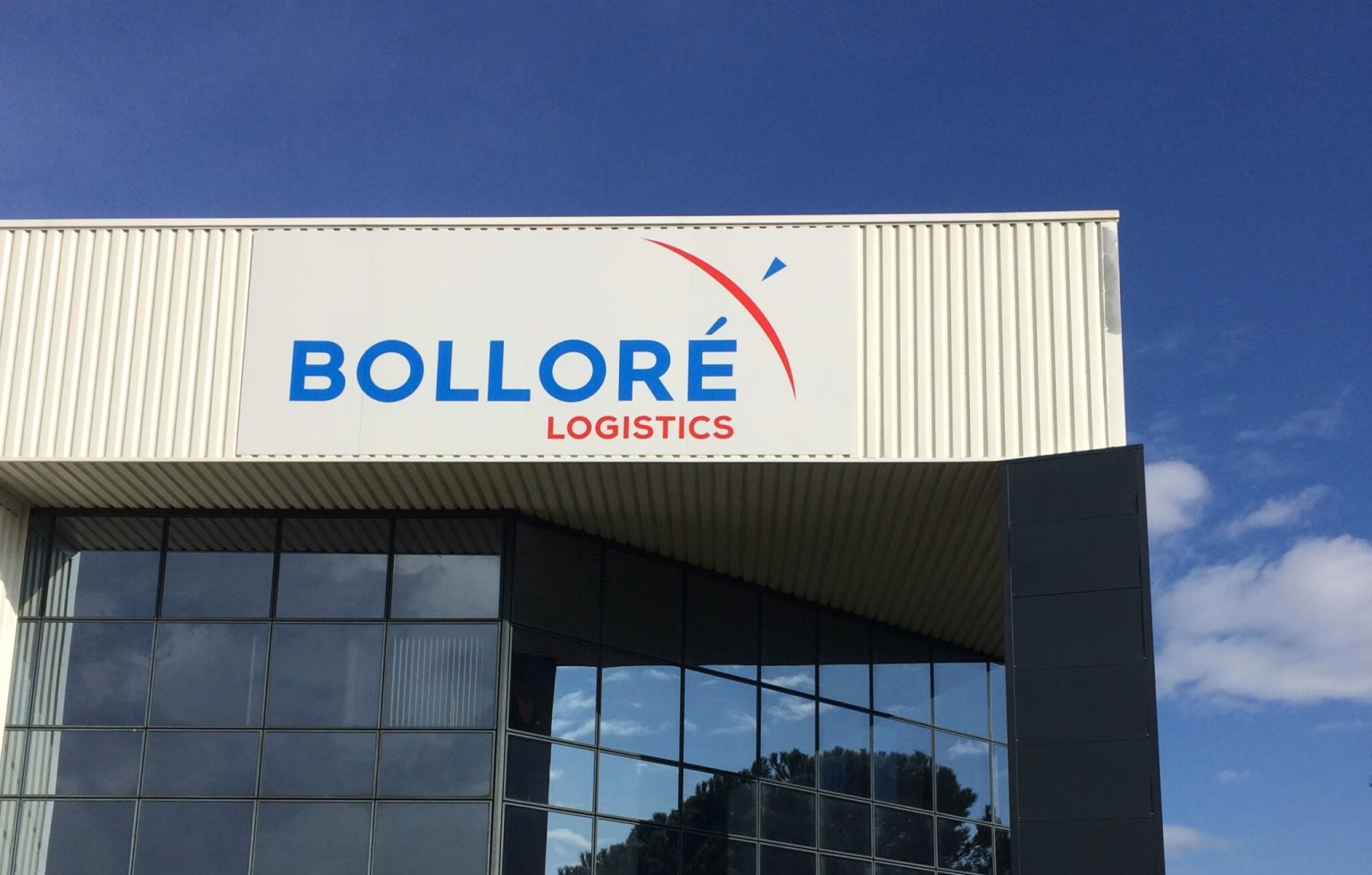
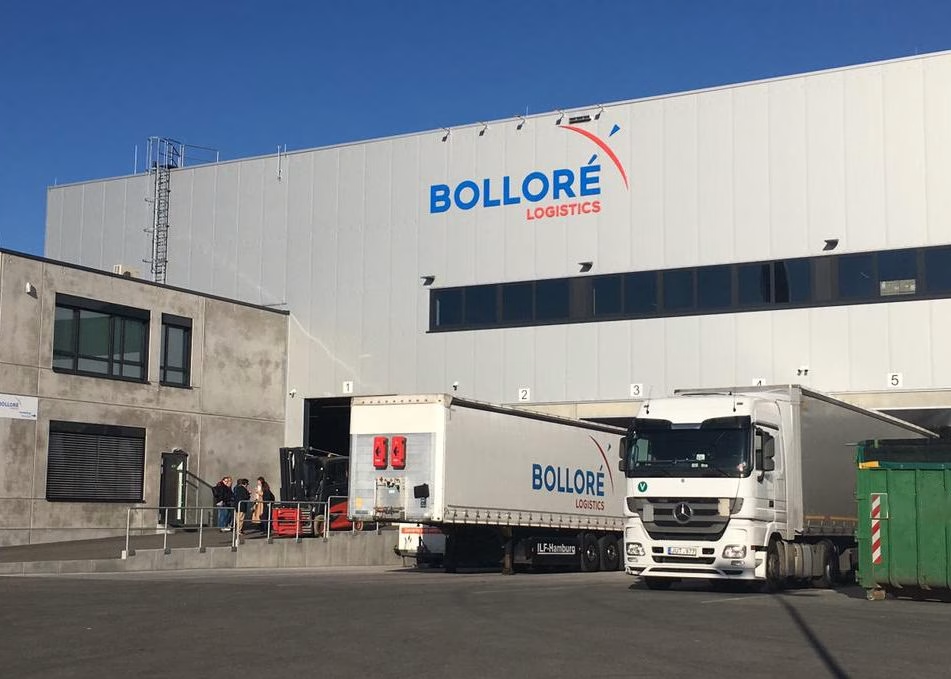
The name Bolloré is familiar across Africa’s transport and logistics space. For years, Bolloré’s African logistics business built a reputation around port management, freight handling, inland logistics and transport networks across multiple countries. Its strength came from operating real trade infrastructure, not simply investing from a distance. That background matters because the success of a seaport depends on far more than the physical construction of quays and channels. It depends on how efficiently cargo moves in and out, how well the port connects to wider trade routes, and how effectively it is managed over time.
The project has also been associated with PowerChina International Group. That is significant. It suggests that the consortium combines port and logistics experience with major engineering and infrastructure delivery capacity. In simple terms, one side understands how ports work commercially and operationally, while the other side brings the scale often required for large infrastructure execution. That combination is important for a project such as Ibom Deep Sea Port, which is expected to serve very large vessels and play a wider regional trade role.
There is also a corporate reality that the public should understand clearly. The former Bolloré Africa Logistics business was acquired in 2022 by MSC Group and now operates as Africa Global Logistics, AGL. This does not erase the Bolloré legacy in African ports. It instead places that operating history within a larger global shipping and logistics environment. That matters because MSC is one of the world’s largest names in maritime transport. A project linked to that ecosystem has access to a deeper industrial and commercial context than a narrow reading of the Bolloré name might suggest.
This point is important for Akwa Ibom. Ports do not succeed only because they are built. They succeed because they attract shipping, cargo flows, logistics services, inland transport connections and commercial confidence. A consortium with roots in African port operations and links to a major global logistics network starts with a stronger hand than a purely speculative investor would.
That does not mean success is automatic. It is not. Even capable investors can face delays, cost pressures, regulatory hurdles, design changes, financing constraints and shifting market conditions. Deep seaport development is a long-cycle undertaking. The engineering is complex. The approvals are layered. The commercial model must be robust enough to sustain operations over decades. This is why the people of Akwa Ibom, host communities, business interests and public commentators should approach the project with patience.
Patience does not mean silence. It means understanding the nature of the work ahead. In projects of this size, the early stages often involve structuring, studies, financial arrangements, technical design, site preparation, risk allocation and supporting infrastructure planning. These are not always dramatic or visible, but they are necessary. A port can only thrive when the marine infrastructure, cargo systems, evacuation links and industrial ecosystem are aligned. That takes time.
Akwa Ibom people should therefore avoid judging the concession solely by the speed of announcements or the tempo of early construction activity. A project designed to alter the state’s economic future cannot be measured by the impatience of the present moment. It must be measured by the seriousness of its foundations and the discipline of its delivery.
Stakeholders should also recognise what is at stake. If properly developed, the Ibom Deep Sea Port can reshape the state’s economic position within Nigeria and the Gulf of Guinea. It can support trade, industrial development, maritime services, warehousing, logistics businesses and employment. It can expand Akwa Ibom’s relevance in regional commerce and improve the state’s capacity to attract investment linked to transport and manufacturing. These opportunities are substantial, but they will only materialise if the project is allowed to mature under credible supervision.
This is where government and the concessionaire both have clear responsibilities. Government must provide policy consistency, investor confidence and public communication. The concessionaire must demonstrate transparency, technical seriousness and measurable progress. Host communities must be respected. Local content must not be treated as an afterthought. Environmental and social concerns must be addressed with clarity. A long concession is not a licence for opacity. It is a framework for long-term responsibility.
That is the balanced position Akwa Ibom needs. The public should neither embrace blind optimism nor retreat into reflexive doubt. The wiser course is disciplined confidence. The consortium appears to have the technical and commercial profile to justify support. At the same time, support must be matched by scrutiny. Milestones should be clear. Progress should be reported. Expectations should be managed honestly.
The Ibom Deep Sea Port has been too important to Akwa Ibom’s future to be reduced to a contest of sentiment. What matters now is execution. If the concession is backed by serious investment, competent delivery and sustained oversight, the project can become one of the most consequential infrastructure assets in the state’s modern history.
For that reason, Akwa Ibom people and stakeholders should give the concession time to work. Major seaports are not built in haste. They are built through planning, capital, expertise and persistence. What is needed now is patience, vigilance and steady public support for a project that could redefine the economic direction of the state for generations.