
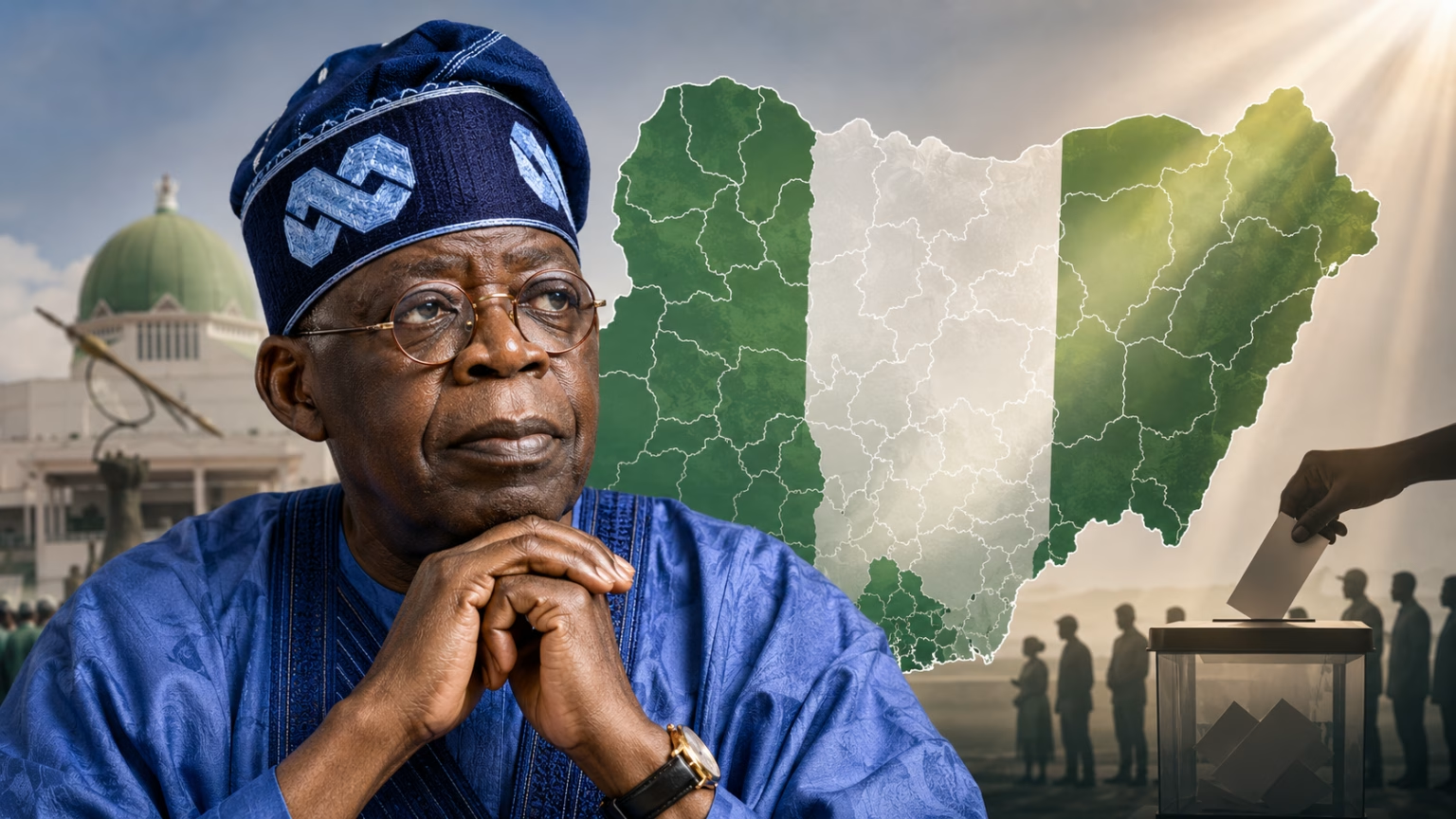

Rejoinder: The North Does Not Own Nigeria’s Future — And President Tinubu Knows It
By Ephraim Okon,PhD
Opening line: This is a rejoinder to Kio Amachree’s article, “The Jagaband’s Gamble: How Bola Tinubu Is Losing A War He Never Understood”, published on OPR News on 19 May 2026.
The article in question rests on an outdated political framework dressed in modern language. It speaks of ritual, and indeed there is a ritual here — but it is not the ritual of Nigerian politics as a whole. It is the ritual of a particular elite who mistake historical inertia for a divine right to rule, and who now mistake decisive governance for anxiety and fear.
What is unfolding before us is not the North moving with the quiet certainty of a geological force. It is the old order realising that its long-held monopoly over federal power is slipping, and scrambling to frame that loss as betrayal.To understand this, one must first address the argument of inheritance. The original piece leans heavily on the events of 1960, on indirect rule, on Ahmadu Bello and Sir James Robertson. It treats these as a living blueprint for the election of 2027. In truth, they are a grievance from sixty-five years ago.
It is true that the British weighted the structure of the North administratively through indirect rule. It is equally true that they weighted it economically by under-investing in the ports, industries and educational institutions of the South. Nigeria, however, outgrew that colonial arrangement the moment it ceased to be a colony. To argue that the Sokoto Caliphate, the emirate councils and other so-called civilisational structures stand outside the reach of democratic contest is to argue that Nigeria is not a republic but a fiefdom. Nigerians rejected that notion in 1999. They rejected it again in 2015. They rejected it once more in 2023, when a Yoruba man from Lagos won a three-way contest that included two northern heavyweights. If these structures were truly invincible, Atiku Abubakar would not have lost in 2023. Muhammadu Buhari would not have needed the political machine of the South-West to secure victory in 2015. The North’s electoral weight is real and significant, but it is not a veto over the destiny of the country.
The second point concerns the creation of the office of Special Adviser on Homeland Security. This is being presented as an attempt to ethnify the security architecture and to create a Yoruba power grab. That reading does not withstand scrutiny. It is, in fact, a response to a security system that has been bleeding the nation for fifteen years.
Boko Haram has resurged. New armed groups such as Lakurawa in the North-West and Mahmuda in the North-Central have emerged and consolidated. In April 2026, military forward operating bases in Borno were attacked and senior commanding officers killed. The current model, which concentrates too much responsibility in the office of the National Security Adviser, is centralised, slow and prone to inter-agency rivalry. Domestic security coordination requires a dedicated focus that cannot wait upon a single office designed primarily for grand strategy and external threats.
Appointing an officer of Yoruba origin does not erase the role of the National Security Adviser. It introduces functional focus and greater accountability. If the measure is to be effectiveness rather than ethnicity, then both offices should be judged by whether Borno, Zamfara and Benue become safer in the next twelve months. The North did not raise objections when northern officers headed every security agency for eight years under the previous administration. Now that balance is being corrected, it is being described as ethnic consolidation.
A third point deserves emphasis: the emergence of multiple southern candidates is not a weakness. It is proof of democratic maturation. The article expresses alarm at the coalition forming between Atiku Abubakar, Peter Obi, Nasir el-Rufai and disaffected figures from the Buhari bloc. Let them coalesce. That is how democracy functions.
The more significant story is that the South is no longer waiting for permission to field candidates. Bola Tinubu, Peter Obi and other southern figures representing the South-West, South-East and South-South demonstrate that the South now treats the presidency as something to be won on merit, not as something to be borrowed in eight-year blocks.
This unsettles the old order because it breaks the old bargain: the South provides legitimacy, the North provides votes and the power of veto. That bargain may have made sense in 1960. It does not make sense in 2026, when Lagos State alone generates more internally generated revenue than thirty states combined, and when governors in the South are driving the bulk of the country’s non-oil economic growth.
If the North wishes to return to power in 2031, it must win that position at the ballot box. It cannot do so by convincing southerners that their ambition is excessive or illegitimate.
The fourth point concerns the idea that power flows only through Kano and Kaduna. The original article ends with a warning that when the reckoning comes, Tinubu will be outgunned by emirs, governors and structures older than the Nigerian state itself. This assumes that power is static, held by traditional guardians, and dispensed only to those who behave according to established rules.
Power in Nigeria today flows through markets, diaspora remittances, technology hubs, ports and a youthful population that cares little for which historical caliphate its grandfather served. It flows through states that can pay salaries without exclusive recourse to Abuja. It flows through voters who are tired of being told that their choice is illegitimate because it upsets an arrangement made in 1960.
Tinubu is navigating a complex federal structure in 2026, where Lagos, Rivers and Anambra hold immense economic and political weight alongside Kano. Building a national path through the South and the Middle Belt is not betrayal. That is federalism in practice.
Finally, if the North wants 2027, it must earn it rather than inherit it. No one denies the North’s demographic and historical weight. But weight is not the same as an absolute mandate. The North gave Tinubu votes in 2023. The South gave him votes. The Middle Belt gave him votes. That is a coalition, not a favour. If northern elites wish to reclaim Aso Rock, they should build alliances across regions, manage party machinery effectively and present a coherent programme to the electorate. Complaining about parallel offices will not achieve that objective. The presidency belongs to whoever can secure twenty-five per cent of the votes in twenty-four states and the Federal Capital Territory. It does not belong to any region by inheritance. For the first time since 1960, that constitutional rule applies equally to everyone.
In conclusion, the moves made by President Tinubu are the strategic steps of a president who understands that Nigeria has structurally changed. The South is not a placeholder. The North is not a proprietor. And the election of 2027 will be decided by voters, not by the ghosts of 1960. If the North wishes to return to the Villa, it is welcome to contest for it. But let us stop pretending that such a democratic contest is an act of political treason.
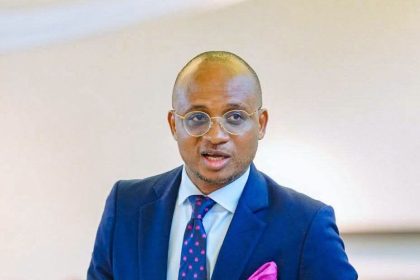
Abom. Ephraim Okon, PhD, is a lawyer, cultural diplomat, and international development consultant with over 17 years of experience in strategic communication and public health. He currently serves as the Special Assistant on Grassroots Mobilisation to the Governor of Akwa Ibom State. He writes from Okon, Essien Udim LGA, strictly in his personal capacity