
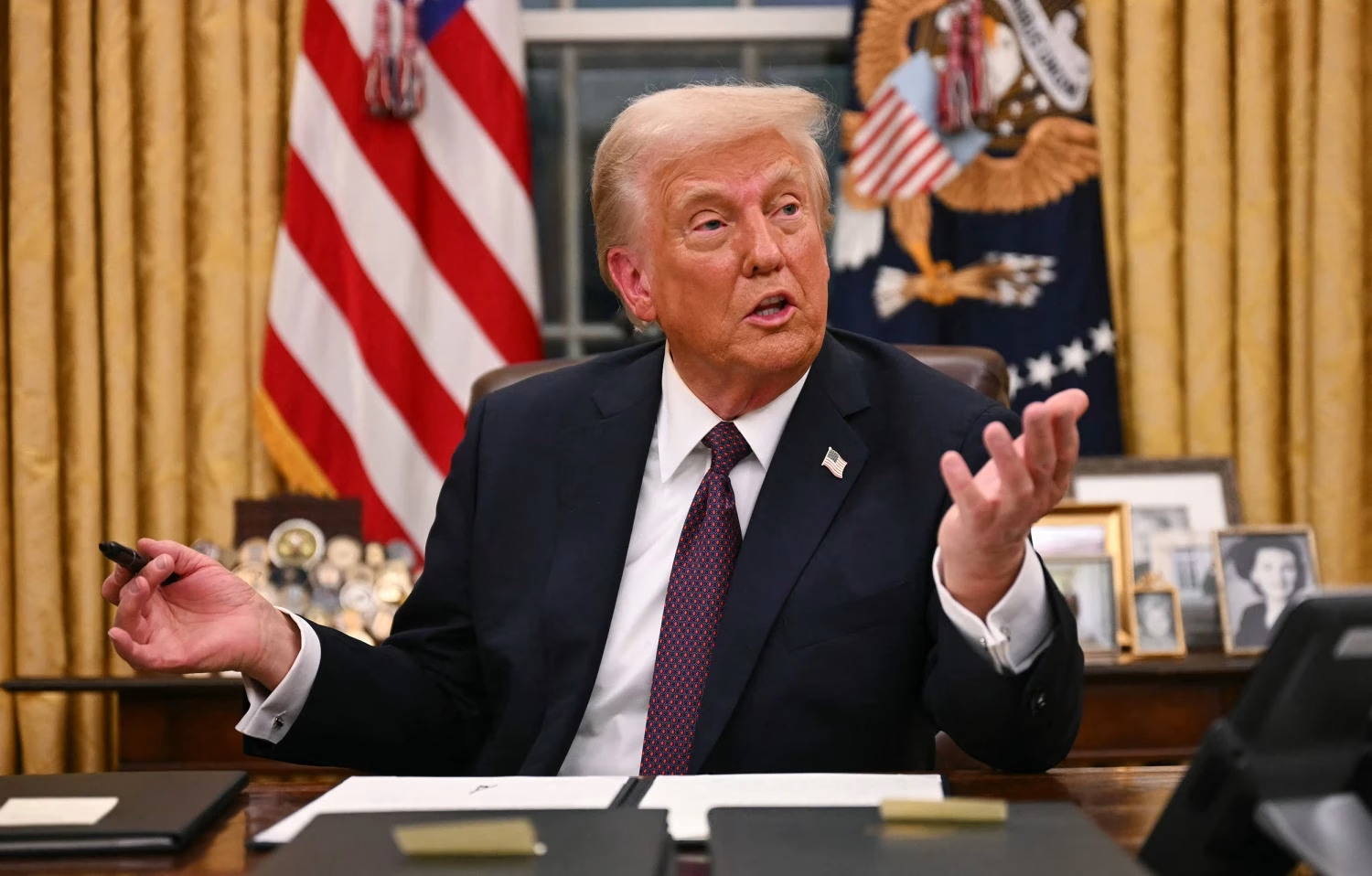

President Donald Trump’s American Energy Dominance agenda is based on a clear objective. The United States should produce more oil and gas, expand exports, cut barriers to investment, and use energy strength as a tool of economic and geopolitical influence. In 2026, that agenda is not just campaign language. It is tied to a real production base and a growing export system, especially in liquefied natural gas.
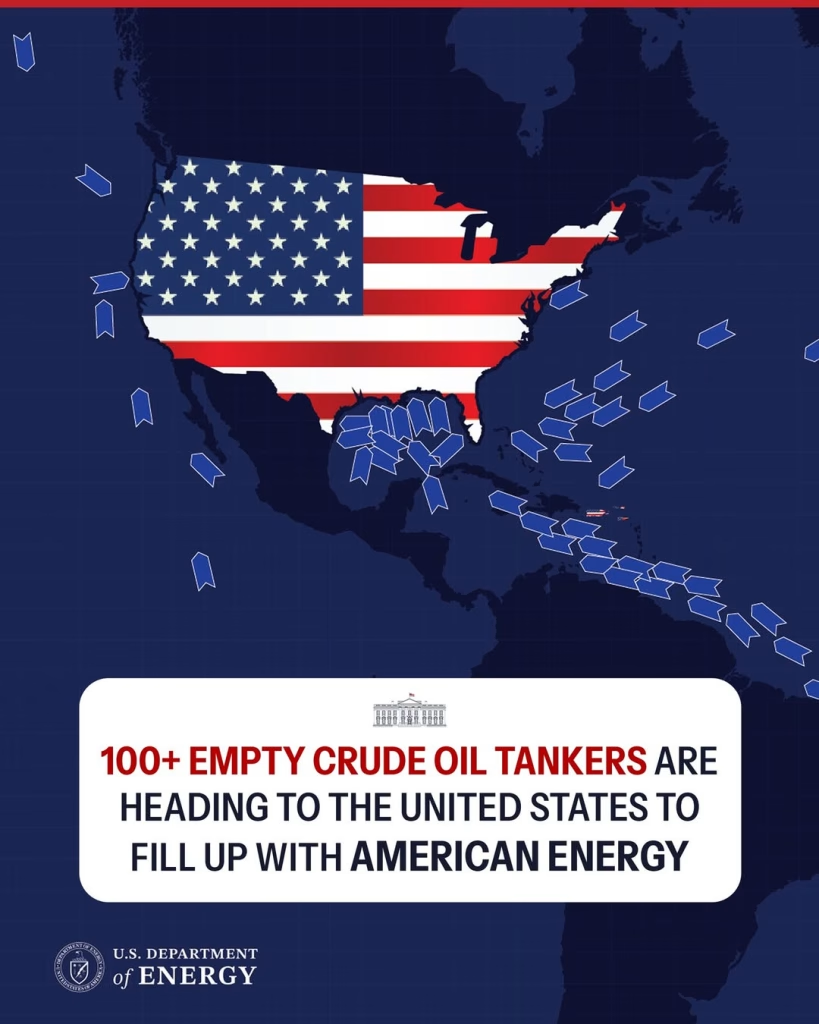
The strongest case for the policy lies in scale. The White House says the United States has become the central force in global energy supply, while independent data show the country remains the world’s largest LNG exporter and a major crude producer. The International Energy Agency said the United States led the latest wave of LNG investment decisions in 2025, strengthening its position in the global gas trade.
That matters because energy security now carries direct geopolitical weight. Europe’s effort to reduce dependence on Russian supply has increased the importance of U.S. crude and LNG. The U.S. Energy Information Administration said Europe became the top destination for U.S. crude exports in 2023 and remained a major market in 2025. At the same time, the IEA said European buyers increased contracting from new U.S. LNG projects.
The argument that America is providing the world with an energy lifeline is strongest in gas. The IEA expects the U.S. share of the global LNG market to rise from around 25 percent in 2025 to about 33 percent by the end of the decade. That would give the United States an even larger role in helping countries replace disrupted pipeline gas, diversify import sources, and manage supply shocks.
Recent market disruptions have made that role more visible. A U.S. Department of Energy LNG snapshot published at the end of March said U.S. export capacity stood at more than 19 Bcf/d, with cargoes shipped to 50 countries and more than 36 Bcf/d of additional capacity under development. That scale gives the United States room to respond when global energy flows tighten.
This is where Trump’s agenda becomes more than a domestic policy slogan. When Washington backs drilling, pipelines, export terminals, and faster approvals, it increases the chance that more U.S. energy reaches world markets. Reuters reported at CERAWeek in March that U.S. officials were promoting energy dominance as a stabilising force even as global executives warned of one of the worst supply disruptions in decades. That tension captures the moment well. The world is not fully secure, but it is leaning more heavily on American supply.
There is also a price and inflation angle. Higher supply usually improves market balance, and stronger U.S. output can help moderate the severity of price spikes over time. For energy-importing economies, that matters beyond fuel. It affects electricity costs, transport, manufacturing, food prices, and broader inflation pressure. In that sense, the American energy push has consequences far beyond the U.S. domestic market.
Still, the claim needs caution. American energy strength helps, but it does not eliminate global risk. Supply chains remain exposed to war, shipping disruption, infrastructure bottlenecks, producer discipline, and policy uncertainty. Reuters noted that even as U.S. officials projected confidence, executives warned that some disruptions could not be solved quickly by shale output alone.
There is another limit. More exports do not automatically translate into lower prices everywhere. Contract terms, shipping costs, regasification infrastructure, and local market conditions all shape whether a country can fully benefit from U.S. supply. For many emerging economies, access still depends on affordability as much as availability. The IEA has said the coming LNG wave should improve supply security and market flexibility, but outcomes will vary across regions.
The broader conclusion is straightforward. Trump’s American Energy Dominance agenda is built on real production strength, expanding LNG capacity, and a larger U.S. role in the global energy system. In that sense, it is providing an important energy cushion for many countries during a period of heightened instability. But it is not a complete solution to the world’s energy problems. It reduces vulnerability. It does not remove it.