

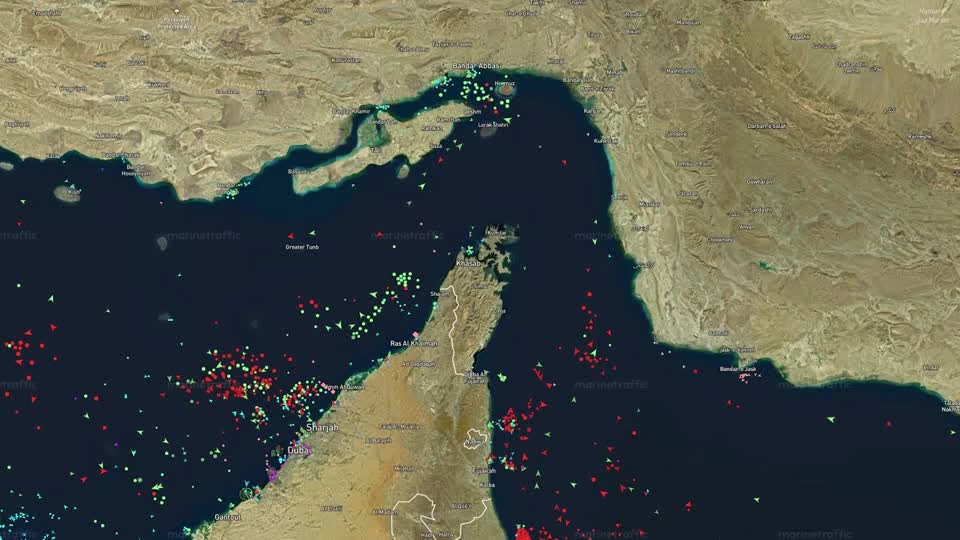

The United States has said its blockade of Iranian ports is now fully in force, in a major escalation of pressure on Tehran and a move that could unsettle global energy and shipping markets.
U.S. Central Command, known as CENTCOM, said the operation targets ships entering or leaving Iranian ports. Washington has argued that the action is limited to Iranian port traffic and does not amount to a blanket closure of the Strait of Hormuz, one of the world’s most important oil transit routes.
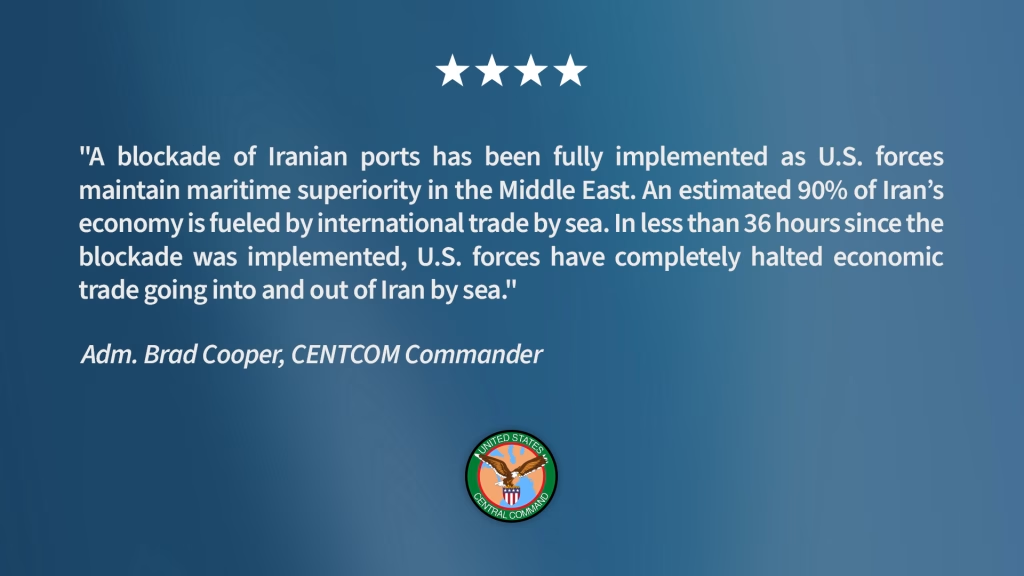
The latest claim was attributed to CENTCOM commander Adm. Brad Cooper, who said U.S. forces had established maritime superiority in the area and halted sea-based trade into and out of Iran within 36 hours of the blockade taking effect.
That claim, if sustained, marks one of the most aggressive U.S. military moves against Iran’s commercial access routes in recent years. It also shifts the confrontation beyond sanctions and diplomacy into direct control of maritime trade channels linked to the Iranian economy.
Early reports suggest the blockade had an immediate effect on shipping activity, with vessels said to have turned back after U.S. warnings. That points to an early disruption in commercial movement, though the full economic effect on Iran, and the wider region, remains unclear.
The significance goes beyond Iran. Any prolonged disruption around Iranian shipping raises the risk of higher insurance costs, delayed cargo movement, tighter tanker availability and renewed volatility in oil prices. Even when shipping lanes remain technically open, military tension in the Gulf can quickly push up the cost of moving energy and goods.
Washington appears to be using the blockade as a pressure tool after diplomacy with Tehran failed to produce a breakthrough. The move comes at a time of already high tension over Iran’s nuclear programme and the wider balance of power in the Middle East.
Still, not every part of the U.S. account is independently settled. One widely circulated claim, that 90 percent of Iran’s economy depends on sea-based international trade, should be treated with caution unless backed by verifiable economic data from an independent source.
What is clear is that the blockade has raised the stakes. If it remains limited to Iranian port traffic, the United States may argue it has contained the fallout. If it expands, or triggers retaliation, the consequences could spread quickly across oil markets, commercial shipping and regional security.
For now, the U.S. is presenting the operation as fast, effective and under control. The real test will be whether that claim holds in the days ahead, as Iran responds and the wider maritime system absorbs the shock.