


Opposition political parties in Nigeria have agreed to work towards fielding a single presidential candidate for the 2027 general election.
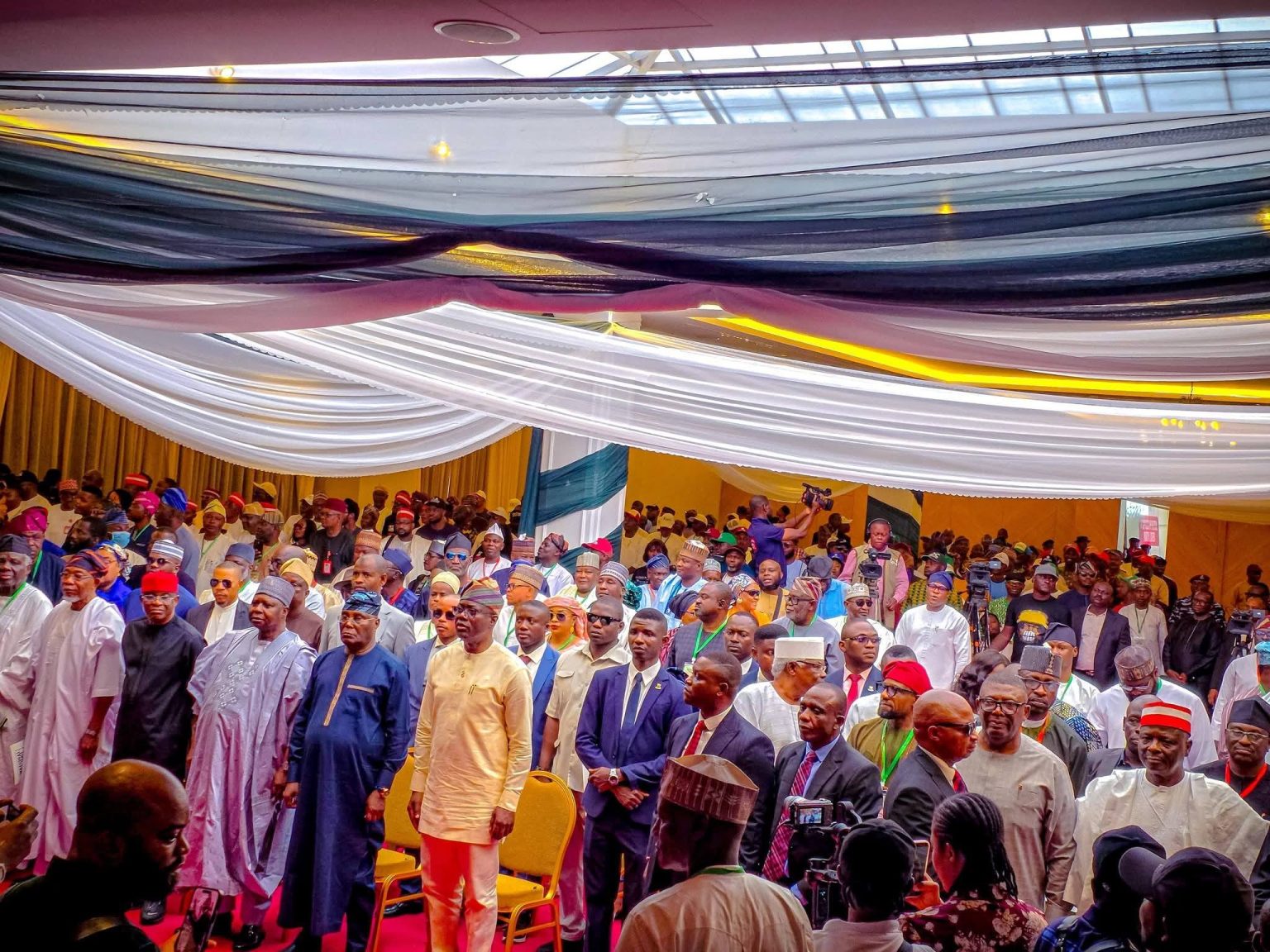
The decision was announced at the National Opposition Summit held in Ibadan, Oyo State, on Saturday, April 25, 2026, where leaders of several opposition parties adopted the “Ibadan Declaration.” Reports identified the participating parties to include the PDP, ADC, PRP, NNPP, NDC, LP, APP, Accord, APM, AA, DLA, YP, ADP and ZLP.
The communiqué was read by former Minister of Special Duties and factional National Chairman of the Peoples Democratic Party, PDP, Taminu Turaki, SAN, on behalf of the participating opposition leaders.
According to the communiqué, the opposition parties said they would work together to produce one presidential candidate to challenge the ruling All Progressives Congress, APC, in the 2027 poll.
“We shall work towards fielding one presidential candidate for the 2027 elections, which shall be agreed and supported by all participating opposition parties to rescue our nation and her long-suffering masses,” the communiqué stated.
The summit, hosted in Ibadan, drew several major political figures, including former Vice President Atiku Abubakar, Labour Party’s 2023 presidential candidate Peter Obi, former Kano State Governor Rabiu Kwankwaso, former Rivers State Governor Rotimi Amaechi and former Osun State Governor Rauf Aregbesola.
The opposition leaders said Nigeria’s democracy was under pressure and warned against what they described as moves capable of weakening multiparty politics ahead of the next general election.
They said the country needed a united opposition front to prevent the emergence of a one-party state and to offer Nigerians what they described as a credible alternative in 2027.
The communiqué also raised concerns over the conduct of the Independent National Electoral Commission, INEC, and passed a vote of no confidence in its chairman, Prof. Joash Amupitan.
The opposition leaders accused Amupitan of alleged partisanship in favour of the APC and called for his resignation, arguing that the electoral body must be led by a neutral figure ahead of the 2027 polls. The allegation remains a political claim by the opposition parties.
They also called on the National Assembly to review provisions of the Electoral Act 2026 which, according to them, could affect the credibility of future elections.
The Ibadan Declaration is expected to set the tone for further talks among opposition parties as Nigeria moves closer to another election cycle.
However, the agreement does not yet mean that a candidate has been chosen. It only signals the intention of the participating parties to negotiate a common platform and a consensus candidate before the 2027 presidential election.
The success of the arrangement will depend on how the parties manage internal disputes, personal ambitions and existing ideological differences within the opposition bloc.