


By | Destiny Young
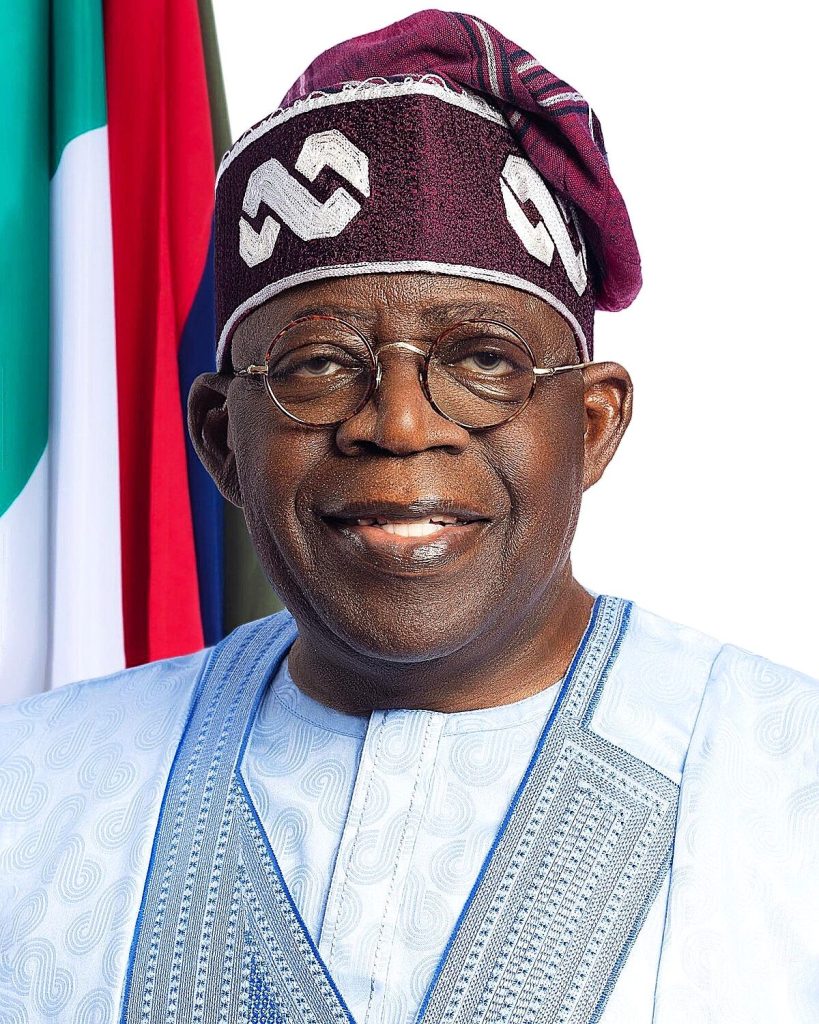
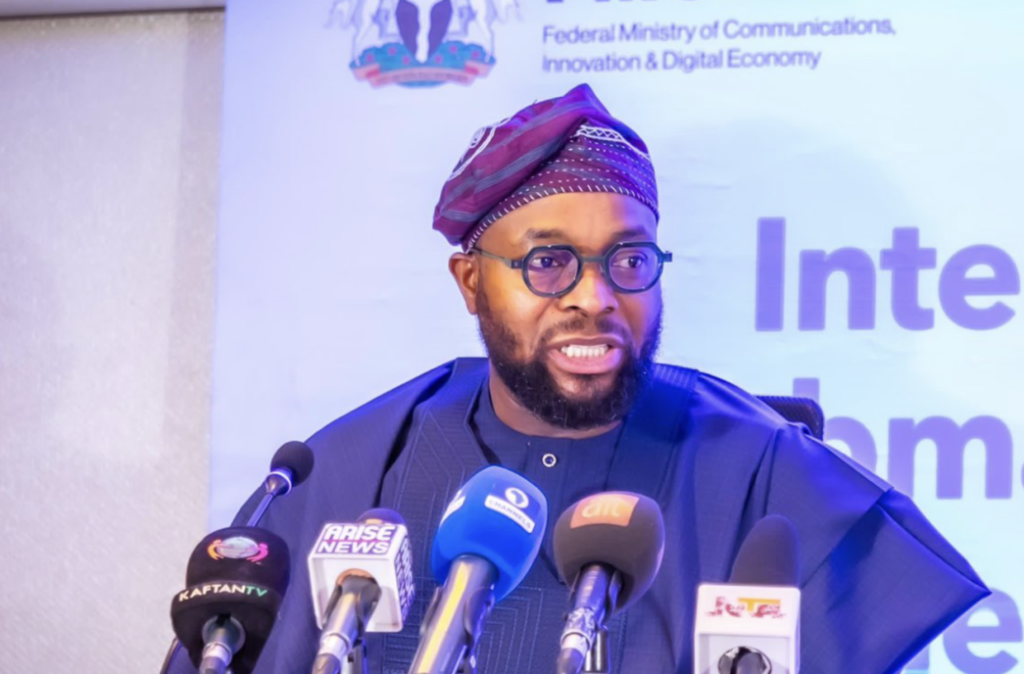
Nigeria’s technology ecosystem and wider digital transformation agenda have moved into a more structured phase under President Bola Ahmed Tinubu’s administration. In my view, the clearest policy driver of that shift has been the work of the Minister of Communications, Innovation and Digital Economy, Dr Bosun Tijani, whose approach has combined talent development, digital infrastructure, startup policy, artificial intelligence planning, and institutional reform,. The result is not a finished transformation. It is a serious attempt to move Nigeria from digital potential to digital capacity, writes Destiny Young, an IT and Tech expert.
What stands out is that the current push is more coherent than many earlier efforts. Rather than treating ICT as a narrow telecoms issue, the ministry has framed digital development as an economy-wide growth strategy. The ministry’s own blueprint places emphasis on knowledge, policy, infrastructure, innovation, entrepreneurship and capital, and trade. That matters because no tech ecosystem grows on startups alone. It needs rules, networks, skills, capital, and public systems that create demand for digital services.
The strongest evidence of this more deliberate direction is the 3 Million Technical Talent programme, known as 3MTT. The programme was launched to build a larger pipeline of Nigerian technical talent, with an initial first phase of 30,000 fellows and a second phase designed to scale training to 300,000 young Nigerians across phases one and two. The programme focuses on practical areas such as AI and machine learning, cloud computing, DevOps, data science, software development, UI and UX design, and cybersecurity. This is important because Nigeria’s biggest structural advantage in technology is not infrastructure. It is people. If the country can produce skilled workers at scale, it can export services, deepen local innovation, and attract employers looking for talent.
By late 2025, the government said the 3MTT programme had drawn more than 1.8 million applications from all local governments and that 30,000 young Nigerians had already undergone training. Earlier in May 2025, Bosun Tijani had also said more than 117,000 Nigerians had been trained, with another 35,000 in training at the time. Even allowing for the fact that government training programmes often face quality and placement questions, the scale of ambition is significant. It shows that the administration sees digital skills as labour market policy, not just youth empowerment rhetoric.
The second major pillar is connectivity. Nigeria cannot build a modern digital economy on weak and uneven internet access. Official NCC statistics show broadband subscriptions rose to 109.7 million in November 2025, with penetration at 50.58 percent, up from 96.3 million subscriptions and 44.43 percent in December 2024. That is real progress, even if it still falls short of older national aspirations for 70 percent broadband penetration. The ministry’s answer is Project BRIDGE, a plan to deploy at least 90,000 kilometres of fibre optic cable through a public private partnership model. In official statements, the government says the project has World Bank financing support and is meant to become Nigeria’s national connectivity backbone.
This is where Bosun Tijani’s role becomes especially important. He has repeatedly linked broadband expansion to economic productivity, affordability, and inclusion, not merely telecom growth. The policy logic is sound. Better fibre backbones reduce the cost of bandwidth, improve service quality, and create the base layer for digital government, e-commerce, online education, telemedicine, fintech, cloud adoption, and AI deployment. In simple terms, if 3MTT is about human capital, Project BRIDGE is about network capital. Nigeria needs both.
There is also evidence that investors are responding to this clearer direction. In May 2025, Tijani said foreign direct investment into Nigeria’s communications and digital economy sector rose from 22 million dollars in the first quarter of 2023 to 191 million dollars in the first quarter of 2024, and from 25 million dollars in the second quarter of 2023 to 114 million dollars in the second quarter of 2024. Those are strong numbers, though they should be read carefully because quarterly FDI can be volatile. Still, the direction of travel suggests that clearer policy signalling, improved engagement with global technology firms, and a stronger reform narrative are helping Nigeria compete for digital capital.
The startup side of the ecosystem also deserves attention. Nigeria already had a strong entrepreneurial base before this administration, especially in fintech, payments, logistics, software services, and digital commerce. What the current government has done is try to give that ecosystem more formal policy support. The Nigeria Startup Act portal is now live to facilitate startup labelling and the registration of investors, accelerators, incubators, innovation hubs, and related actors. That does not automatically solve the funding squeeze that startups face in a high interest rate and weak currency environment. But it does show movement toward a more formal innovation architecture, which matters for regulation, incentives, and investor confidence.
Another area where this administration has moved faster than many expected is artificial intelligence. Nigeria now has a formal National Artificial Intelligence Strategy, published in September 2025, with strategic goals around economic competitiveness, social inclusion, research and innovation capacity, ethical AI, and governance frameworks. The ministry also lists the Nigeria Artificial Intelligence Research Scheme and the National AI Strategy among its core initiatives. In practical terms, this tells local founders, researchers, universities, and international partners that Nigeria wants to be more than a consumer market for imported AI tools. It wants to build local capability, policy frameworks, and sector use cases in areas such as health, agriculture, education, and public services.
The trust layer of digital transformation is also taking shape. Nigeria’s digital economy cannot mature without stronger privacy, cybersecurity, and governance systems. The Nigeria Data Protection Commission now has a formal strategic roadmap and action plan for 2023 to 2027, alongside the Nigeria Data Protection Act 2023 and related compliance guidance. In April 2026, the ministry also announced steps toward a multi-stakeholder Cybersecurity Coordination Council to improve information sharing, resilience, and coordinated response to cyber threats across sectors. These moves matter because investors, consumers, and institutions do not fully embrace digital systems they do not trust.
There is a public sector angle too. The proposed National Digital Economy and e-Governance Bill 2025 seeks to provide legal recognition for digital records and contracts, mandate digital transformation across public institutions, and create a broader framework for digital governance and emerging technologies. If eventually passed and implemented well, it could help move digital transformation in Nigeria from fragmented projects to a more standardised state architecture. That would be one of the most consequential shifts of all, because government itself is one of the largest potential buyers and users of digital systems.
Still, this is not a story of uncomplicated success. Nigeria’s telecom and digital sectors continue to face deep constraints. High operating costs, foreign exchange pressure, electricity instability, right of way bottlenecks, infrastructure vandalism, and uneven state-level policy execution remain serious obstacles. Even official documents acknowledge right of way as a major challenge, though recent advocacy has led to zero charges in 11 states. That is progress, but not yet a national solution.
My reading of the moment is this. Nigeria’s tech ecosystem is not advancing because of slogans. It is advancing because a more deliberate framework has emerged around talent, infrastructure, startup enablement, AI policy, trust architecture, and digital government. Dr Bosun Tijani has become the most visible face of that framework, while President Tinubu’s administration has provided the political cover and policy lane for it to take shape. The real test now is execution at scale. Nigeria does not need more announcements. It needs fibre in the ground, talent in jobs, startups with growth capital, safer digital systems, and public institutions that actually work in digital form. On that score, the administration has made a credible start, but the harder phase is the one now in front of it.
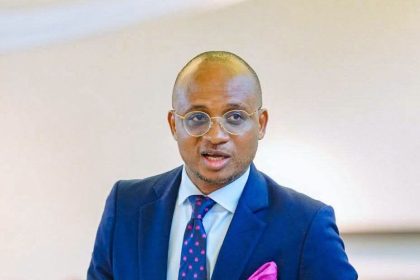
Destiny Young, a technology, IT and cybersecurity expert, currently serves as Special Assistant on New Media and Digital Communication to the Executive Governor of Akwa Ibom State, His Excellency Pastor Umo Eno, PhD.