
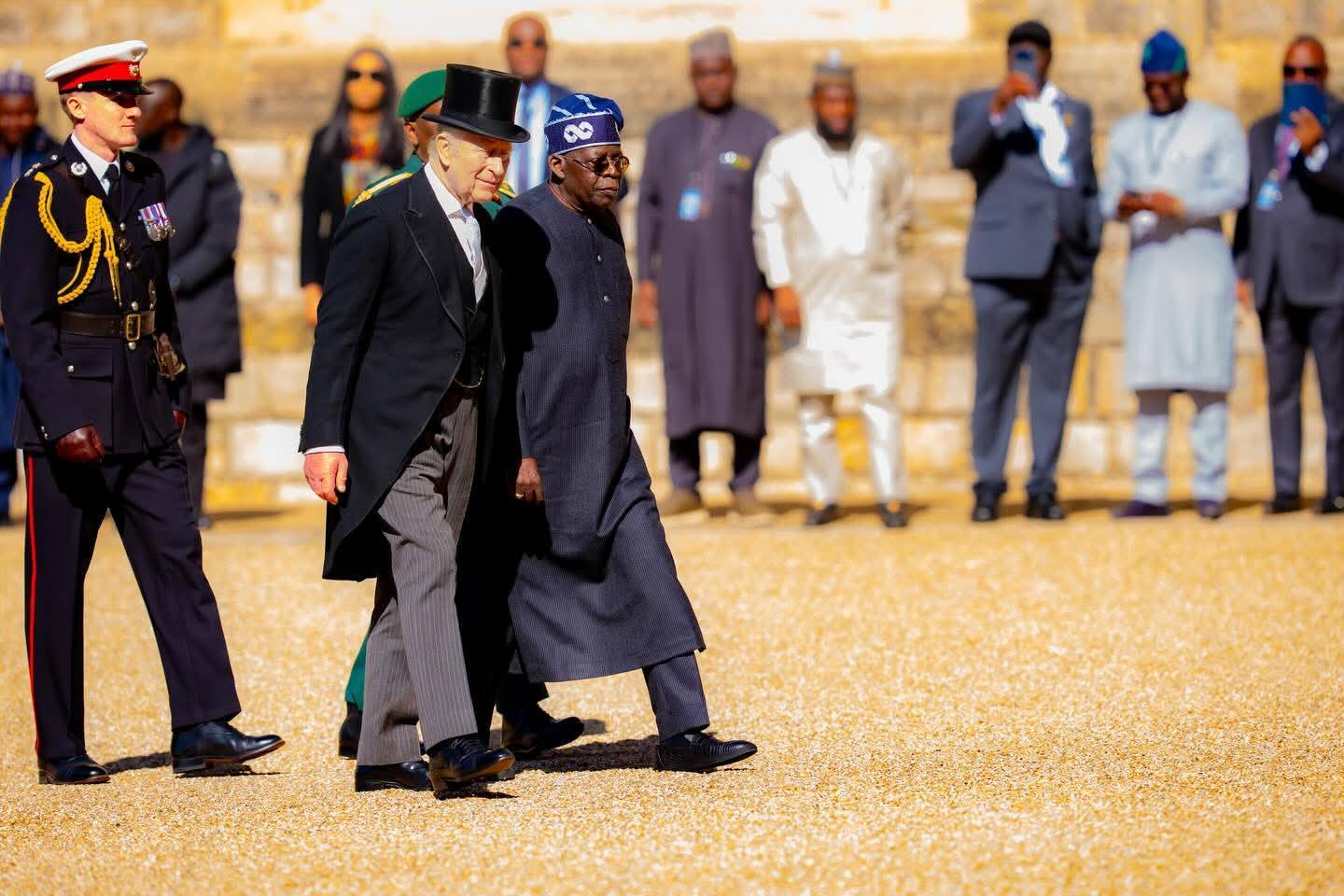

Tinubu’s UK Visit Yields Trade, Education and Infrastructure Gains for Nigeria
President Bola Tinubu’s state visit to the United Kingdom has handed Nigeria a mix of diplomatic prestige, commercial openings and sector-specific outcomes that could carry benefits well beyond the ceremonial stage.

President Bola Tinubu’s state visit to the United Kingdom produced outcomes in port infrastructure, trade, education, digital finance and food security. The gains could improve logistics, expand skills development and strengthen Nigeria’s investment profile if fully implemented.
The visit, the first by a Nigerian leader to the UK in 37 years, came with strong symbolism. It also came with practical results. From a major ports financing deal to new education partnerships, manufacturing commitments, digital finance openings and wider trade cooperation, the engagement offered a clearer picture of how bilateral diplomacy can translate into domestic value.
At the centre of the visit was a £746 million financing deal to refurbish the Lagos Port Complex at Apapa and the Tin Can Island Port Complex. That is the most immediate and measurable outcome of the trip. For Nigeria, better ports mean more than improved physical infrastructure. They can reduce cargo delays, lower logistics costs, speed up the movement of goods and improve the efficiency of imports and exports. For businesses, that can ease long-standing operational bottlenecks. For consumers, it can help reduce some of the cost pressures that inefficient port operations add to everyday goods.
The ports deal also sends an important message to investors. Large-scale export finance transactions are not signed on sentiment. They require confidence in the host country, confidence in repayment structures and confidence in the policy environment. That matters for Nigeria because one successful infrastructure financing package can improve the country’s standing with other lenders and investors looking at transport, energy, housing and industrial projects. In practical terms, this can widen access to capital for future projects that support jobs, public services and growth.
Beyond the ports agreement, Tinubu’s visit built on the United Kingdom-Nigeria Enhanced Trade and Investment Partnership, which had already begun to gather pace. That wider framework matters because it provides an institutional route for follow-up. State visits often produce headlines that fade quickly. What makes this one more significant is that several outcomes sit within an existing platform designed to move trade, investment and sector cooperation forward in a structured way.
One positive takeaway is the growing emphasis on production within Nigeria rather than simple trade with Nigeria. A notable example is the opening of a £24 million Ovaltine manufacturing facility in Lagos, its first production site in Africa. That is important because local manufacturing supports jobs, supplier linkages, tax revenue and skills development. It also helps Nigeria deepen value addition at home instead of relying heavily on imports. For Nigerians, the broader gain is economic activity that is rooted locally and capable of creating direct and indirect employment.
Another important area is digital finance. The visit period coincided with progress for UK fintech firm Wise, which secured conditional regulatory approval to expand into Nigeria. That matters because cross-border transfers remain expensive and frustrating for many Nigerians, especially students, freelancers, businesses and families connected to the diaspora. More competition in the payments space can improve efficiency and lower transaction costs. For millions of Nigerians who depend on foreign transfers or who make international payments, that kind of reform can have a direct effect on convenience and affordability.
Agriculture and food security also featured among the outcomes. Nigeria’s sovereign investment authorities signed an agreement with a UK-linked firm to explore large-scale dairy production and processing. This may not attract the same public attention as the port deal, but it touches a more immediate national concern. Nigeria spends heavily on imported dairy products, and local production remains underdeveloped. A credible dairy investment programme could support farmers, processors and local supply chains while reducing pressure on foreign exchange. If implemented properly, it could also improve nutrition outcomes and strengthen food security.
Education emerged as one of the clearest long-term gains from the visit. Several university and academic partnerships were highlighted, including links involving the University of Birmingham, the London School of Economics and institutions in Nigeria. These collaborations are significant because they point to stronger in-country access to internationally recognised education, training and research partnerships. For students and families, that could reduce the need to seek every high-value qualification abroad. For the country, it helps build local capacity in fields such as artificial intelligence, digital communications, surgery and other future-focused disciplines.
This matters because Nigeria’s development challenge is not only about infrastructure and finance. It is also about skills. A country with a young and expanding population needs stronger pathways into high-value sectors. Education partnerships that bring expertise, curriculum development, research collaboration and technical training into Nigeria can help create a more competitive workforce. That is the kind of gain whose real value becomes clearer over time.
The visit also strengthened Nigeria’s standing in the creative and cultural economy. Britain used the occasion to highlight the deep social and cultural links between both countries, including the role of the Nigerian diaspora and the rising influence of Nigerian music, film and culture. That soft power matters. It supports brand Nigeria in ways that can help tourism, media exports, fashion, entertainment and investment in creative industries. The creative sector is already one of Nigeria’s most visible global strengths. Better institutional links and stronger recognition can help move it from cultural prominence to larger commercial returns.
There was also progress in standards, accreditation and regulatory cooperation. These areas rarely dominate headlines, but they matter to a modern economy. Better standards systems make it easier for products and services to compete across borders. Stronger accreditation improves trust. More capable regulators help create a more predictable business environment. These are the kinds of foundations that make investment easier and exports more viable. For Nigerians, they matter because serious economic growth depends not only on deals, but also on the systems that allow businesses and institutions to function with credibility.
Security cooperation formed another useful part of the visit. Both countries signalled stronger collaboration against terrorism and transnational crime. Nigeria’s security challenges remain a major drag on growth, agriculture, movement and investment. Any improvement in intelligence-sharing, law enforcement support or institutional cooperation could strengthen Nigeria’s capacity to respond to threats that have economic and social consequences. For ordinary Nigerians, the value of stronger security cooperation lies in the possibility of safer communities, more stable livelihoods and a better climate for investment.
Migration cooperation was one of the more politically sensitive outcomes tied to the visit. The UK announced a new arrangement to make the return of Nigerians without legal status easier in some cases. While that will not be celebrated in the same way as the trade and investment gains, it still reflects a more structured bilateral relationship. The positive case for Nigeria is that engagement on migration, documentation and border management can reduce friction in state-to-state relations and show that the country is willing to deal seriously with difficult issues. In diplomacy, credibility often rests on the ability to engage both the popular and unpopular parts of a relationship.
The larger diplomatic benefit of the visit should also not be ignored. State visits are designed to send a signal. In this case, the signal was that Nigeria remains a country of strategic importance to the United Kingdom, both commercially and politically. That visibility matters in a competitive global economy where countries are seeking capital, technology, educational partnerships and stronger foreign relationships. High-level recognition does not solve domestic problems by itself, but it can strengthen Nigeria’s profile at a time when the country wants to attract more investment and present itself as a serious destination for business and innovation.
Taken as a whole, Tinubu’s UK visit delivered more than pageantry. The headline result was the Lagos ports financing deal. The deeper value lies in the combination of infrastructure support, manufacturing growth, education linkages, digital finance progress, food sector investment, regulatory cooperation and wider trade engagement. Some of these gains will take time to mature. Some will depend heavily on implementation back home. That remains the true test.
Still, the visit has given Nigeria a stronger platform. It has produced outcomes that touch infrastructure, skills, food security, payments, trade and investment. If these commitments are followed through, the benefits could be felt by businesses trying to move goods more efficiently, students seeking better opportunities, workers looking for jobs, entrepreneurs navigating payment systems and families hoping for a more functional economy.
That is why the trip matters. It was not only a diplomatic showpiece. It was a chance to secure practical openings. On the evidence so far, Nigeria came away with tangible gains and a clearer path to turn bilateral goodwill into national value.