

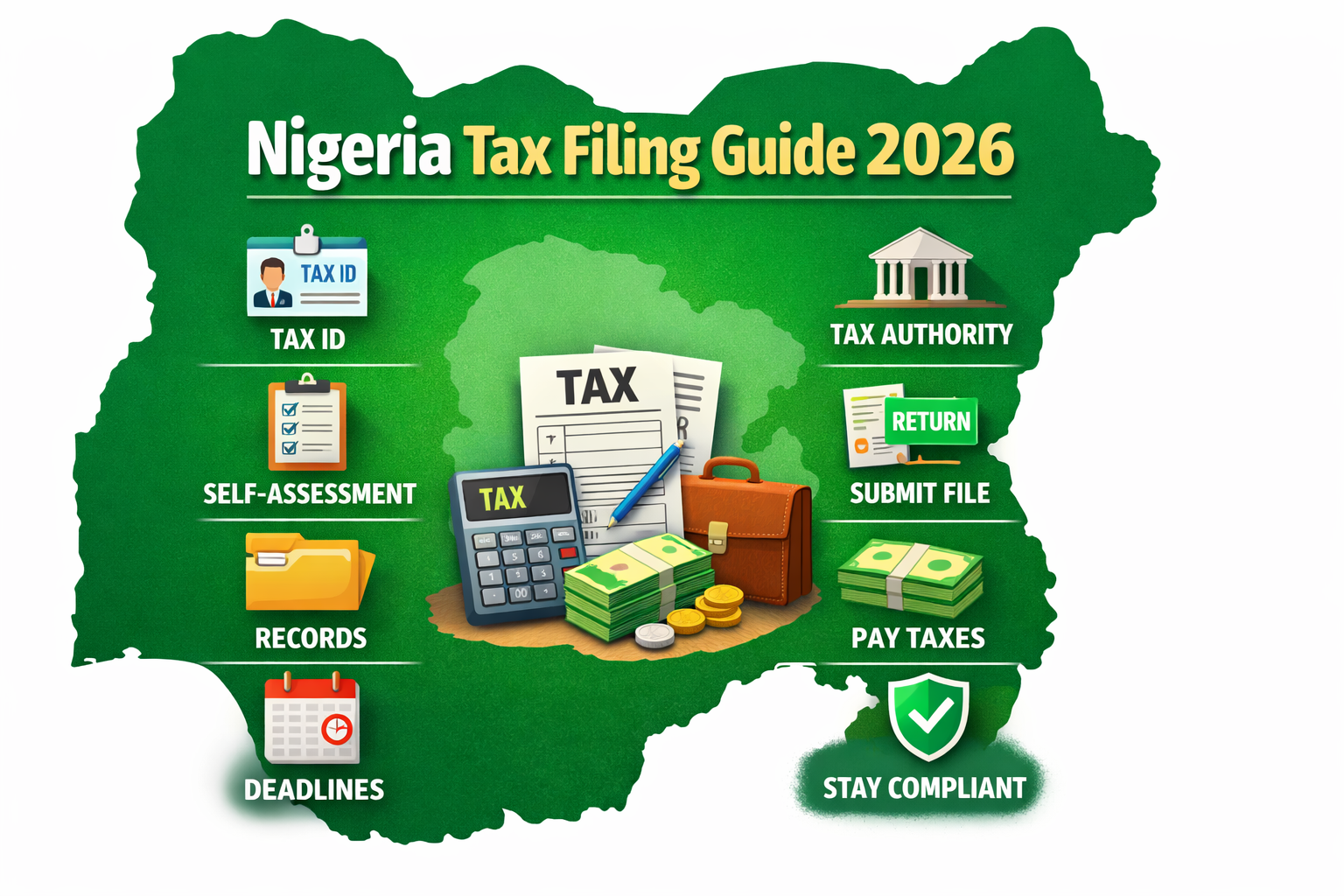

Filing tax in Nigeria has become more important under the country’s new tax law, which places stronger emphasis on registration, self-assessment, proper record-keeping, and timely returns. Whether you are an employee, a freelancer, a business owner, an employer, or a registered company, the process now requires clearer attention to your taxpayer category, the correct tax authority, and the documents needed to stay compliant. This guide explains the basic steps in a simple format so you can understand what to file, where to file it, and how to avoid common mistakes.
- Understand the basic rule
Nigeria’s new tax framework for 2026 is built around self-assessment.
This means you are expected to:
Register.
Work out your tax.
File your return.
Pay what is due.
You should not wait for the tax authority to issue a demand before you act.
- Know the tax authority you should deal with
This depends on the type of tax.
For personal income tax:
You usually deal with the State Internal Revenue Service in the state where you live.
This applies to:
Employees under PAYE.
Self-employed persons.
Freelancers.
Traders.
Landlords.
For company taxes:
You usually deal with the Nigeria Revenue Service, NRS.
This generally covers:
Company income tax.
VAT.
Some other federal tax obligations.
- Register and get your Tax ID
Before you file, make sure you are registered.
You need a Tax ID.
If you already have one, confirm that your details are correct and up to date.
This is one of the first things the new system expects from every taxpayer.
- Identify the kind of taxpayer you are
Your filing steps depend on your category.
You may be:
An employee.
A self-employed person.
An employer.
A registered company.
A company with VAT obligations.
A business that deducts withholding tax.
Some people fall into more than one category.
For example, you may be a salaried worker and still earn freelance income.
- If you are an employee
Your employer deducts PAYE from your salary and remits it to the relevant state tax authority.
That is only part of the process.
You should still prepare your own annual income return.
What to gather:
Salary details.
Allowances.
Bonuses.
Benefits.
Pension deductions.
Evidence of tax already deducted.
Any other income you earned during the year.
This may include:
Consulting income.
Freelance income.
Rental income.
Side business income.
Investment income.
What to do:
Confirm your state tax authority.
Gather your income records.
Complete your annual return.
File it through the correct state channel.
Pay any balance if necessary.
Keep your acknowledgement and receipt.
- If you are self-employed, a freelancer, trader, or landlord
You usually file under direct assessment through your state tax authority.
What to gather:
Business income records.
Expense records.
Bank statements.
Rental income records, if any.
Evidence of tax already paid.
Any documents that support deductions or reliefs.
What to do:
Calculate your total income for the year.
Separate taxable income from non-taxable inflows.
Apply the correct deductions and reliefs.
Complete your self-assessment return.
Submit the return.
Pay the tax due.
Save your receipt and filing evidence.
- If you are an employer
If you have employees, you have more than one duty.
You must:
Deduct PAYE from salaries.
Remit PAYE to the correct state tax authority.
File annual returns for your employees.
What your records should show:
Each employee’s gross pay.
Allowances.
Benefits.
Deductions.
Net pay.
What to keep:
Payroll schedules.
Employee list.
PAYE deduction records.
Evidence of monthly remittances.
Records of benefits in kind.
Treat payroll tax compliance as a continuous process, not a year-end exercise.
- If you run a company
A company’s tax filing is broader and more document-heavy.
You should be ready to:
Register properly.
Keep proper books.
Prepare financial statements.
Prepare tax computations.
File annual returns with the Nigeria Revenue Service.
Pay the tax due.
What to gather:
Audited financial statements.
Trial balance.
General ledger.
Fixed asset schedule.
Tax computation.
Self-assessment forms.
Evidence of tax payments.
Evidence of prior credits, where relevant.
What to do:
Close your books for the year.
Prepare your accounts.
Prepare your tax computation.
Complete the self-assessment.
Submit the return to NRS.
Pay any outstanding amount.
Keep proof of filing and payment.
- If your business is VAT-registered
VAT compliance is generally monthly.
You must prepare accurate VAT records and file on time.
What to gather:
Sales invoice schedule.
Purchase invoice schedule.
Output VAT computation.
Input VAT computation.
Credit notes.
Debit notes.
Evidence of payments made.
What to do:
Work out your vatable supplies for the month.
Separate exempt supplies from taxable supplies.
Calculate output VAT.
Deduct allowable input VAT.
Submit the VAT return.
Pay the VAT due.
Keep proof of submission and payment.
- If your business deducts withholding tax
If you make payments to contractors, consultants, service providers, or vendors, withholding tax may apply.
Your duty is to:
Deduct the correct amount.
Remit it on time.
File the relevant return.
Keep the credit documentation.
Poor withholding tax records often create problems later.
- Keep the right documents
For individuals:
Tax ID.
Payslips.
Annual income records.
Business income records, if any.
Rental records, if any.
Bank statements, where needed.
Previous tax receipts.
For employers:
Payroll records.
Employee list.
PAYE schedules.
Evidence of remittances.
For companies:
Certificate of incorporation.
Tax ID.
Audited accounts.
Tax computations.
VAT schedules.
Withholding tax schedules.
Payment receipts.
Previous assessment records.
- Pay attention to deadlines
Do not leave filing until the last moment.
Tax compliance works better when you track deadlines throughout the year.
You need to watch for:
Annual employee return deadlines.
Annual individual filing deadlines.
Monthly PAYE remittance deadlines.
Monthly VAT filing deadlines.
Company income tax filing deadlines after year-end.
The exact deadline depends on the kind of taxpayer you are and the tax involved.
- Avoid these common mistakes
Mistake one:
Assuming PAYE deductions by your employer mean you do not need to file your own annual return.
Mistake two:
Using old tax rates, old relief assumptions, or outdated filing templates.
The new law changed important parts of the system. Old guides may no longer be reliable.
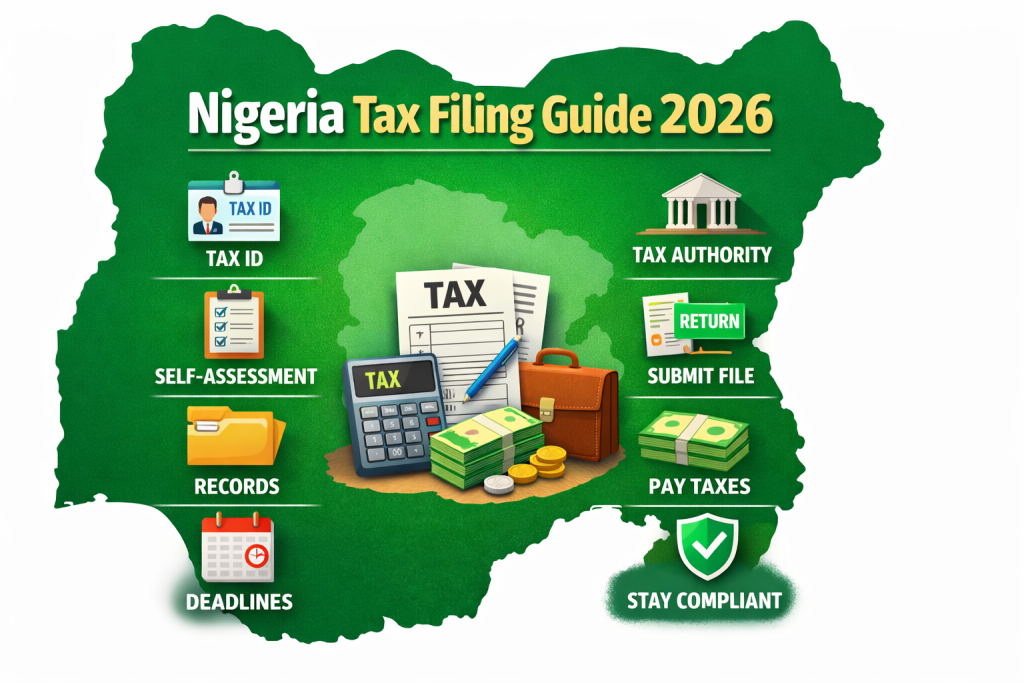
- Use this simple filing order
Step 1.
Identify your taxpayer category.
Are you:
An employee.
Self-employed.
An employer.
A company.
More than one of these.
Step 2.
Confirm the correct tax authority.
State tax authority for personal income tax.
Nigeria Revenue Service for company tax, VAT, and many federal taxes.
Step 3.
Register and confirm your Tax ID.
Step 4.
Gather all records for the filing period.
Step 5.
Use current 2026 rules and rates.
Step 6.
Complete and submit the return.
Step 7.
Pay what is due.
Step 8.
Keep copies of:
Your filed return.
Payment receipt.
Acknowledgement.
Any supporting records.
- Best practical approach
If you are an individual, start with your state tax authority.
If you are a company, start with your NRS registration and annual tax documents.
If you earn income from more than one source, combine them properly in your tax planning and filing process.
- Final takeaway
To file correctly under the new tax law in Nigeria, follow this order:
Register first.
Get your Tax ID.
Know your tax category.
Use the correct tax authority.
Keep proper records.
File on time.
Pay what is due.
Keep proof of everything.
That is the clearest way to stay compliant.
If you want, I can turn this next into a one-page checklist for:
Individual taxpayers.
Small business owners.
Employers.
Limited companies.
(c) Akwa Ibom Times