
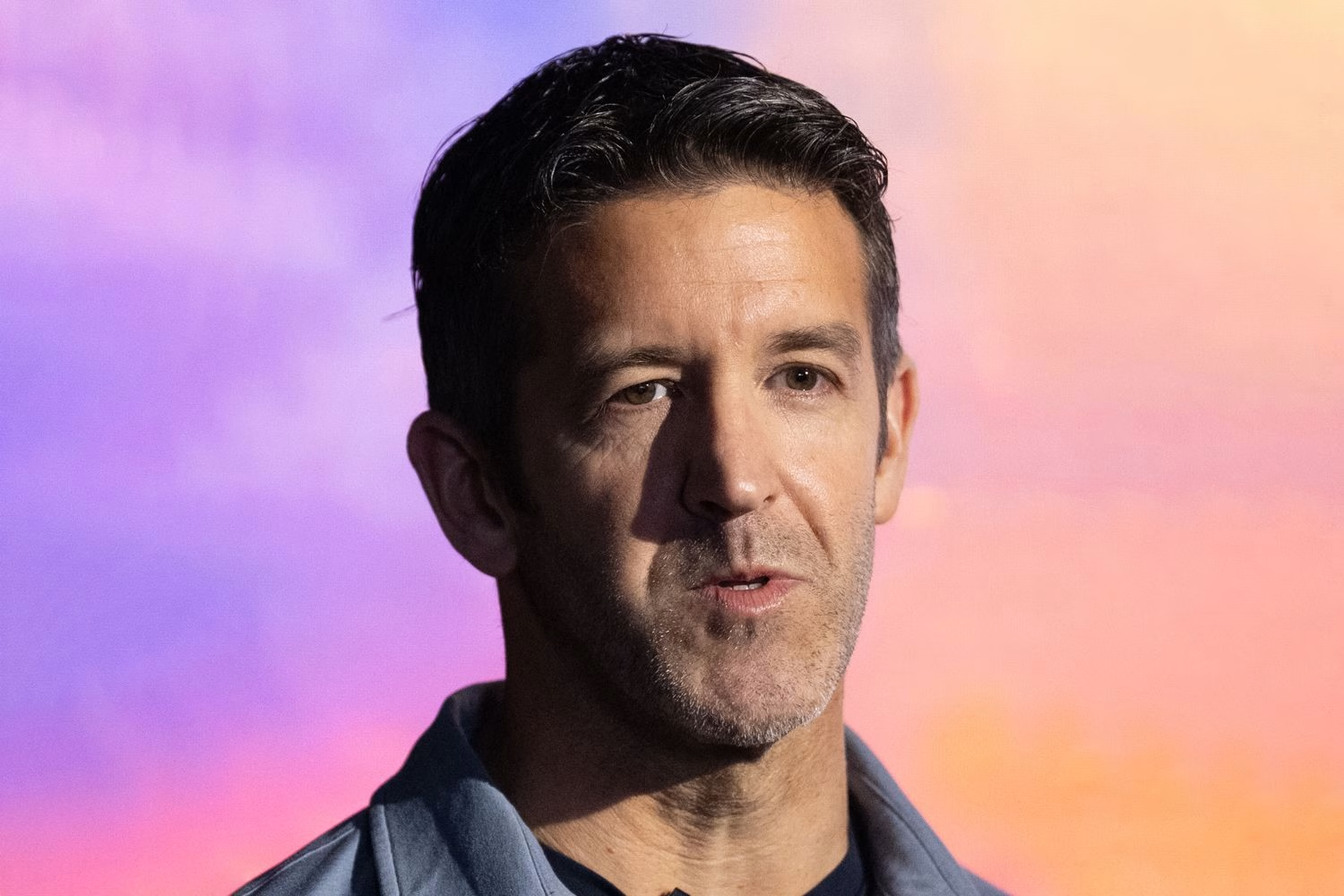

Apple has announced a major leadership transition, naming John Ternus as its next chief executive officer in a move that marks the most significant change at the top of the iPhone maker since Tim Cook succeeded Steve Jobs in 2011.
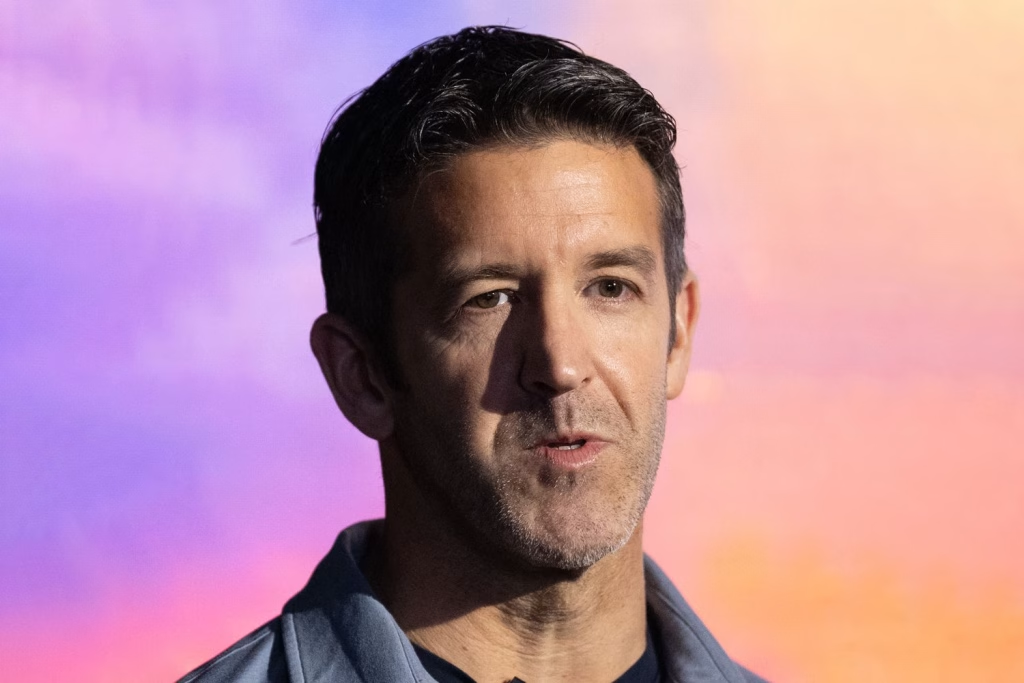
The company said Cook will become executive chairman of Apple’s board, while Ternus, currently senior vice president of Hardware Engineering, will take over as CEO on September 1, 2026. Apple said Cook will remain chief executive through the summer to work closely with Ternus on the transition.
The announcement places one of Apple’s most senior hardware leaders at the helm of the company at a time when global attention remains fixed on its product pipeline, long-term growth strategy and response to intensifying competition in artificial intelligence.
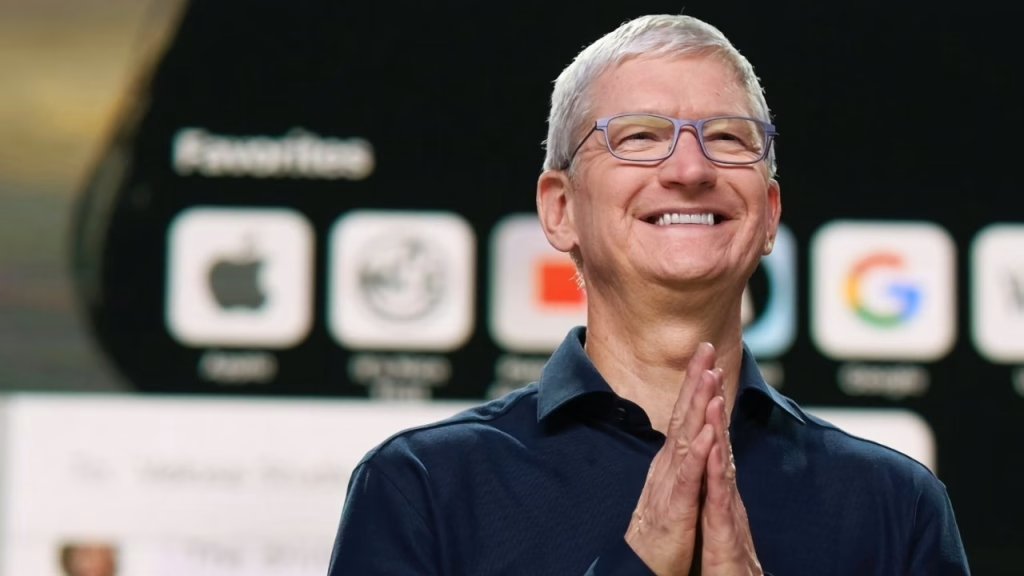
In a statement, Apple said the transition followed a long-term succession planning process and was approved unanimously by the board. The company also said Arthur Levinson, its non-executive chairman, will become lead independent director from September 1, while Ternus will join Apple’s board on the same date.
Cook described the leadership handover as a defining moment for the company and said he had full confidence in Ternus’s ability to lead Apple into its next phase. Ternus said he was honoured by the appointment and pledged to carry forward Apple’s mission and values.
Ternus is a long-serving Apple executive with deep roots in the company’s hardware organisation. He joined Apple’s product design team in 2001, became a vice president of Hardware Engineering in 2013, and joined the executive team in 2021. Over the years, he has been closely associated with hardware development across the iPhone, Mac, iPad, AirPods and Apple Watch product lines.
The elevation of Ternus signals continuity in Apple’s leadership approach. Rather than turn to an outsider or a purely finance-focused executive, the company has chosen a senior insider whose career has been built around product engineering, hardware reliability and the development of Apple’s core devices.
The leadership shift comes after a long period of growth under Cook, who took charge in 2011. During his tenure, Apple expanded its services business, deepened its global retail presence, pushed into wearables and mixed reality, and completed its transition to Apple-designed silicon across major parts of its product ecosystem.
Independent reporting described the move as a steady succession choice designed to preserve Apple’s strategic direction while positioning the company for its next era of competition. That includes stronger scrutiny from investors and analysts over innovation, AI execution and how Apple balances hardware strength with new software-driven expectations.
With the transition now formalised, attention is likely to turn to how Ternus shapes Apple’s next chapter, especially across hardware, artificial intelligence and the broader ecosystem that has made the company one of the world’s most influential technology groups.