
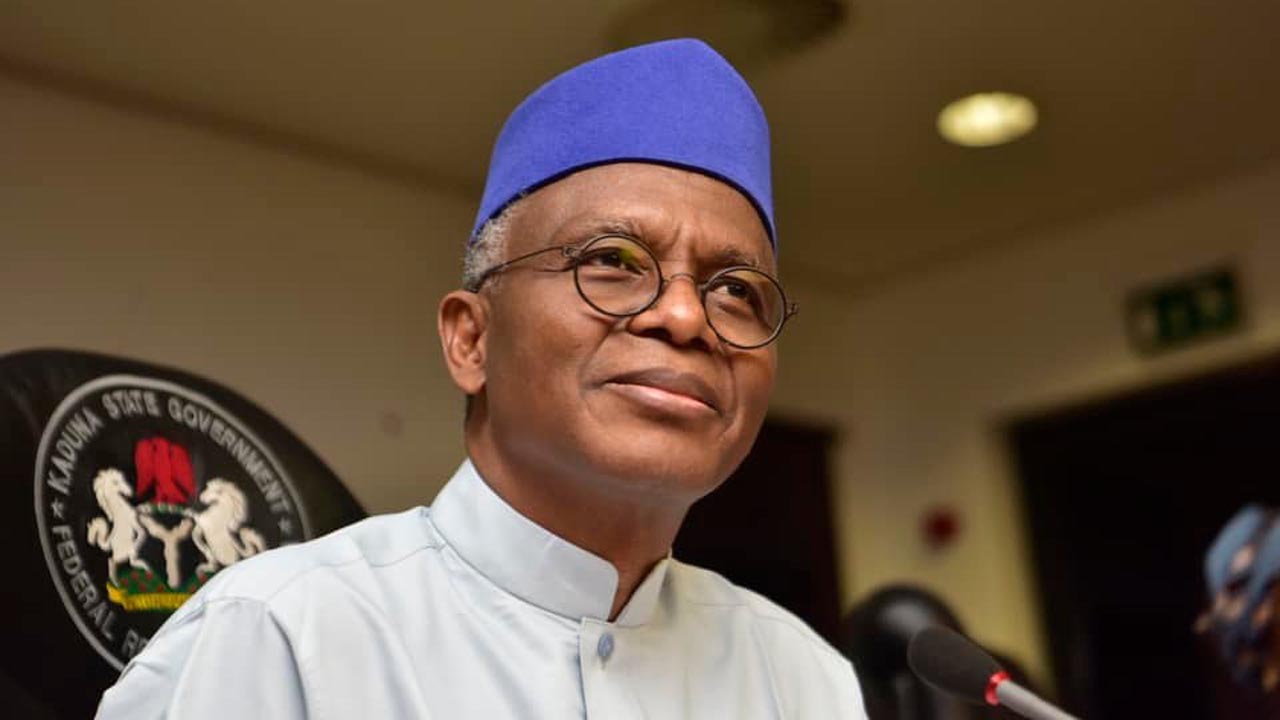

A Federal High Court in Abuja has authorised the Independent Corrupt Practices and Other Related Offences Commission, ICPC, to access and analyse electronic devices recovered from the Abuja home of former Kaduna State Governor, Nasir El-Rufai, as part of an ongoing investigation. The order was granted on Thursday by Justice Joyce Abdulmalik after an ex parte application filed by the anti corruption agency.
At the court session, counsel for the ICPC asked for permission to open the seized devices, carry out forensic checks and extract relevant data for investigative purposes. In granting the request, the judge allowed the commission to review the contents of the items, including messages, call logs, photographs, WhatsApp chats and other information stored on them.
The devices listed before the court include several mobile phones, laptops, storage drives, flash drives, a tablet and a memory card. They were said to have been recovered during a search conducted by ICPC operatives at El Rufai’s residence in Abuja.
The case, marked FHC/ABJ/CS/499/2026, is between the Federal Republic of Nigeria and Nasir Ahmad El Rufai. Justice Abdulmalik held that the commission was entitled to examine materials seized during an investigation for forensic analysis.
The development comes as El Rufai separately challenges the search of his residence in another suit before the same court. In that action, he argues that the operation violated his constitutional rights, including his rights to dignity, liberty, fair hearing and privacy. He is also asking the court to declare any evidence obtained from the search inadmissible, order the return of the seized items and award him N1 billion in damages.
In response, the ICPC said its actions followed a petition against the former governor and were backed by a valid search warrant issued on February 18 and executed on February 19. The agency added that police officers accompanied its operatives during the search, which it said was witnessed by El-Rufai’s wife, Hadiza, and his son, Mohammed. The police also defended the operation, insisting it was lawful and carried out in line with due process.
The report also stated that El-Rufai’s legal troubles began after his return from Cairo on February 12, 2026. He was said to have honoured an invitation from the Economic and Financial Crimes Commission on February 16, after which he was detained. He was later released on administrative bail on February 18 and then taken into custody by the ICPC.
A separate suit was also reportedly filed by the Department of State Services at the FCT High Court over allegations that he wire tapped the telephone line of the National Security Adviser, Nuhu Ribadu.