
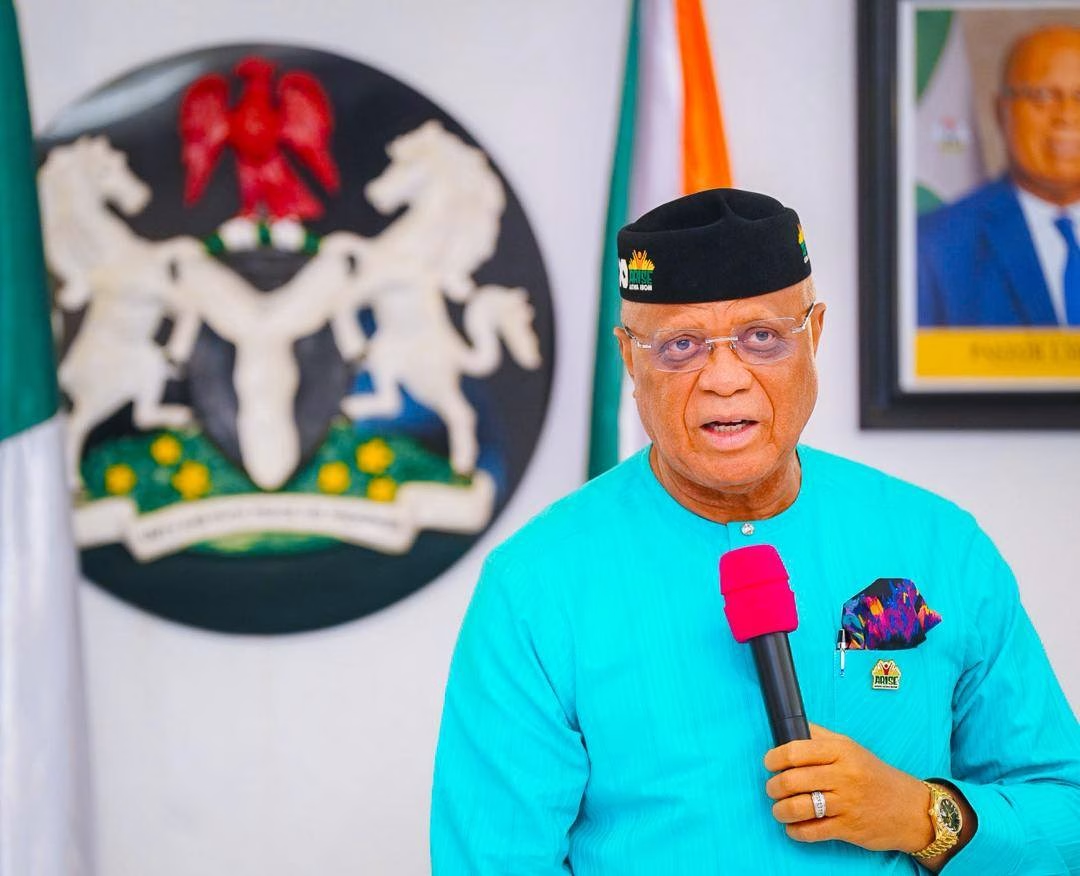

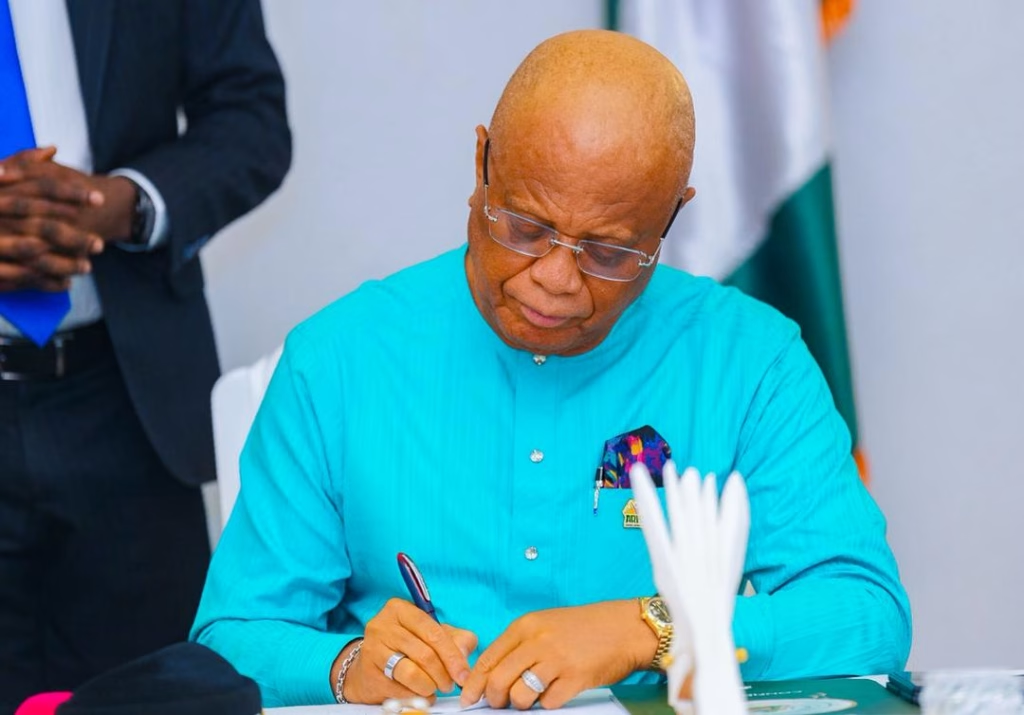
Akwa Ibom State Governor, Pastor Umo Eno, has approved and released N5.9 billion for intervention projects in the state’s basic education sector.
The fund covers 2025 and 2026 intervention projects and will support broad reforms in public primary and junior secondary schools across the state.
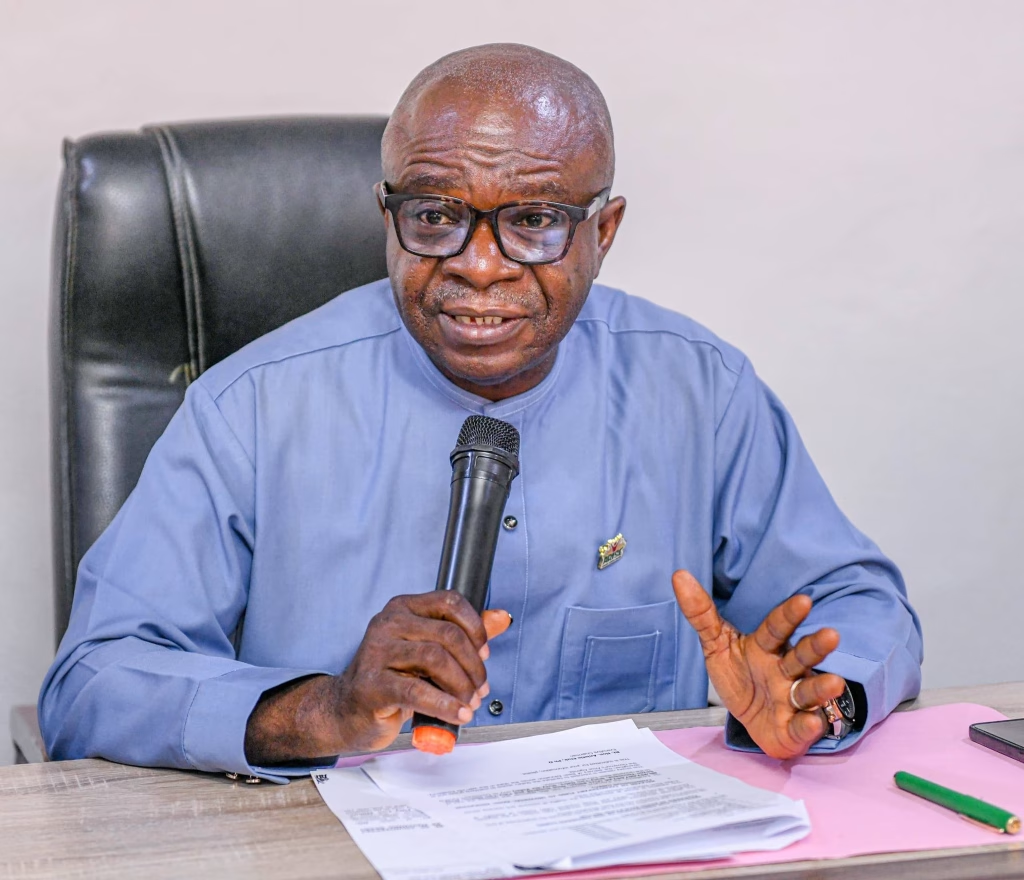
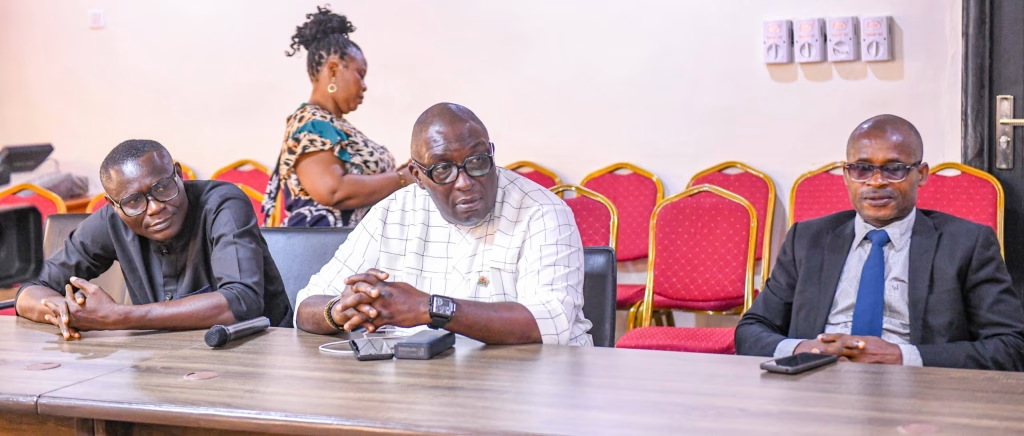
Chairman of the State Universal Basic Education Board, SUBEB, Rt. Hon. Anietie Etuk, PhD, disclosed this during a press briefing at the board’s headquarters in Uyo.
Etuk said the intervention would focus on comprehensive school improvement, rather than isolated renovation works.
He said the state government would no longer adopt a piecemeal approach to school projects, adding that each selected school would receive full attention based on its needs.
“Intervention will no longer be piecemeal. When we go to a school, we will handle it holistically. Classrooms, water, toilets, electricity, and everything required to make the environment suitable for learning will be provided,” he said.
The SUBEB chairman said the board was working to improve teaching standards, strengthen learning conditions and address gaps affecting basic education delivery in the state.
He also announced plans to introduce a new curriculum for primary schools, describing it as a major step towards improving classroom instruction and learning outcomes.
“For many years, this has not happened. With the new curriculum, we will be able to add value to teaching and learning in our schools,” Etuk said.
On manpower, he said Governor Eno had also approved the recruitment of 1,000 additional teachers to address shortages in public schools.
Etuk said priority would be given to ICT and computer science graduates as part of efforts to strengthen digital education in schools already equipped with computer laboratories.
“We do not have enough teachers in our schools. Therefore, we appealed to the Governor, and he graciously approved the recruitment of 1,000 teachers. We are paying attention to ICT teachers because we already have computer labs that require qualified personnel,” he said.
The SUBEB chairman, however, raised concern over vandalism and theft of school facilities, warning that government investments in education would not achieve the desired results if communities fail to protect public assets.
He urged host communities, traditional rulers, parents and school management committees to take ownership of projects sited in their areas.
“Government cannot continue to commit huge resources only for facilities to be vandalised. Communities must take responsibility to protect what is provided for them,” he said.
Etuk also expressed concern over disputes between some communities and school authorities over school lands.
He said such conflicts were disrupting school administration and affecting enrolment, and called on community leaders to support the smooth running of schools.
According to him, the success of the reforms will depend on cooperation between government, school authorities, parents and host communities.
He said basic education remains central to human capital development and must receive sustained investment.
“If the foundation is not strong, nothing can function properly. That is why we must continue to invest in basic education,” he said.
Also speaking at the briefing, Chairman of the Nigeria Union of Journalists, NUJ, Akwa Ibom State Council, Mr. Nsibiet John, commended Governor Eno for giving priority to education.
John said the approval for the recruitment of 1,000 teachers was a significant step, especially for schools in rural communities.
“The employment of over 1,000 teachers is a major step forward, especially for schools in rural communities, and will go a long way in strengthening basic education delivery,” he said.
He called for stronger Parent-Teacher Associations and urged SUBEB to extend intervention projects to schools with major infrastructure challenges, including QIC Primary School in Eket Local Government Area.
Etuk assured that SUBEB would continue to pursue reforms aimed at improving the standard of basic education and delivering better outcomes for pupils across Akwa Ibom State.