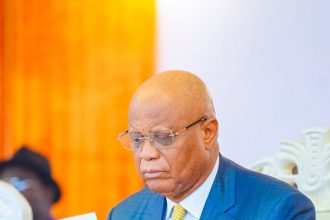

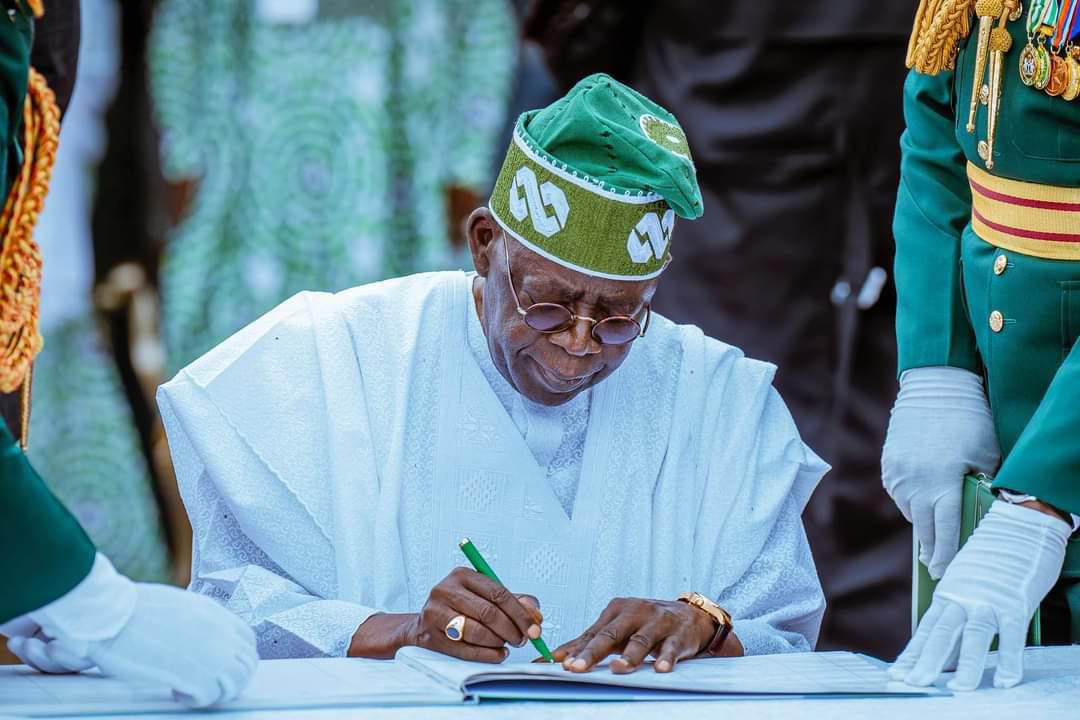

President Bola Tinubu has signed Nigeria’s 2026 Appropriation Bill into law, approving a federal budget of ₦68.32 trillion for the fiscal year. He also approved an extension of the 2025 budget implementation period from March 31 to June 30, 2026.
The extension gives ministries, departments and agencies more time to complete projects and other spending commitments still tied to the 2025 fiscal plan. At the same time, the 2026 budget now provides the legal basis for fresh government expenditure across the year.
Breakdown of the new budget shows ₦4.799 trillion for statutory transfers, ₦15.8 trillion for debt servicing, ₦13.64 trillion for recurrent non-debt spending, and ₦23.96 trillion for capital expenditure.
The signing concludes the legislative process for the 2026 spending plan after its passage by the National Assembly. The approved figure is higher than the earlier proposal submitted by the President, reflecting adjustments made during parliamentary consideration.
The latest move means the Federal Government will run the new budget while still closing out parts of the previous one. That overlap has remained a recurring feature of Nigeria’s budget cycle, especially where capital projects are not completed within the original implementation period.
With the assent now in place, attention is expected to shift to implementation, including release of funds, project execution and compliance with the priorities set out in the 2026 fiscal framework.