

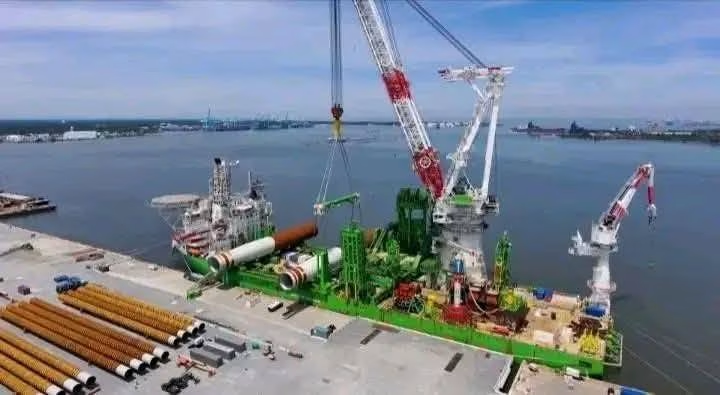
In Oron, a new maritime infrastructure push is reviving old economic hopes. From ferry services and fisheries to trade, tourism and shoreline protection, the project could reshape how coastal communities live and work.
By | Destiny Young
At dawn, the shoreline in Oron carries two histories at once. One belongs to memory. The other belongs to construction.
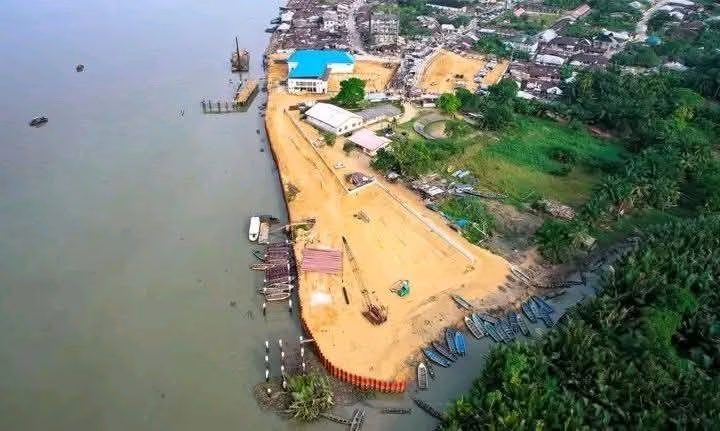
The older history is familiar to coastal families. Oron was once known for movement across water, for fishing, for small trade, for the social and economic life that grew around marine transport. The newer history is still being built. It is visible in steel, shoreline works, jetties, terminal structures and the promise of renewed traffic across the coast.
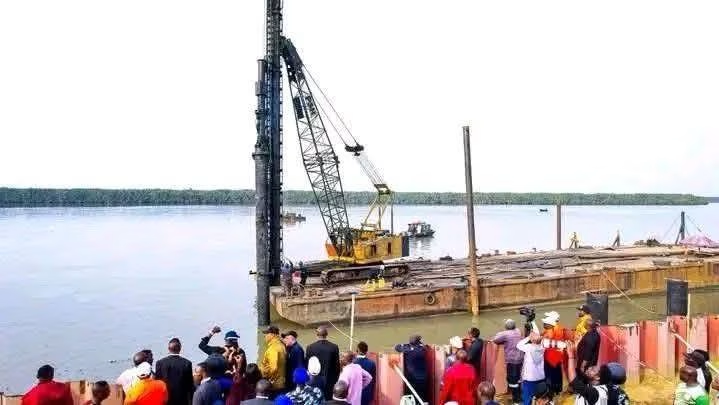
Governor Umo Eno’s maritime infrastructure project in Oron is more than a public works site. It is an attempt to restore commercial marine activity in one of Akwa Ibom’s most strategic coastal corridors. Official descriptions of the project point to a reconstructed marine jetty, ferry terminal, aquatic produce commercial hub, leisure components, shoreline protection and support facilities designed to reconnect Oron to marine commerce.
That matters because coastal infrastructure changes local economies in direct ways.
The first gain is transport. A functioning ferry terminal can reopen regular movement between Oron and nearby coastal destinations, including the historic Oron-Calabar route repeatedly referenced by the state government and project backers. For traders, commuters and small business operators, better water transport can reduce travel stress, widen market access and improve the speed of movement for people and goods.
The second gain is fisheries. Oron’s coastal economy has long depended on the water, but fish and other aquatic produce lose value quickly where storage and processing are weak. The project’s inclusion of commercial hub features and storage support is significant because it can reduce spoilage, improve product handling and help fishing households sell into better markets. That can lift incomes beyond the shoreline itself and support businesses in transport, packaging, retail and food processing.
The third gain is jobs. When the project was flagged off, the state government said it would create employment during construction and open wider economic opportunities after completion. BusinessDay also reported official projections that the modern jetty would boost maritime activities and create jobs. In practical terms, that means work for boat operators, terminal staff, handlers, security workers, traders, food vendors, mechanics and service providers around the waterfront.
The fourth gain is trade and logistics. Marine terminals are not deep seaports, but they play an important role in local and regional commerce. They create organised landing points, support storage, encourage cargo movement and give coastal towns a stronger place in supply chains. In Akwa Ibom, where the government is also pushing wider blue economy and port ambitions, Oron can serve as an important feeder and commercial gateway for coastal movement.
The fifth gain is tourism and urban renewal. The Oron project has been framed not only as transport infrastructure but also as a waterfront destination with leisure value. That gives it a broader economic role. A cleaner, safer and more active marine frontage can attract visitors, support local hospitality, stimulate small retail and improve how residents use public space. For a town with a strong maritime identity, that kind of renewal can strengthen both income and civic pride.
Then there is shoreline protection, one of the less dramatic but more important parts of the project. Coastal erosion affects homes, access routes, investor confidence and long-term planning. Protection works help preserve the waterfront and reduce the risks that often discourage sustained private activity. When the shoreline is stabilised, it becomes easier for other investments to survive.
For coastal communities, this is where the real story lies. Maritime infrastructure does not help only the people who board ferries or load cargo. It affects fish sellers, transport operators, welders, cold room attendants, food vendors, artisans, youth looking for work and households that depend on the wider circulation of money around marine activity. When water-based commerce returns, the effects spread across the local economy.
That is why Oron matters.
It is not only about reviving an old jetty. It is about whether a coastal town can recover its economic direction. It is about whether marine geography can once again become productive geography. It is about whether public investment can reconnect communities to the advantages that the coastline has always offered them.
If the project delivers as planned, Oron could become a stronger centre for ferry movement, fisheries support, local trade and waterfront enterprise. It could also give nearby coastal communities a firmer stake in Akwa Ibom’s wider blue economy drive.
—