

By | Ekaette Okon-Joseph
When Akwa Ibom marked International Women’s Day last recently, the ceremony carried more than symbolic significance. For the administration of Governor Umo Bassey Eno, the event represented the culmination of a governance approach that has increasingly positioned women at the centre of political leadership, financial inclusion and grassroots economic empowerment.
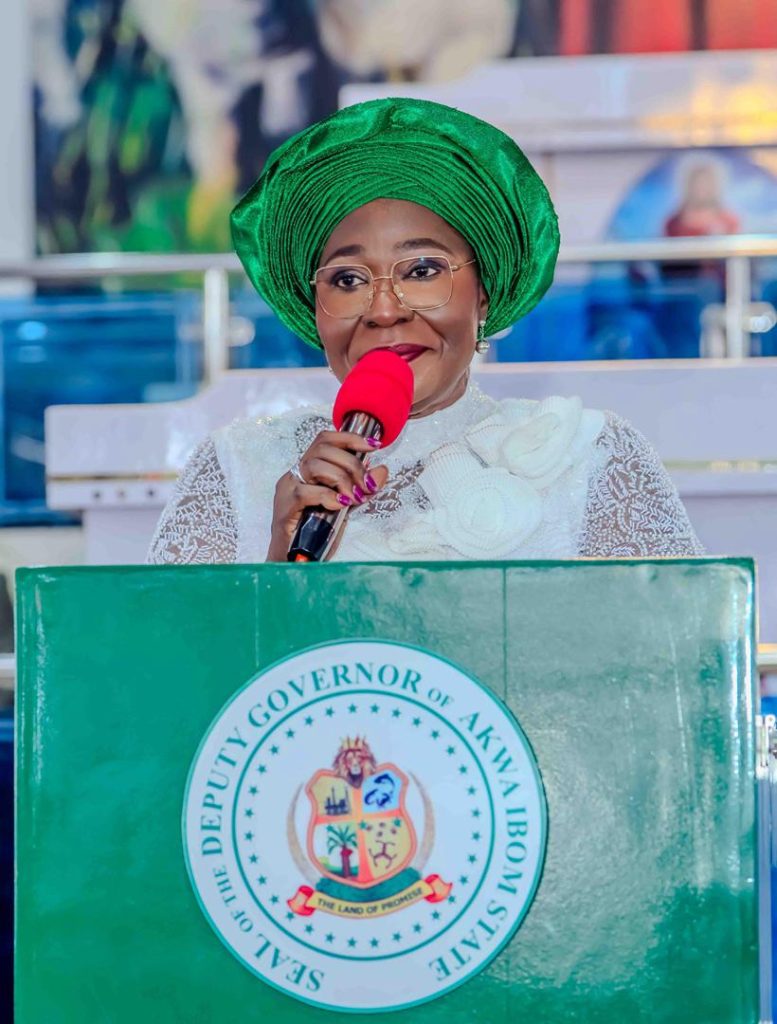
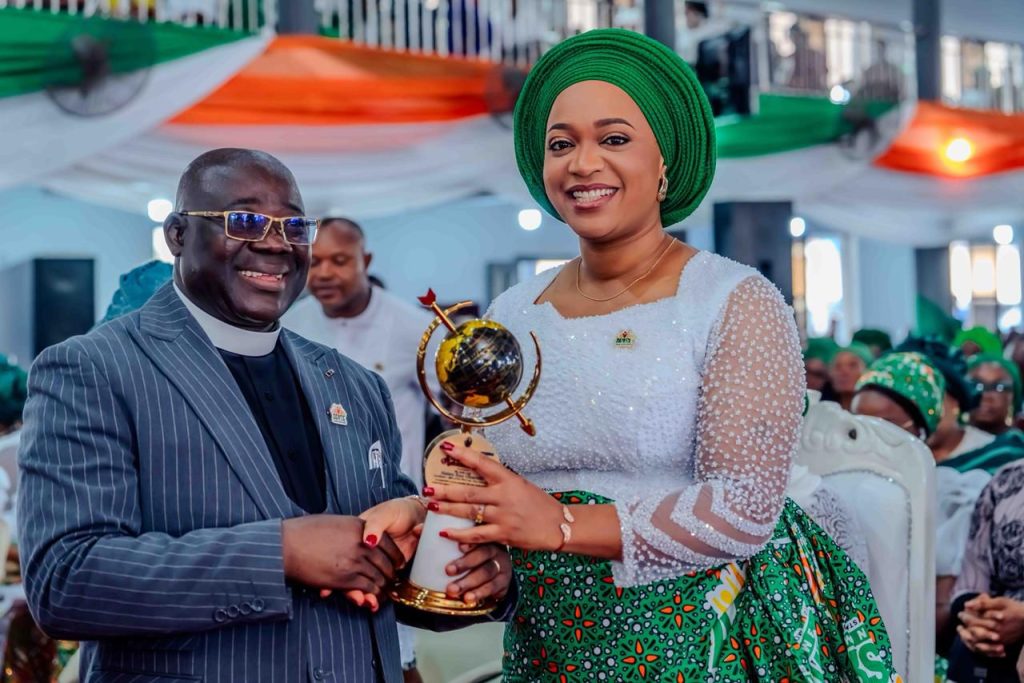
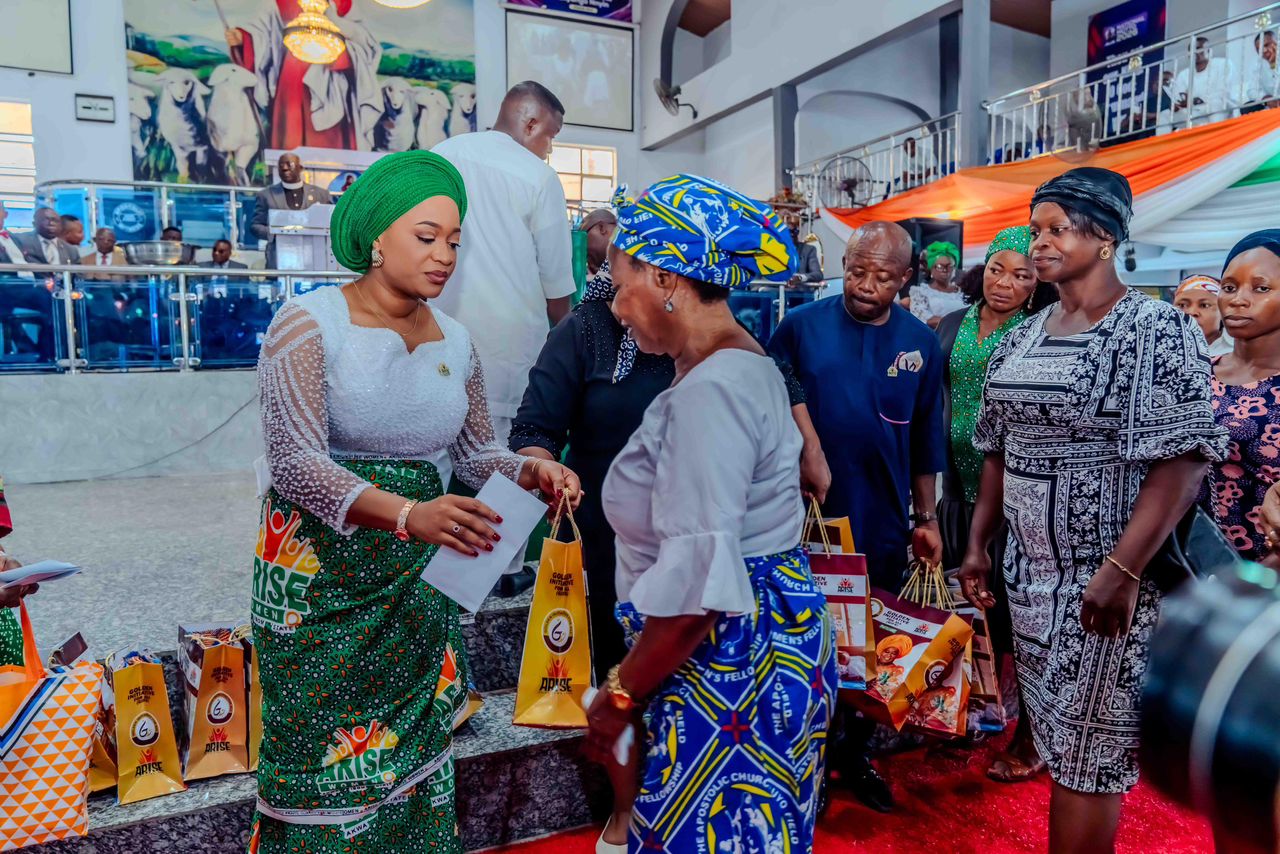
Standing before a congregation during the thanksgiving service that concluded a statewide Women Sensitisation Tour across all 31 local government areas, Deputy Governor Akon Eyakenyi reflected on the scale of that shift.
“For the first time in the history of Akwa Ibom State, after 35 years, a woman is standing before you as an elected Deputy Governor,” she said, pointing to a broader transformation in the state’s leadership structure.
Today, women occupy about 40% of political appointments in Akwa Ibom’s government, exceeding the 35% benchmark recommended by the Beijing Declaration and Platform for Action, the landmark United Nations framework adopted in 1995 to accelerate gender equality worldwide.
“In every appointed position, Governor Umo Eno gives specific instructions and follows up to ensure women get their slots,” Eyakenyi said, describing the policy as unprecedented in the state’s political history.
The milestone reflects a deliberate effort by the Eno administration to embed gender inclusion within its governing philosophy under the ARISE Agenda, a development framework focused on social welfare, rural development and economic expansion.
A Global Leadership Gap
Akwa Ibom’s push for gender inclusion comes at a time when the global political landscape still reflects a persistent gender imbalance.
Women currently hold about 26% of parliamentary seats worldwide, according to the Inter-Parliamentary Union, while female representation in executive leadership positions remains even lower.
The World Economic Forum’s Global Gender Gap Report estimates that at the current rate of progress, full gender parity in political leadership could take more than a century to achieve globally.
Against this backdrop, subnational governments are increasingly becoming laboratories for gender reforms.
Akwa Ibom’s approach, combining political representation with economic empowerment and social protection, reflects that emerging governance trend.
The Governor’s Policy Direction.
Governor Eno has repeatedly framed women’s empowerment as central to the state’s development agenda.
Speaking during International Women’s Day commemorations, he said his administration would continue to run a gender-inclusive government, emphasising the critical role women play in both governance and economic growth.
“Our women have done great things, from managing homes to making strides in the private and public sectors,” Eno said, adding that investing in women and the girl child would produce long-term benefits for society.
The governor has also urged women across the state to take advantage of economic programmes created under the ARISE Agenda, particularly cooperative-based financing initiatives designed to expand financial inclusion.
During a women’s civic mobilisation tour, Eno announced that the state would inject ₦20 million into cooperative societies in each of the state’s 369 wards, encouraging women to organise around cooperative structures to access business financing and economic opportunities.
“All empowerment programmes will be channelled through cooperative societies,” the governor said, adding that the initiative would strengthen women’s economic participation and self-reliance.
Financial Inclusion and Grassroots Entrepreneurship.
Economic empowerment forms a central pillar of the administration’s gender strategy.
Across the state’s 31 local government areas, women’s cooperatives are being strengthened to provide access to microcredit, agricultural financing and business development support.
The emphasis on financial inclusion aligns with global research on gender and economic growth.
According to the World Bank Global Findex database, women remain seven percentage points less likely than men to have a bank account globally, highlighting persistent barriers to financial participation.
Economists increasingly view closing that gap as a major driver of development.
The International Monetary Fund notes that reducing gender disparities in labour force participation can significantly boost economic output and productivity.
Entrepreneurship Training and the Ibom-LED Pipeline.
Complementing financial inclusion programmes is the state’s Ibom Leadership and Entrepreneurial Development Centre (Ibom-LED), a training institution designed to equip young entrepreneurs with business and vocational skills.
The Eno administration has expanded training opportunities for women through the centre, supporting them with start-up grants and entrepreneurship training.
During a public engagement in 2025, the governor approved hundreds of millions of naira in empowerment funds for women entrepreneurs, enabling beneficiaries to establish small businesses and secure commercial spaces.
The approach mirrors a global policy shift that increasingly prioritises women-led enterprises.
A study by the McKinsey Global Institute estimates that advancing women’s economic participation could add $12 trillion to global GDP by improving labour productivity and entrepreneurial activity.
“Investing in women is one of the highest-return strategies for economic development,” McKinsey analysts wrote.
Supporting Women Through Social Programmes.
The administration’s gender inclusion framework also intersects with broader social protection policies.
One example is the Senior Citizens Centre in Uyo inaugurated by Senator Remi Tinubu, the wife of the Nigerian President, which provides stipends, health insurance and social engagement programmes for elderly residents, many of whom are women who spent decades outside formal employment systems.
The programme reflects what policy analysts describe as “compassionate governance,” integrating welfare and economic inclusion policies.
The governor has also supported grassroots empowerment initiatives led by women’s groups and civil society organisations.
At one training and empowerment ceremony for young women entrepreneurs, Eno praised organisers for helping young women build sustainable livelihoods.
“Thank you for the training and empowerment, you’re giving these young women a source of livelihood,” the governor said while announcing a ₦20 million support grant for the programme.
Expanding Women’s Influence Beyond Politics.
Gender inclusion efforts in Akwa Ibom extend beyond governance and economic programmes.
The administration has also supported investment in women’s sports development, including partnerships aimed at strengthening Ibom Angels Football Club, one of Nigeria’s prominent women’s football teams.
Sports administrators say such investments can create career pathways for young women while raising the state’s profile in national competitions.
Why Gender Inclusion Matters.
Development economists increasingly link women’s empowerment to broader societal outcomes.
Research by the United Nations Development Programme shows that societies with higher gender equality tend to experience better outcomes in education, healthcare and economic growth.
Similarly, the World Bank argues that empowering women strengthens families, increases household incomes and improves community welfare.
“When women participate fully in the economy, entire societies benefit,” the World Bank notes in its gender equality research.
Deputy Governor Eyakenyi echoed that argument in her remarks during the women’s mobilisation tour.
“When you empower a woman, you empower a whole community,” she said.
A Subnational Model for Inclusion.
Within Nigeria’s federal system, where national gender representation remains relatively low, Akwa Ibom’s approach highlights how subnational leadership can accelerate reforms.
By combining political representation, financial inclusion, entrepreneurship training and social welfare initiatives, the Eno administration has constructed a governance model that places women and families at the centre of development policy.
For Governor Eno, the rationale remains clear.
“We will continue to support our women and prepare them for the opportunities tomorrow may offer,” he said during the International Women’s Day address.
If sustained, analysts say the strategy could position Akwa Ibom as a leading example of gender-inclusive governance in Nigeria, demonstrating how policy, representation and economic empowerment can converge to reshape opportunity for half the population.
Ekaette Okon-Joseph is the Special Assistant on Media to Governor Umo Eno of Akwa Ibom State and writes from Uyo the State capital, she can be reached on ([email protected]).