

By | Destiny Young
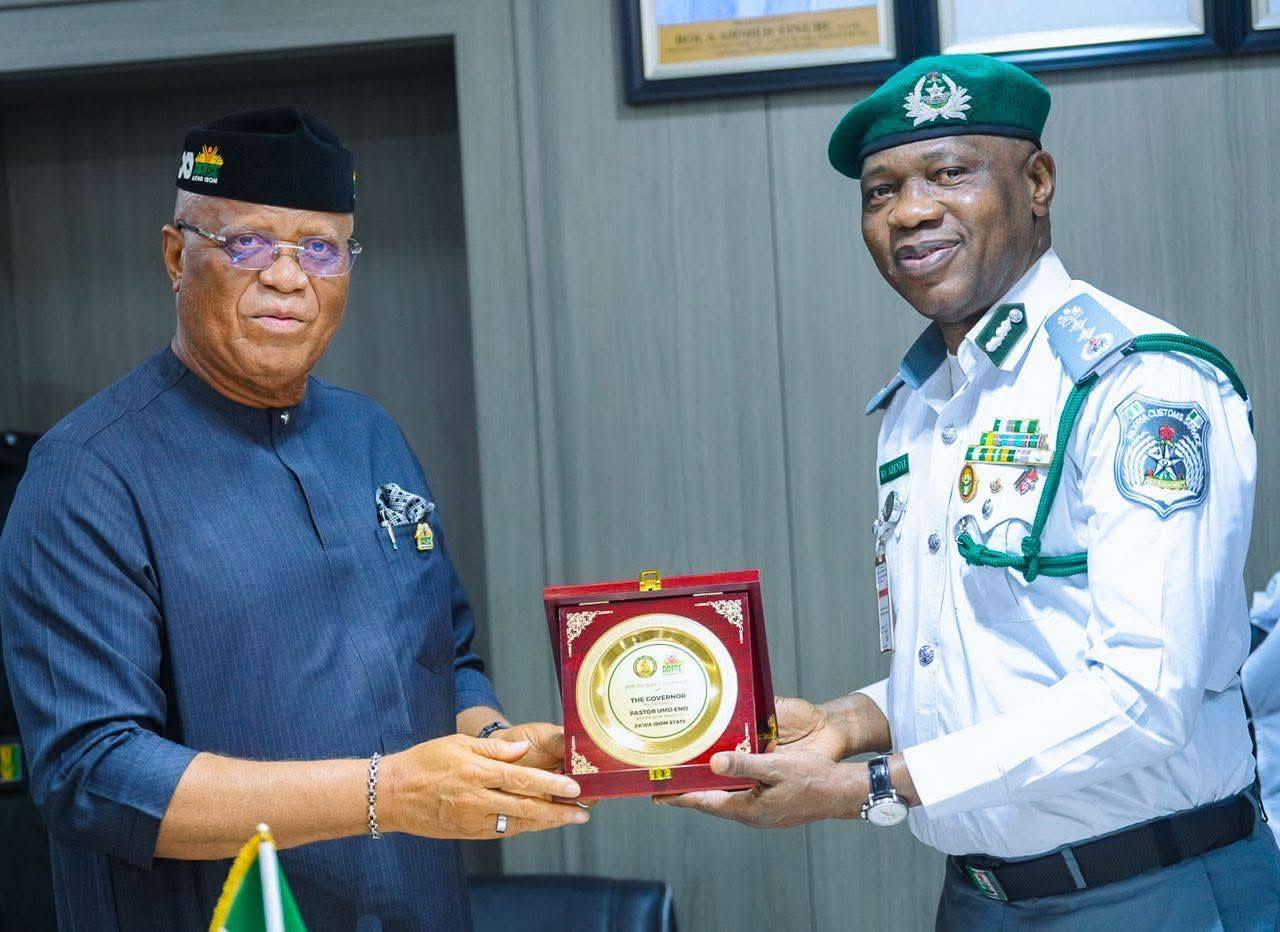
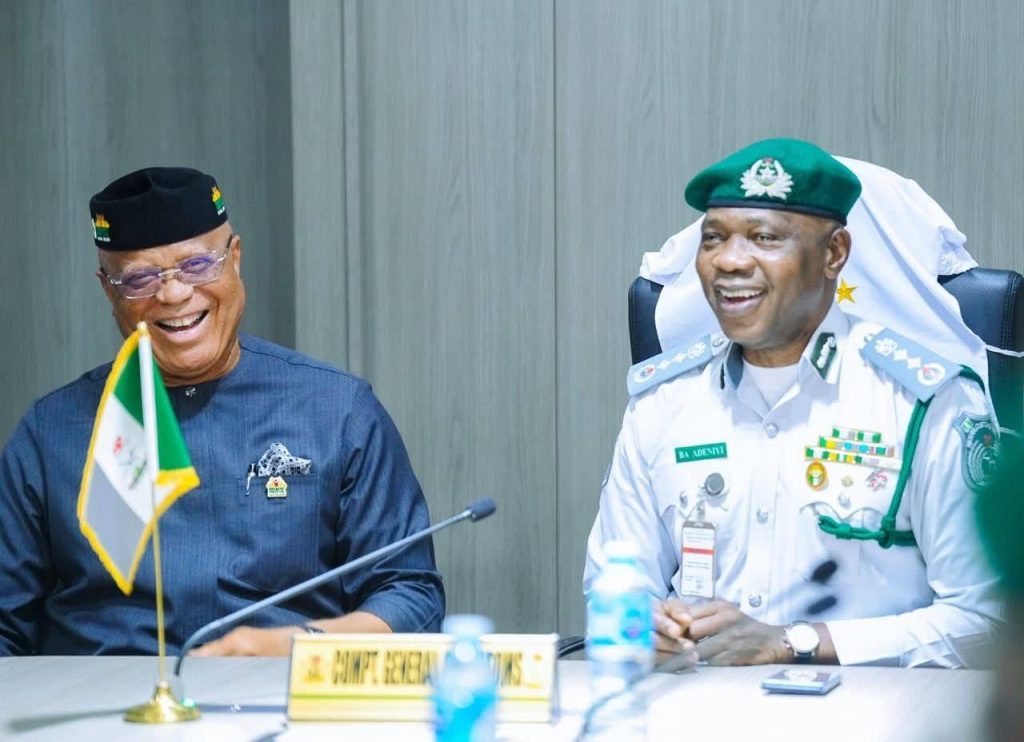
Akwa Ibom is taking another step in its bid to become a serious aviation and logistics centre in southern Nigeria. That direction came into sharper focus after Governor Umo Eno secured approval for a bonded terminal for the state following a meeting in Abuja with the Comptroller-General of Customs, Bashir Adewale Adeniyi. The development was presented as a move that could ease cargo handling, lower business costs and support wider trade activity in the state.
The significance of the approval lies in what a bonded terminal represents. It is not simply a storage point. It is a customs-controlled facility that helps regulate the movement, holding and clearance of goods. Nigeria Customs says bonded warehouse operations are subject to defined requirements, including bond security and compliance conditions, which means the facility sits within a formal trade and accountability structure.
For Governor Eno, this is part of a broader economic vision. Akwa Ibom has, for some time, signalled its intention to turn the Victor Attah International Airport corridor into more than a passenger transit point. The bonded terminal gives that ambition greater weight because airports with cargo support infrastructure tend to serve a wider commercial purpose. They can connect importers, exporters, logistics operators, manufacturers and distributors more efficiently than airports built around passenger movement alone. The governor’s meeting with Customs, and the language around the approval, point clearly in that direction.
This matters for a state that wants to expand its economic base and improve its attractiveness to investors. A bonded terminal can strengthen supply chains, improve turnaround time for goods and make the state more competitive for trade-linked business activity. It can also complement any long-term effort to deepen airport operations, stimulate cargo traffic and build services around warehousing, freight forwarding, haulage and distribution. That is the wider commercial logic behind the latest approval.
Akwa Ibom’s case is also helped by geography and timing. As competition grows among Nigerian states to attract investment, transport-linked infrastructure is becoming more important. A state with an airport, improving road access and customs-enabled cargo support has a stronger platform for business expansion than one relying only on conventional public sector spending. The bonded terminal, if effectively developed and integrated, could therefore become an important link between public infrastructure and private commercial activity. This is an inference based on the customs role of bonded facilities and the state’s stated logistics ambitions.
The challenge now is delivery. Approvals create momentum, but results depend on execution. The value of the terminal will rest on how quickly it is operationalised, how well it is integrated into the airport and transport ecosystem, and whether businesses see enough efficiency and cost advantage to use it at scale. That is where policy vision must meet infrastructure discipline. Still, the approval itself is an important signal. It suggests that Akwa Ibom is not merely talking about becoming an aviation and logistics hub, it is beginning to assemble the assets needed to pursue that goal.
From a political and development standpoint, the bonded terminal fits neatly into Governor Umo Eno’s larger projection of Akwa Ibom as a state ready for investment, trade and regional relevance. It supports a narrative of practical economic positioning. It also gives the government a concrete project to point to as it argues that Akwa Ibom can play a bigger role in Nigeria’s aviation and logistics map. On present evidence, that argument is becoming easier to make.
Destiny Young serves as the Special Assistant (New Media & Digital Communication) to the Executive Governor of Akwa Ibom State, H.E. Pst Umo Eno, Ph.D