


By | Destiny Young
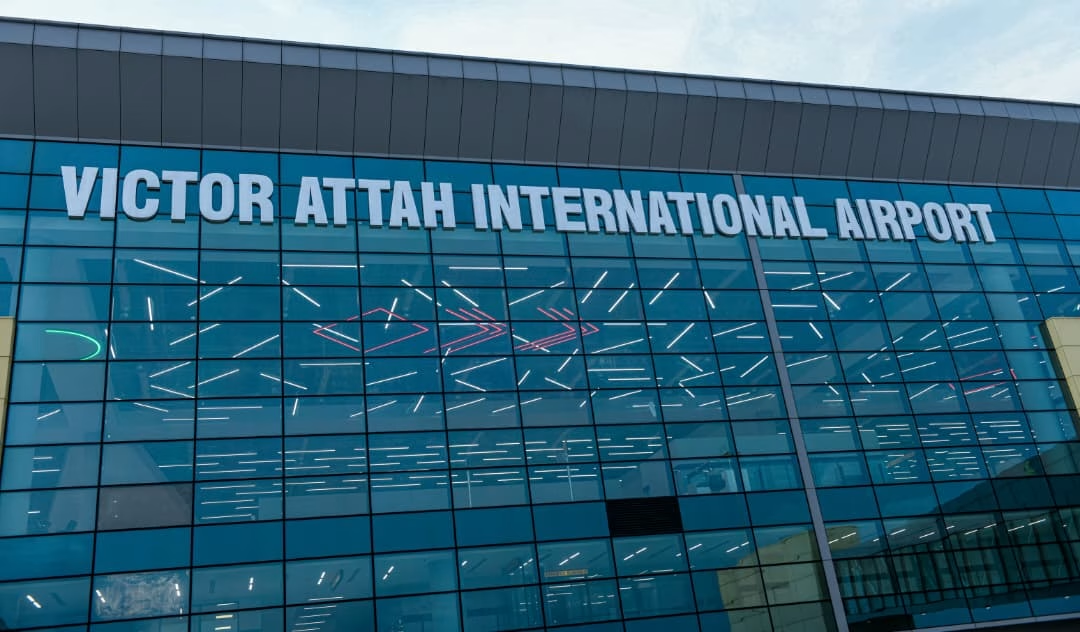
Akwa Ibom has entered a new chapter in its development journey. With the commencement of international flight operations from Victor Attah International Airport, Uyo, the state has moved from aviation aspiration to global visibility.

The maiden international flight from Uyo to Accra, Ghana, operated by Ibom Air on Saturday, May 2, 2026, marks more than a historic aviation milestone. It signals the arrival of Akwa Ibom as a serious player in regional connectivity, trade, tourism and investment.
For decades, travellers from Akwa Ibom and neighbouring states in the South-South and South-East depended largely on Lagos, Abuja or Port Harcourt for international travel. That pattern imposed extra costs, longer travel time and logistical pressure on passengers, businesses and investors. The direct Uyo-Accra route changes that story.
It places Uyo on a wider aviation map. It also gives Akwa Ibom a direct gateway into West Africa, beginning with Ghana, one of the region’s most active commercial and diplomatic centres.
This milestone strengthens the vision behind Victor Attah International Airport. The airport was not built as a ceremonial infrastructure project. It was conceived as a strategic aviation ecosystem with passenger operations, cargo potential, maintenance capacity and future links to trade, tourism and industrial development.
The presence of a Maintenance, Repair and Overhaul facility, a cargo and logistics terminal, a modern smart terminal, an airport clinic, a VIP hangar, an Aviation Village and a multi-lane access road gives the airport an advantage beyond passenger movement. It positions Akwa Ibom to support aviation services, exports, technical training, logistics and business travel.
Governor Umo Eno’s administration has presented the international flight milestone as part of a broader agenda to expand aviation capacity and strengthen Akwa Ibom’s economic competitiveness. The Governor has consistently linked aviation development to his administration’s wider push for investment, tourism, logistics and sustainable growth under the ARISE Agenda.
The significance is clear. Airports are economic gateways. They shape investor confidence. They reduce distance between markets. They support hospitality, cargo movement, professional services, conferences and tourism. With international operations now taking off from Uyo, Akwa Ibom has gained a stronger platform to market itself beyond Nigeria.
Ibom Air’s role also deserves attention. Since its launch, the state-owned airline has become one of the most visible symbols of Akwa Ibom’s capacity to build and manage strategic assets. Its move into international operations gives the airline a larger stage and gives the state a stronger aviation identity.
The Uyo-Accra route should therefore be seen as a beginning, not an endpoint. The next phase is clear: sustain the momentum, deepen passenger confidence, strengthen regional partnerships and expand routes that connect Akwa Ibom to more commercial and tourism destinations across Africa and beyond.
Akwa Ibom must now build around this breakthrough. The state needs stronger tourism packaging, hotel readiness, export support systems, investor-facing information, airport-linked transport services and aggressive destination marketing. Aviation success depends on the economy around the airport as much as the aircraft on the runway.
For the people of Akwa Ibom, this is a moment of pride. For businesses, it is a new opening. For investors, it is a signal. For travellers, it is relief. For the state, it is a bold statement that Uyo is no longer looking at the world from a distance.
Akwa Ibom has registered its presence on the global aviation map. The task now is to deepen that presence, sustain the momentum and turn aviation visibility into measurable economic value.