

For many Nigerians, the desire to earn a university degree has never been the problem. The real barriers have often been cost, time, distance, and the pressure to work while studying.
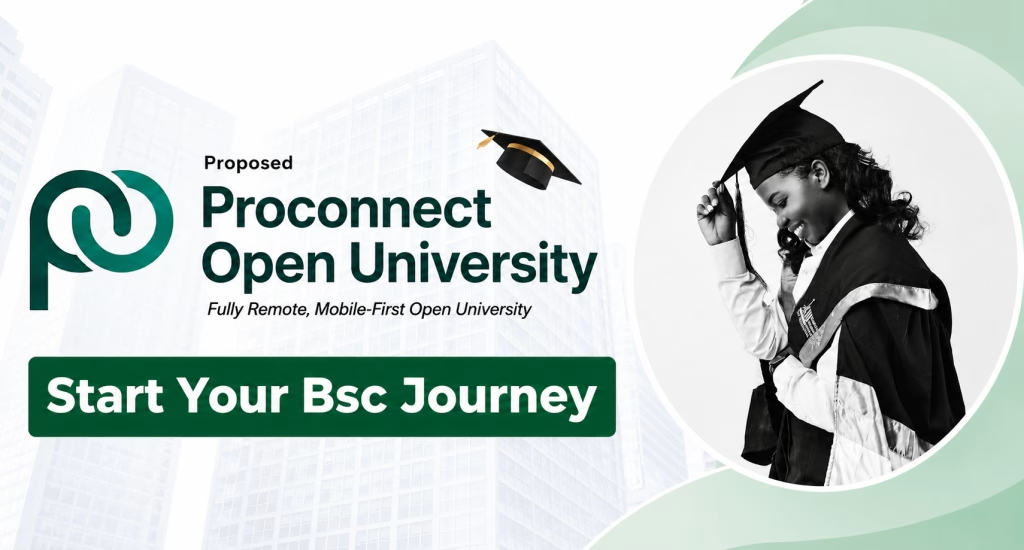
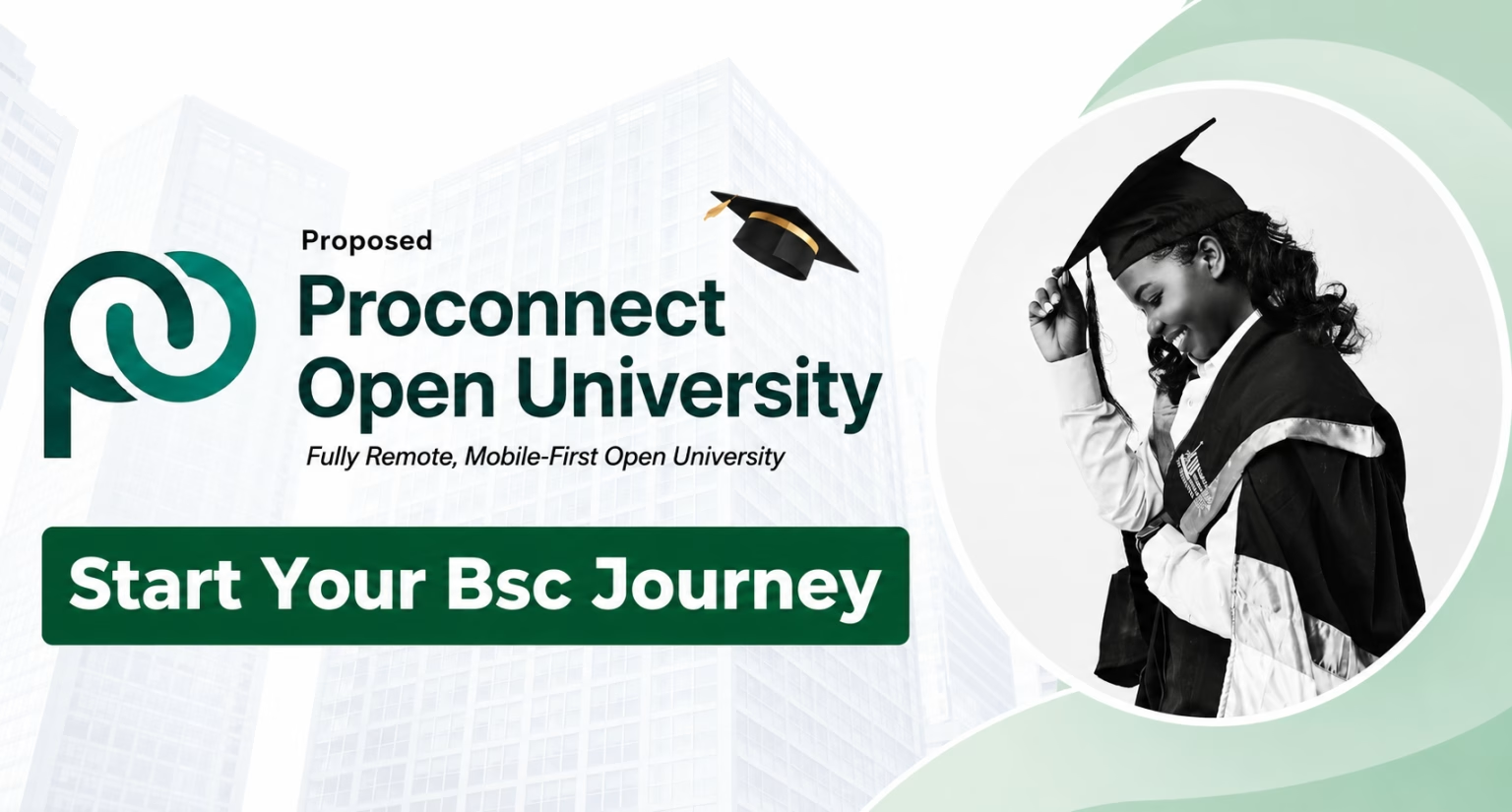
The proposed Proconnect Open University speaks directly to that challenge. It is being positioned as a low-cost, flexible, technology-driven private open university designed for working Nigerians and Africans who want access to higher education without abandoning their jobs, businesses, or family responsibilities.
The idea responds to one of Nigeria’s most urgent education questions: how can quality university education become more accessible to people who cannot afford the traditional cost of campus-based study?
Across the country, thousands of young people and working adults postpone university education because they cannot relocate, pay high fees, or commit to full-time classroom learning. For this group, open and distance education offers a practical bridge. It allows learners to study from where they are, at a pace that fits their economic reality.
Proconnect Open University’s proposed model appears built around that need. Its emphasis on affordability, online access, and work-friendly learning makes it relevant to civil servants, entrepreneurs, artisans, office workers, parents, and young school leavers seeking a flexible route to a degree.
Affordability, however, is only one side of the promise. The bigger test is quality.
In Nigeria, university education is regulated by the National Universities Commission, which sets minimum academic standards, accredits academic programmes, and monitors quality within the Nigerian university system. This is why the word “proposed” remains important.
As a proposed institution, Proconnect Open University must meet all regulatory requirements before it can operate as an accredited university. The promoters of the proposed open university are currently finalising these important regulatory requirements.
Prospective students are advised to verify the institution’s accreditation status, approved programmes, admission processes, and official standing before making any payment.
As the university is currently in its pre-accreditation phase, an admission waitlist has been opened to gauge demand and keep interested applicants informed. Students who wish to be notified once accreditation is secured are encouraged to register their interest at https://proconnect-edu.online/join-waitlist or by scanning the QR code provided.
Still, the concept is timely. Nigeria needs more credible, affordable, technology-driven pathways into higher education. As digital learning expands, institutions that combine low cost with strong academic structure, credible assessment, learner support, and regulatory compliance will help widen access for people who have long been excluded by cost and distance.
The strength of the proposed Proconnect Open University concept lies in its focus on access. If accredited and properly executed, the model could help many Nigerians move from aspiration to qualification. It could also support national manpower development by giving more people the chance to gain practical knowledge in business, computing, digital media, and other relevant fields.
Education should not belong only to those who can afford expensive fees or relocate to major cities. It should also serve the trader seeking business knowledge, the young person learning technology from a small town, the worker trying to upgrade skills, and the adult learner returning to school after years away.
That is the promise affordability brings to higher education. It opens the door. It gives more people a chance. It turns learning from a privilege into a realistic opportunity.
The proposed Proconnect Open University is entering a tertiary education sector where Nigeria clearly needs innovation, new thinking, and new approaches. If its regulatory journey is completed and its academic delivery meets the required standards, it could become part of a wider movement to make university education more flexible, more inclusive, and more responsive to the needs of working Nigerians.
For now, its message is clear: quality education must become more accessible, and affordability remains one of the strongest ways to make that happen.
Written by:
Destiny Young, FIIM, MCPN, CCEP, MNCS, MBCS, MNIM
IT and Technology Infrastructure Management Executive