

By | Destiny Young
Public projects often fail after approval, not before it. Budgets are passed. Contracts are awarded. Ceremonies are held. Then delivery slows because supervision weakens, obstacles stay unresolved, and contractors begin to treat timelines as optional.
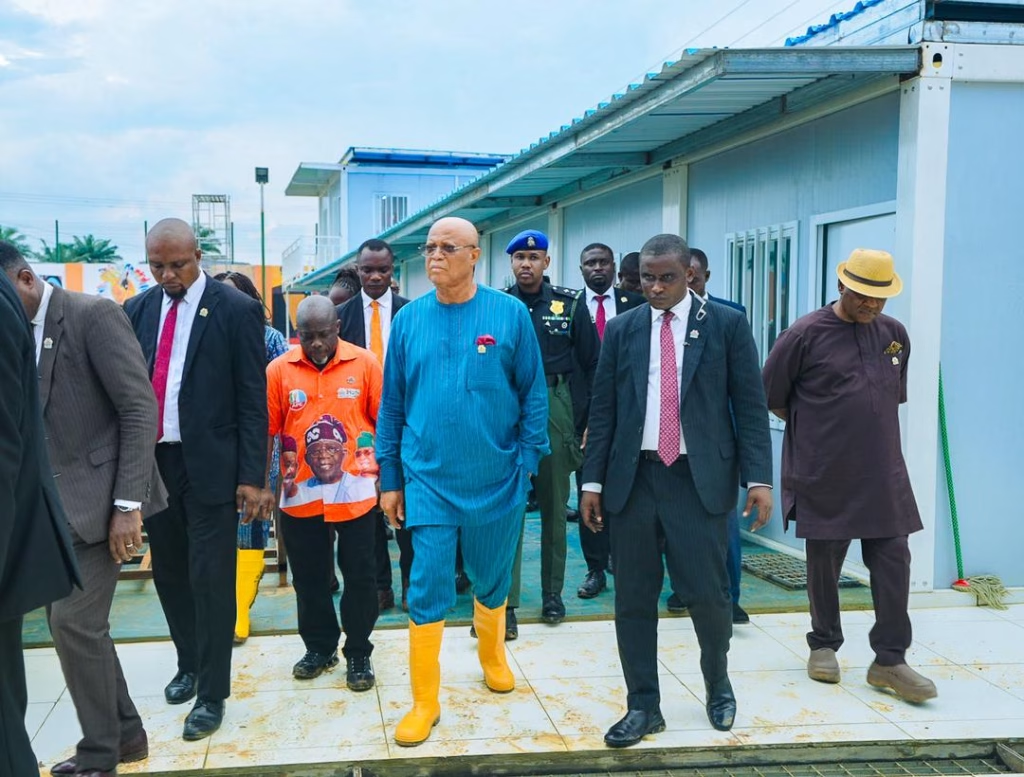
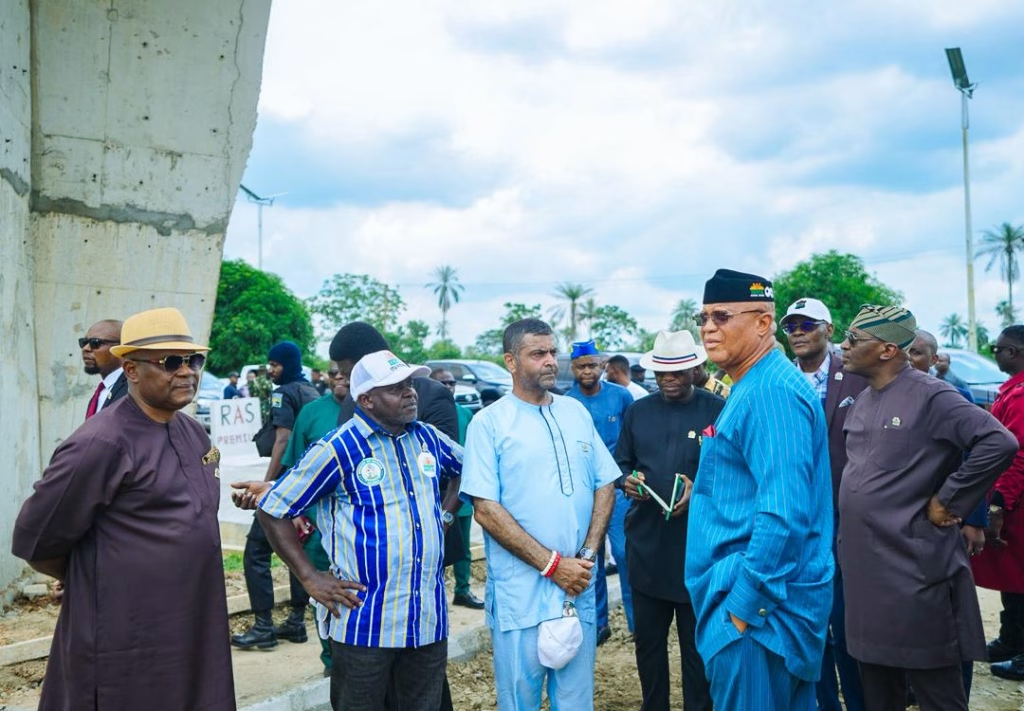
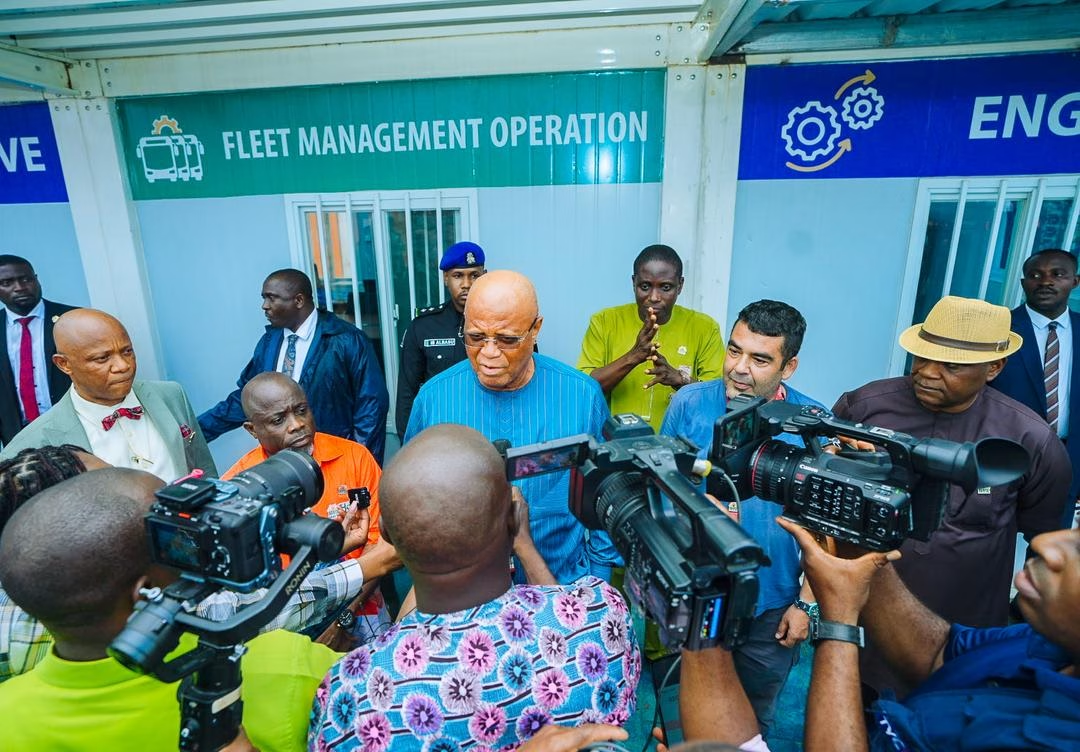
That is where Governor Umo Eno’s physical project inspection culture has become important in Akwa Ibom. Rather than rely only on files, briefing notes and ministry reports, he has repeatedly gone to sites to check progress himself, question contractors, review conditions on the ground and issue directives aimed at speeding up delivery. Official state records show this pattern across roads, hospitals, schools, airport-linked infrastructure and stalled legacy assets.
The strength of that approach is simple. Physical inspection moves governance from paper supervision to field verification. A report may say work is progressing, but a site visit reveals the real pace of construction, the state of equipment, whether a contractor is fully mobilised, and what specific bottlenecks are holding the project back.
That hands-on method was visible early in his tenure when he inspected state projects and facilities, including the Airport Road expansion and the Nsit Atai-Okobo road project. During that tour, he ordered the removal of compensated structures obstructing the Airport Road right-of-way and stressed the need to complete ongoing roads rather than abandon them. That kind of intervention matters because delays in public works often come from unresolved site constraints, not just funding.
Inspection also improves accountability. Contractors respond differently when they know the principal is not depending only on monthly updates. Direct visits create pressure to match claims with visible progress. They also give government a firmer basis to decide whether a contractor deserves more time, more support, or tougher scrutiny.
That accountability element was evident when Eno inspected projects in Nsit Ubium and Eket. According to the state government, he spent hours reviewing ongoing works, including a cottage hospital, a model primary school and the Nsit Ubium-Eket road through Ofriyo. He urged contractors to take advantage of the dry season and solve problems quickly, stressing that government had no time to waste.
That point is especially important in Akwa Ibom, where weather affects delivery schedules. Road construction, drainage works and erosion control projects are highly sensitive to seasonal conditions. A governor who inspects sites and links directives to the dry-season work window is not merely making appearances. He is using executive supervision to manage time itself.
Inspection culture also supports better funding decisions. When leaders visit project sites personally, they can see which works are advancing, which need immediate intervention, and where fresh releases are justified. That reduces the risk of disbursing more public money into projects that are not moving at a reasonable pace.
This funding logic has surfaced in Eno’s own public comments. During an inspection of the Dakkada Luxury Estate and airport terminal area, he said the visit would help government determine where funds should be directed. In another case, at the Uyo gully erosion reclamation project, he said personal inspection of progress was necessary before approving further funding. That suggests a performance-based approach in which site verification comes before additional financial commitment.
Another benefit of regular inspection is the recovery of troubled assets. Many public projects become monuments to waste because top officials stop asking hard questions after the initial excitement fades. Once that happens, abandoned structures sit idle, costs rise, and the public loses faith.
Eno’s inspection of the Ibom Tropicana complex points to a different model. After touring the theme park, hotel and conference components, he ordered the reclamation of encroached land and signalled plans to complete the uncompleted parts of the facility. That matters because inspection, in this context, is not just about monitoring active contracts. It is also about reviving stalled investments and reconnecting them to present economic goals.
Public inspection has another effect. It deepens transparency. Once a governor is seen on-site with commissioners, lawmakers or technical officials, project delivery becomes harder to hide behind office paperwork. Citizens can better judge whether government activity is producing real outputs. Ministries know that implementation will be tested against physical evidence. Contractors understand that excuses may not survive direct observation.
The broader governance lesson is clear. Timely delivery improves when supervision is visible, problems are identified early, and deadlines are reinforced from the top. Inspection culture does not eliminate every challenge. Inflation, design changes, contractor weakness and procurement delays can still slow progress. But regular site visits reduce the space for inertia.
For Akwa Ibom, the value goes beyond politics. Roads affect trade and mobility. Hospitals affect access to care. School projects affect learning conditions. Airport and tourism-linked assets affect commerce, investment and the state’s long-term economic positioning. Each delay imposes a cost on citizens. Each completed project creates measurable public value.
Gov Umo Eno’s physical inspection culture therefore stands out as more than a style preference. It is a governance tool. It helps government detect problems early, tighten accountability, make better funding decisions and push contractors toward delivery. In a system where many public projects drift because follow-through is weak, that culture may be one of the clearest ways to improve the odds of timely completion.