

By | AkwaIbomTimes Correspondent
Uyo, April 30, 2026
Professor Christopher Nyong Ekong has been announced as the new Vice Chancellor of the University of Uyo, stepping into one of the most influential academic leadership roles in Akwa Ibom State. His appointment has drawn attention across the university community because he is not only a senior academic but also one of UNIUYO’s own, with decades of service to the institution.
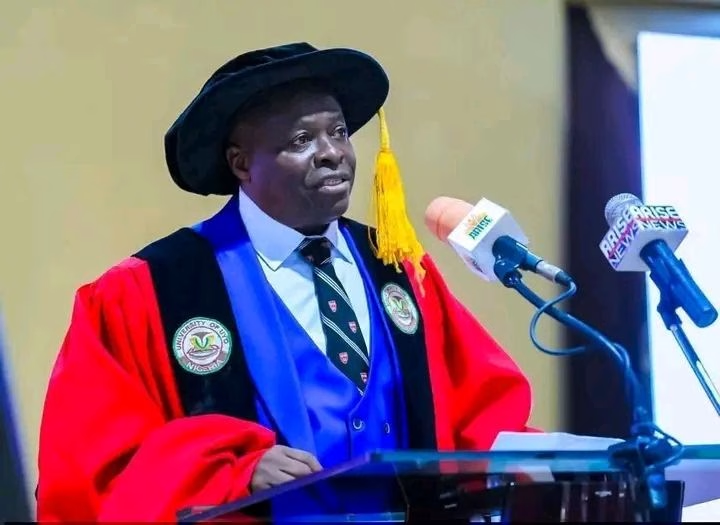
Prof Ekong is a professor of Economics with a long record in teaching, research and university administration. Public profiles show that he has lectured at the University of Uyo since 1992 and has served in key roles including Coordinator of the university’s e-learning programme, with more than 30 scholarly publications to his name.
He is widely associated with the study of monetary economics, development economics and environmental economics. His academic profile also reflects experience outside the classroom, including work in the public sector as a commissioner and adviser on development-related matters.
Born and educated in Nigeria, Ekong earned his BSc in Economics from the University of Cross River State, now the University of Uyo, before obtaining an MSc in Money and Banking from the University of Port Harcourt. He later returned to UNIUYO for his doctoral studies, building a career that has largely unfolded within the same institution he now leads.
Beyond academia, Ekong has been active in public service. Available records indicate that he served in government as Commissioner in different portfolios, including youth, sports and other development-related sectors, giving him experience in administration beyond the university environment.
His emergence as Vice Chancellor is significant for several reasons. First, it places an internal candidate with institutional memory at the helm of the university. Second, it comes at a time when UNIUYO is seeking stronger academic innovation, digital learning capacity and administrative stability.
Ekong has also built a reputation as a visible member of the university’s intellectual community. He has featured in university panels, delivered public lectures and maintained an academic profile that blends scholarship with leadership.
His appointment is expected to attract interest from staff, students and alumni who will be watching closely to see how he balances reforms, infrastructure needs and academic standards in the years ahead. For a university with a strong public profile, the new VC’s first moves will likely set the tone for his tenure.